












pH-responsive polymer–antigen vaccine bioconjugates
Literature Information
Publication Date
2011-05-18
DOI
10.1039/C1PY00060H
Impact Factor
5.582
Authors
Emily F. Crownover, Anthony J. Convertine, Patrick S. Stayton
View Original
Abstract
Protein-based vaccines play an important role in controlling infectious disease but their full clinical impact has been limited by their inability to generate a coordinated cellular CD4+ and CD8+ immune response. Vaccines that better deliver antigens to the cytosolic MHC1 display system could in principle provide a better coordinated response. Here, controlled radical polymerization was employed to prepare a diblock copolymer containing an endosomal releasing segment based on poly(propylacrylic acid) (poly(PAA)) and a hydrophilic segment containing thiol-reactive disulfide moieties for antigen conjugation. Propylacrylic acid (PAA) was polymerized in the presence of a trithiocarbonate based RAFT chain transfer agent (CTA). The resultant poly(PAA) was then employed as a macroCTA in the copolymerization of pyridyl disulfide methacrylamide (PDSMA) (thiol-reactive monomer) and N,N-dimethylacrylamide (DMA) as a hydrophilic comonomer. Copolymer compositions and molecular weights were determined via1H NMR spectroscopy and size exclusion chromatography. Native polyacrylamide gel electrophoresis (PAGE) showed a complete disappearance of the bands corresponding to free thiolated ovalbumin after conjugation to the polymer at pyridyl disulfide to thiol ratios as low as 2.5. The ability of the poly[(PAA)-b-(DMA)co(PDSMA)]–ovalbumin conjugates to activate CTLs was evaluated in vivo, tumor protection using the EG7 tumor protection model. Tumors were visible in the PBS and free ovalbumin immunized mice by day 7 but were not visible in the polyPAA–ovalbumin conjugate immunized mice until day 18. The mice immunized with the polyPAA–ovalbumin conjugate had a survival rate at day 21 of 100% versus 20% for PBS and 40% for ovalbumin immunized mice.
Related Literature
AromTool: predicting aromatic stacking energy using an atomic neural network model
Wengan He, Danhong Liang, Hongjuan Diao, Ruibo Wu
2021-06-29
Paper
DOI: 10.1039/D1CP01954F
Computational investigations of selected enzymes from two iron and α-ketoglutarate-dependent families
Madison B. Berger, Alice R. Walker, Erik Antonio Vázquez-Montelongo, G. Andrés Cisneros
2021-09-24
Perspective
DOI: 10.1039/D1CP03800A
Polymer network formation mechanism of multifunctional poly(ethylene glycol)s in ionic liquid electrolyte with a lithium salt
Asumi Ishikawa, Namie Ikeda, Shuichi Maeda, Kenta Fujii
2021-07-27
Paper
DOI: 10.1039/D1CP02710G
Theoretical characterization of zeolite encapsulated platinum clusters in the presence of water molecules
2021-10-07
Paper
DOI: 10.1039/D1CP03766H
Extinction, absorption, and scattering of light by plasmonic spheres embedded in an absorbing host medium
2021-09-15
Paper
DOI: 10.1039/D1CP03057D
Ground and excited electronic structure analysis of XM4 (X = N, P and M = Li, Na) and their anions
2021-06-30
Paper
DOI: 10.1039/D1CP02273C
Ambiguities in solvation free energies from cluster-continuum quasichemical theory: lithium cation in protic and aprotic solvents
Luigi Cavallo
2021-07-02
Paper
DOI: 10.1039/D1CP01454D
New ethionamide boosters and EthR2: structural and energetic analysis
J. F. Vianna, K. S. Bezerra, A. H. Lima Costa, E. D. Barbosa, J. X. Lima Neto, J. I. N. Oliveira, V. N. Freire, U. L. Fulco
2021-09-27
Paper
DOI: 10.1039/D1CP02853G
Evidence of gas-phase pyranose-to-furanose isomerization in protonated peptidoglycans
2021-10-01
Paper
DOI: 10.1039/D1CP03842G
Intercalation/deintercalation of solvated Mg2+ into/from graphite interlayers
Masahiro Shimizu, Atsuhito Nakahigashi, Susumu Arai
2021-07-27
Paper
DOI: 10.1039/D1CP02895B
You might also like
Compound Q&A
What is 3-Fluoro-2-methylbenzylamine (CAS: 771573-36-5)?
3-Fluoro-2-methylbenzylamine is an organic compound with the CAS number 771573-3...
771573-36-53-Fluoro-2-methylben...
Compound Q&A
Is Tert-butyl 2-(oxetan-3-ylidene)acetate (CAS: 1207175-03-8) safe?
Tert-butyl 2-(oxetan-3-ylidene)acetate is considered safe for its intended uses ...
1207175-03-8Tert-butyl 2-(oxetan...
Compound Q&A
What precautions should be taken when handling 4-Acetyl-2-fluorobenzonitrile (CAS: 214760-18-6)?
Proper personal protective equipment (PPE) such as gloves, goggles, and a lab co...
214760-18-64-Acetyl-2-fluoroben...
Compound Q&A
How is 2-Ethyl-4-methyl-1,3-thiazole (CAS: 15679-12-6) typically synthesized?
2-Ethyl-4-methyl-1,3-thiazole is commonly synthesized via the reaction of thiour...
15679-12-62-Ethyl-4-methyl-1,3...
Compound Q&A
How should 5',5''-([2,2'-Bithiophene]-5,5'-diyl)bis(([1,1':3',1''-terphenyl]-4,4''-dicarboxylic acid)) (CAS: 1227780-71-3) be stored?
This compound should be stored in a cool, dry place away from direct sunlight an...
1227780-71-35',5''''-([2,2'-Bith...
Compound Q&A
What regulatory guidelines apply to L-Lysine Acetate Salt (CAS: 52315-92-1)?
L-Lysine Acetate Salt (CAS: 52315-92-1) is subject to various regulatory guideli...
52315-92-1L-LYSINE ACETATE SAL...
Compound Q&A
Is 6-Fluoro-3-hydroxy-2-pyrazinecarboxamide (CAS: 259793-96-9) safe?
6-Fluoro-3-hydroxy-2-pyrazinecarboxamide (CAS: 259793-96-9) is generally conside...
259793-96-96-Fluoro-3-hydroxy-2...
Compound Q&A
What are the physical and chemical properties of 1,1'-Sulfonylbis(1H-imidazole) (CAS: 7189-69-7)?
1,1'-Sulfonylbis(1H-imidazole) is a crystalline solid with a molecular weight of...
7189-69-71,1'-Sulfonylbis(1H-...
Compound Q&A
What industries use 4-methyl-7-nitro-1H-indole-3-carbonitrile (CAS: 289483-82-5)?
4-Methyl-7-nitro-1H-indole-3-carbonitrile (CAS: 289483-82-5) is primarily used i...
289483-82-54-methyl-7-nitro-1H-...
Compound Q&A
How should waste containing 5-Bromo-3-indolyl-beta-galactoside (CAS: 97753-82-7) be handled?
Waste containing 5-Bromo-3-indolyl-beta-galactoside (CAS: 97753-82-7) should be ...
97753-82-75-Bromo-3-indolyl-be...
Source Journal
Polymer Chemistry

CiteScore:
8.6
Self-citation Rate:
7.3%
Articles per Year:
457
Polymer Chemistry welcomes submissions in all areas of polymer science that have a strong focus on macromolecular chemistry. Manuscripts may cover a broad range of fields, yet no direct application focus is required.
Recommended Compounds
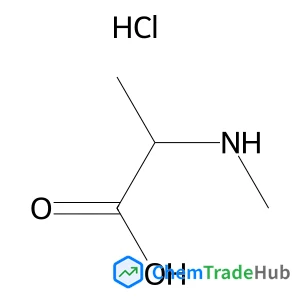
(R)-2-(Methylamino)propanoic acid hydrochloride
CAS Number:
1155878-14-0
Molecular Formula:
C4H10ClNO2
![Benzyl spiro[indole-3,4'-piperidine]-1(2H)-carboxylate hydrochloride (1:1) structure](https://static.chemtradehub.com/structs/159/159635-46-8-8de0.webp "Benzyl spiro[indole-3,4'-piperidine]-1(2H)-carboxylate hydrochloride (1:1) structure")
Benzyl spiro[indole-3,4'-piperidine]-1(2H)-carboxylate hydrochloride (1:1)
CAS Number:
159635-46-8
Molecular Formula:
C20H23ClN2O2
![(2E)-4-[(1R,2S,8R,19S,21R)-14-Hydroxy-11-isopropenyl-8,23,23-trimethyl-5-(3-methyl-2-buten-1-yl)-16,20-dioxo-3,7,22-trioxaheptacyclo[17.4.1.1~8,12~.0~2,17~.0~2,21~.0~4,15~.0~6,13~]pentacosa-4(15),5,13
,17-tetraen-21-yl]-2-methyl-2-butenoic acid structure](https://static.chemtradehub.com/structs/173/173867-04-4-d2d3.webp "(2E)-4-[(1R,2S,8R,19S,21R)-14-Hydroxy-11-isopropenyl-8,23,23-trimethyl-5-(3-methyl-2-buten-1-yl)-16,20-dioxo-3,7,22-trioxaheptacyclo[17.4.1.1~8,12~.0~2,17~.0~2,21~.0~4,15~.0~6,13~]pentacosa-4(15),5,13
,17-tetraen-21-yl]-2-methyl-2-butenoic acid structure")
Recommended Suppliers


Disclaimer
This page provides academic journal information for reference and research purposes only. We are not affiliated with any journal publishers and do not handle publication submissions. For publication-related inquiries, please contact the respective journal publishers directly.
If you notice any inaccuracies in the information displayed, please contact us at support@chemtradehub.com. We will promptly review and address your concerns.