












Why does B2O3 suppress nepheline (NaAlSiO4) crystallization in sodium aluminosilicate glasses?
Literature Information
Publication Date
2020-03-31
DOI
10.1039/D0CP00172D
Impact Factor
3.676
Authors
Ambar Deshkar, Ozgur Gulbiten, Randall E. Youngman, John C. Mauro, Ashutosh Goel
View Original
Abstract
The uncontrolled growth of nepheline (NaAlSiO4) crystals during the manufacturing of sodium aluminosilicate glasses via the fusion draw or float techniques and during the vitrification of some of the sodium- and alumina-rich nuclear waste glasses is a well-known problem. The addition of B2O3 to suppress the crystallization in these glasses is well documented in the literature. Another advantage of B2O3 is that it lowers the viscosity of the glass melt and, if incorporated in its trigonal coordination state, will improve the intrinsic damage resistance of the final glass product. Hence, B2O3 has been an integral component of glass compositions for advanced industrial applications and for nuclear waste vitrification. However, one major disadvantage of adding B2O3 to alkali aluminosilicate based glasses is its adverse impact on their chemical durability due to the rapid hydrolysis of B[3,4]–O–B[3,4] bonds in comparison to (Si, Al)–O–(Si, Al) bonds. Therefore, designing a boron-containing alkali aluminosilicate based functional glass with minimal tendency towards crystallization and high chemical durability requires an in-depth fundamental understanding of the mechanism through which B2O3 tends to suppress crystallization in these glasses. There is no current consensus on the fundamental mechanism through which B2O3 tends to suppress nepheline crystallization in these glasses. Based on the mechanisms described and the questions raised in the preceding literature, the present study focuses on addressing the ongoing debate through a detailed structural and thermo-kinetic investigation of glasses designed in the Na2O–Al2O3–B2O3–SiO2 based quaternary system over a broad composition space. Using a combination of Raman and (1D and 2D) nuclear magnetic resonance spectroscopies along with equilibrium and non-equilibrium viscosity, and liquidus temperature measurements, it has been shown that the substitution of Si–O–Al by Si–O–B linkages in the glass structure results in a significant increase in the glass forming ability as well as an increase in the liquidus viscosity (slower diffusivity), thereby suppressing the nepheline crystallization.
Related Literature
Spark plasma sintered catalytic nickel–copper alloy and carbon nanotube electrodes for the hydrogen evolution reaction
Cédric Espinet, Simon Amigues, David Mesguich, Christophe Laurent
2023-10-23
Communication
DOI: 10.1039/D3CC04472F
Heteroatom-boron-heteroatom-doped π-conjugated systems: structures, synthesis and photofunctional properties
Tinghao Ma, Jiaqi Dong
2023-10-24
Feature Article
DOI: 10.1039/D3CC04302A
Poly(ferrocenylene iminoborane): an inorganic–organic hybrid polymer comprising a backbone of moderately interacting ferrocenes‡
Vivien Zeh, Johannes S. Schneider, Jonas Bachmann, Ivo Krummenacher, Holger Braunschweig, Holger Helten
2023-10-26
Communication
DOI: 10.1039/D3CC03523A
Substituted benzophenone imines for COF synthesis via formal transimination‡
Josefine Sprachmann, Niklas Grabicki, Anna Möckel, Jeremy Maltitz, José Refugio Monroy, Glen J. Smales, Oliver Dumele
2023-10-18
Communication
DOI: 10.1039/D3CC03735E
In silico MS/MS prediction for peptidoglycan profiling uncovers novel anti-inflammatory peptidoglycan fragments of the gut microbiota
Yaquan Liang, Evan Wei Long Ng, Ekaterina Sviriaeva, Chenyu Li, Yilin Zhao, Xiao-Lin Zhang, Xue-Wei Liu, Sunny H. Wong, Yuan Qiao
2024-01-05
Edge Article
DOI: 10.1039/D3SC05819K
Organoboron/iodide-catalyzed photoredox N-functionalization of NH-sulfoximines/sulfonimidamides
Jiawei Huang, Xiaoman Li, Yu Wei, Liang Xu
2023-10-24
Communication
DOI: 10.1039/D3CC04351G
Koopmans' theorem for acidic protons
Tim Schrader, Jamoliddin Khanifaev, Eva Perlt
2023-10-31
Communication
DOI: 10.1039/D3CC04304E
No-wash fluorogenic labeling of proteins for reversible photoswitching in live cells
Kenji Torii, Yuichiro Hori
2023-12-18
Edge Article
DOI: 10.1039/D3SC04953A
Facile synthesis of supported CuNi nano-clusters as an electrochemical CO2 reduction catalyst with broad potential range
Jiale Wang, Fan Li, Runhua Li, Qian Xiang, Wencong Zhang, Chengyi Song, Peng Tao, Wen Shang
2023-10-16
Communication
DOI: 10.1039/D3CC03758D
Trapping of soluble, KCl-stabilized Cu(i) hydrides with CO2 gives crystalline formates
Alexander Grasruck, Giorgio Parla, Lisha Lou, Jens Langer, Christian Neiß, Alberto Herrera, Sybille Frieß, Andreas Görling, Günter Schmid, Romano Dorta
2023-11-07
Communication
DOI: 10.1039/D3CC03033D
You might also like
Compound Q&A
What are the main uses of (5-Sulfamoyl-3-pyridinyl)boronic acid (CAS: 951233-61-7)?
(5-Sulfamoyl-3-pyridinyl)boronic acid is primarily used in chemical synthesis, p...
951233-61-7(5-Sulfamoyl-3-pyrid...
Compound Q&A
How is Benzyl 2-methyl-2-(methylsulfonyl)-4-pentenoate (CAS: 1942858-50-5) typically synthesized?
Benzyl 2-methyl-2-(methylsulfonyl)-4-pentenoate is typically synthesized via est...
1942858-50-5Benzyl 2-methyl-2-(m...
Compound Q&A
What precautions should be taken when handling 8-Fluoroquinolin-6-ol (CAS: 209353-22-0)?
When handling 8-Fluoroquinolin-6-ol (CAS: 209353-22-0), it is important to use p...
209353-22-08-Fluoroquinolin-6-o...
Compound Q&A
What are the physical and chemical properties of 1,3-Dibromo-5-(2-methyl-2-propanyl)benzene (CAS: 129316-09-2)?
1,3-Dibromo-5-(2-methyl-2-propanyl)benzene (CAS: 129316-09-2) is a crystalline c...
129316-09-21,3-Dibromo-5-(2-met...
Compound Q&A
What industries use Ethyl 7-chloro-4-oxo-1-(1,3-thiazol-2-yl)-1,4-dihydro-1,8-naphthyridine-3-carboxylate (CAS: 174726-87-5)?
Ethyl 7-chloro-4-oxo-1-(1,3-thiazol-2-yl)-1,4-dihydro-1,8-naphthyridine-3-carbox...
174726-87-5Ethyl 7-chloro-4-oxo...
Compound Q&A
What precautions should be taken when handling Delta-7-Avenasterol (CAS: 23290-26-8)?
When handling Delta-7-Avenasterol (CAS: 23290-26-8), it is important to wear app...
23290-26-8Delta-7-Avenasterol
Compound Q&A
What precautions should be taken when handling N-({(5R)-3-[3-Fluoro-4-(4-morpholinyl)phenyl]-2-oxo-1,3-oxazolidin-5-yl}methyl)acetamide (CAS: 872992-20-6)?
Proper handling involves the use of personal protective equipment such as gloves...
872992-20-6N-({(5R)-3-[3-Fluoro...
Compound Q&A
What precautions should be taken when handling 2-Methyl-2-proanyl 4-[(2-aminophenyl)amino]-1-piperidinecarboxylate (CAS: 79099-00-6)?
When handling 2-Methyl-2-proanyl 4-[(2-aminophenyl)amino]-1-piperidinecarboxylat...
79099-00-62-Methyl-2-propanyl ...
Compound Q&A
What is N-Methyl-4-chlorobenzylamine hydrochloride (CAS: 65542-24-7)?
N-Methyl-4-chlorobenzylamine hydrochloride (CAS: 65542-24-7) is a organic compou...
65542-24-7N-Methyl-4-chloroben...
Compound Q&A
Is [2-(Dodecyloxy)ethoxy]acetic acid (CAS: 27306-90-7) safe?
[2-(Dodecyloxy)ethoxy]acetic acid (CAS: 27306-90-7) is generally considered safe...
27306-90-7[2-(Dodecyloxy)ethox...
Source Journal
Physical Chemistry Chemical Physics

CiteScore:
5.5
Self-citation Rate:
10.3%
Articles per Year:
3036
Physical Chemistry Chemical Physics (PCCP) is an international journal co-owned by 19 physical chemistry and physics societies from around the world. This journal publishes original, cutting-edge research in physical chemistry, chemical physics and biophysical chemistry. To be suitable for publication in PCCP, articles must include significant innovation and/or insight into physical chemistry; this is the most important criterion that reviewers and Editors will judge against when evaluating submissions. The journal has a broad scope and welcomes contributions spanning experiment, theory, computation and data science. Topical coverage includes spectroscopy, dynamics, kinetics, statistical mechanics, thermodynamics, electrochemistry, catalysis, surface science, quantum mechanics, quantum computing and machine learning. Interdisciplinary research areas such as polymers and soft matter, materials, nanoscience, energy, surfaces/interfaces, and biophysical chemistry are welcomed if they demonstrate significant innovation and/or insight into physical chemistry. Joined experimental/theoretical studies are particularly appreciated when complementary and based on up-to-date approaches.
Recommended Compounds
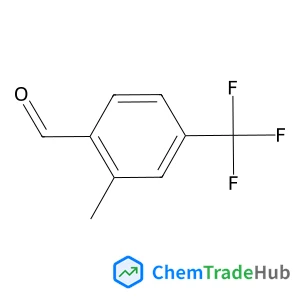
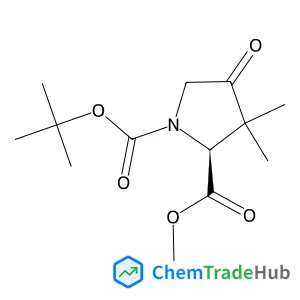
2-Methyl 1-(2-methyl-2-propanyl) (2S)-3,3-dimethyl-4-oxo-1,2-pyrrolidinedicarboxylate
CAS Number:
478698-30-5
Molecular Formula:
C13H21NO5
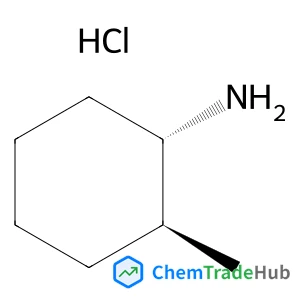
(1R,2R)-2-Methylcyclohexanamine hydrochloride (1:1)
CAS Number:
39558-31-1
Molecular Formula:
C7H16ClN
Recommended Suppliers




Disclaimer
This page provides academic journal information for reference and research purposes only. We are not affiliated with any journal publishers and do not handle publication submissions. For publication-related inquiries, please contact the respective journal publishers directly.
If you notice any inaccuracies in the information displayed, please contact us at support@chemtradehub.com. We will promptly review and address your concerns.