











Back cover
Literature Information
Publication Date
DOI
10.1039/CS99120BX015
Impact Factor
54.564
Authors
View Original
Abstract
The first page of this article is displayed as the abstract.
Related Literature
Side chain-specific 11/9-helix propensity of α/β-peptides with alternating residue types
Jaeyeon Lee, Jihyun Shim, Philjae Kang, Moon-Gun Choi, Soo Hyuk Choi
2017-12-07
Paper
DOI: 10.1039/C7OB02816D
Governing the DNA-binding mode of styryl dyes by the length of their alkyl substituents – from intercalation to major groove binding
Nikolai I. Sosnin, Olga A. Fedorova, Heiko Ihmels
2017-12-14
Paper
DOI: 10.1039/C7OB02736B
Can strand displacement take place in DNA triplexes?
Qian Li, Cheng Tian, Xiang Li, Chengde Mao
2017-12-21
Communication
DOI: 10.1039/C7OB02871G
A mild method for synthesizing carboxylic acids by oxidation of aldoximes using hypervalent iodine reagents
Akira Nakamura, Hodaka Kanou, Junki Tanaka, Akira Imamiya, Tomohiro Maegawa
2018-01-02
Communication
DOI: 10.1039/C7OB02858J
PLP-independent racemization: mechanistic and mutational studies of O-ureidoserine racemase (DcsC)
Yeong-Chan Ahn, Conrad Fischer, Marco J. van Belkum, John C. Vederas
2018-01-24
Paper
DOI: 10.1039/C7OB03013D
Synthesis of azulene-substituted benzofurans and isocoumarins via intramolecular cyclization of 1-ethynylazulenes, and their structural and optical properties
Taku Shoji, Miwa Tanaka, Sho Takagaki, Kota Miura, Akira Ohta, Ryuta Sekiguchi, Shunji Ito, Shigeki Mori, Tetsuo Okujima
2017-12-08
Paper
DOI: 10.1039/C7OB02861J
Unexpected cleavage of upper rim-bridged calix[4]arenes leading to linear oligophenolic derivatives
P. Slavík, H. Dvořáková, M. Krupička, P. Lhoták
2018-01-04
Paper
DOI: 10.1039/C7OB03101G
Rh(iii)-Catalyzed ortho-C–H alkynylation of N-phenoxyacetamides with hypervalent iodine-alkyne reagents at room temperature
Sisheng Hu, Liang Lu, Tongyang Zhu, Qian Wu, Ying Chen, Jie Jack Li
2017-11-28
Communication
DOI: 10.1039/C7OB02438J
Design of a substrate-tailored peptiligase variant for the efficient synthesis of thymosin-α1
Ana Toplak, Henriëtte J. Rozeboom, Hein J. Wijma, Peter J. L. M. Quaedflieg, Jan H. van Maarseveen, Dick B. Janssen, Timo Nuijens
2018-01-04
Paper
DOI: 10.1039/C7OB02812A
You might also like
Compound Q&A
What are the main uses of (3.beta.)-3-Hydroxy-N,N-dimethyl-chol-5-en-24-amide (CAS: 79066-03-8)?
(3.beta.)-3-Hydroxy-N,N-dimethyl-chol-5-en-24-amide (CAS: 79066-03-8) is primari...
79066-03-8(3.beta.)-3-Hydroxy-...
Compound Q&A
What regulatory guidelines apply to 5-(aminomethyl)-2-methoxyphenol (CAS: 89702-89-6)?
5-(Aminomethyl)-2-methoxyphenol (CAS: 89702-89-6) is classified under GHS as a s...
89702-89-65-(aminomethyl)-2-me...
Compound Q&A
What is Thieno[2,3-c]pyridin-7(6H)-one (CAS: 28981-13-7)?
Thieno[2,3-c]pyridin-7(6H)-one (CAS: 28981-13-7) is a heterocyclic organic compo...
28981-13-7Thieno[2,3-c]pyridin...
Compound Q&A
Is 1-[(6-Methoxy-3-pyridinyl)methyl]-4-piperidinamine dihydrochloride (CAS: 1185311-28-7) safe?
1-[(6-Methoxy-3-pyridinyl)methyl]-4-piperidinamine dihydrochloride is generally ...
1185311-28-71-[(6-Methoxy-3-pyri...
Compound Q&A
What regulatory guidelines apply to [(2E)-3-Phenyl-2-propen-1-yl]phosphonic acid (CAS: 146404-58-2)?
[(2E)-3-Phenyl-2-propen-1-yl]phosphonic acid (CAS: 146404-58-2) is regulated und...
146404-58-2[(2E)-3-Phenyl-2-pro...
Compound Q&A
What regulatory guidelines apply to 6-Bromo-7-methoxyquinoline (CAS: 1620515-86-7)?
6-Bromo-7-methoxyquinoline (CAS: 1620515-86-7) falls under the scope of the Glob...
1620515-86-76-Bromo-7-methoxyqui...
Compound Q&A
What industries use (2R)-1-(1-Benzofuran-2-yl)-N-propyl-2-pentanamine (CAS: 260550-89-8)?
This compound is primarily used in the pharmaceutical industry for the developme...
260550-89-8(2R)-1-(1-Benzofuran...
Compound Q&A
What are the main uses of 1-Ethyl-7-[2-methyl-6-(4H-1,2,4-triazol-3-yl)-3-pyridinyl]-3,5-dihydropyrazino[2,3-b]pyrazin-2(1H)-one (CAS: 1228013-15-7)?
1-Ethyl-7-[2-methyl-6-(4H-1,2,4-triazol-3-yl)-3-pyridinyl]-3,5-dihydropyrazino[2...
1228013-15-71-Ethyl-7-[2-methyl-...
Compound Q&A
Are there alternatives to {5-(Acryloylamino)-2-[(dimethylamino)methyl]phenyl}boronic acid (CAS: 1217500-78-1) in synthesis?
Alternative reagents such as 2-[(dimethylamino)methyl]phenylboronic acid or rela...
1217500-78-1{5-(Acryloylamino)-2...
Compound Q&A
What is 3-(Piperidin-4-yloxy)pyridine (CAS: 310881-48-2)?
3-(Piperidin-4-yloxy)pyridine (CAS: 310881-48-2) is an organic compound with the...
310881-48-23-(Piperidin-4-yloxy...
Source Journal
Chemical Society Reviews

CiteScore:
80.8
Self-citation Rate:
1.2%
Articles per Year:
250
Chem Soc Rev publishes review articles covering important topics at the forefront of the chemical sciences. Reviews should be of the very highest quality and international impact. We particularly encourage international and multidisciplinary collaborations among our authors. Our scope covers the breadth of the chemical sciences, including interdisciplinary topics where the article has a basis in chemistry. Topics include: Analytical chemistry Biomaterials chemistry Bioorganic/medicinal chemistry Catalysis Chemical Biology Coordination Chemistry Crystal Engineering Energy Sustainable chemistry Green chemistry Inorganic chemistry Inorganic materials Main group chemistry Nanoscience Organic chemistry Organic materials Organometallics Physical chemistry Supramolecular chemistry Synthetic methodology Theoretical and computational chemistry
Recommended Compounds
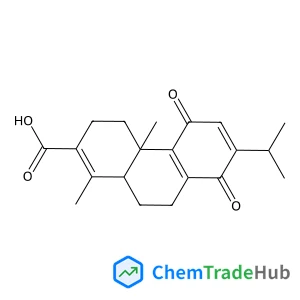
(4aS,10aS)-7-Isopropyl-1,4a-dimethyl-5,8-dioxo-3,4,4a,5,8,9,10,10a-octahydro-2-phenanthrenecarboxylic acid
CAS Number:
142950-86-5
Molecular Formula:
C20H24O4
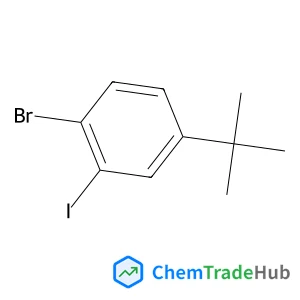
![4,4-Difluoro-2-methyl-1-{[(2-methyl-2-propanyl)oxy]carbonyl}-L-proline structure](https://static.chemtradehub.com/structs/119/1194032-23-9-f426.webp "4,4-Difluoro-2-methyl-1-{[(2-methyl-2-propanyl)oxy]carbonyl}-L-proline structure")
4,4-Difluoro-2-methyl-1-{[(2-methyl-2-propanyl)oxy]carbonyl}-L-proline
CAS Number:
1194032-23-9
Molecular Formula:
C11H17F2NO4
Recommended Suppliers






Disclaimer
This page provides academic journal information for reference and research purposes only. We are not affiliated with any journal publishers and do not handle publication submissions. For publication-related inquiries, please contact the respective journal publishers directly.
If you notice any inaccuracies in the information displayed, please contact us at support@chemtradehub.com. We will promptly review and address your concerns.