












Photochemistry of polyoxometallates of molybdenum and tungsten and/or vanadium
Literature Information
Publication Date
DOI
10.1039/CS9891800001
Impact Factor
54.564
Authors
View Original
Abstract
The first page of this article is displayed as the abstract.
Related Literature
Free energy evaluation of the p53-Mdm2 complex from unbinding work measured by dynamic force spectroscopy
Anna Rita Bizzarri, Salvatore Cannistraro
2010-12-10
Paper
DOI: 10.1039/C0CP01474E
Electronic structure calculations of low-lying electronic states of O3
Bingbing Suo, Daiqian Xie, Yibo Lei, Yubin Wang
2010-12-10
Paper
DOI: 10.1039/C0CP01300E
Mapping the frontier electronic structures of triphenylamine based organic dyes at TiO2 interfaces
Maria Hahlin, Michael Odelius, Martin Magnuson, Erik M. J. Johansson, Stefan Plogmaker, Daniel P. Hagberg, Licheng Sun, Hans Siegbahn, Håkan Rensmo
2010-12-20
Paper
DOI: 10.1039/C0CP01491E
Size and morphology of assemblies formed by DNA and lysozyme in dilute aqueous mixtures
Anna M. Carnerup, John Janiak, Karin Schillén, Maria da Graça Miguel
2010-11-03
Paper
DOI: 10.1039/C0CP01220C
Charging of ionic liquid surfaces under X-ray irradiation: the measurement of absolute binding energies by XPS
Ignacio J. Villar-Garcia, Emily F. Smith, Alasdair W. Taylor, Fulian Qiu, Kevin R. J. Lovelock, Robert G. Jones, Peter Licence
2010-12-13
Paper
DOI: 10.1039/C0CP01587C
Elastic deformations in hexagonal phases studied by small-angle X-ray diffraction and simulations
Šárka Perutková, Matej Daniel, Michael Rappolt, Georg Pabst, Gregor Dolinar, Veronika Kralj-Iglič, Aleš Iglič
2010-11-09
Paper
DOI: 10.1039/C0CP01187H
Fullerene derivative acceptors for high performance polymer solar cells
Youjun He, Yongfang Li
2010-12-22
Perspective
DOI: 10.1039/C0CP01178A
Preparation of a colloidal array of NaTaO3nanoparticlesvia a confined space synthesis route and its photocatalytic application
Toshiyuki Yokoi, Junya Sakuma, Kazuhiko Maeda, Kazunari Domen, Takashi Tatsumi, Junko N. Kondo
2011-01-11
Paper
DOI: 10.1039/C0CP02141E
Accounting for electronic polarization in non-polarizable force fields
Igor Leontyev, Alexei Stuchebrukhov
2011-01-07
Perspective
DOI: 10.1039/C0CP01971B
Microenvironment-switchable singlet oxygen generation by axially-coordinated hydrophilic ruthenium phthalocyanine dendrimers
Uwe Hahn, Francesca Setaro, Xavier Ragàs, Angus Gray-Weale, Santi Nonell, Tomas Torres
2010-12-21
Paper
DOI: 10.1039/C0CP01015D
You might also like
Compound Q&A
What are the main uses of 1H-Indazole-6-carbonitrile (CAS: 141290-59-7)?
1H-Indazole-6-carbonitrile finds applications in pharmaceuticals, where it serve...
141290-59-71H-Indazole-6-carbon...
Compound Q&A
How should waste containing Dioctyl (2E)-2-butenedioate (CAS: 2997-85-5) be handled?
Waste containing Dioctyl (2E)-2-butenedioate (CAS: 2997-85-5) should be collecte...
2997-85-5Dioctyl (2E)-2-buten...
Compound Q&A
What industries use Sodium [(1,2-benzoxazol-3-ylmethyl)sulfonyl]azanide (CAS: 68291-98-5)?
Sodium [(1,2-benzoxazol-3-ylmethyl)sulfonyl]azanide is primarily used in pharmac...
68291-98-5Sodium [(1,2-benzoxa...
Compound Q&A
Are there alternatives to Dimethyl 4-(4,4,5,5-tetramethyl-1,3,2-dioxaborolan-2-yl)-2,6-pyridinedicarboxylate (CAS: 741709-66-0) in synthesis?
Dimethyl 4-(4,4,5,5-tetramethyl-1,3,2-dioxaborolan-2-yl)-2,6-pyridinedicarboxyla...
741709-66-0Dimethyl 4-(4,4,5,5-...
Compound Q&A
How should waste containing 2-Fluoro-6-hydrazinopyridine (CAS: 80714-39-2) be handled?
Waste containing 2-Fluoro-6-hydrazinopyridine (CAS: 80714-39-2) should be manage...
80714-39-22-Fluoro-6-hydrazino...
Compound Q&A
What is 6-Formyl-2-pyridinecarboxylic acid (CAS: 499214-11-8)?
6-Formyl-2-pyridinecarboxylic acid is an organic compound with the molecular for...
499214-11-86-Formyl-2-pyridinec...
Compound Q&A
What is the market or research trend for 3-(3,4-dimethoxyphenyl)-2,5-dimethyl-N-(2-morpholin-4-ylethyl)pyrazolo[1,5-a]pyrimidin-7-amine (CAS: 900874-91-1)?
Research trends for this compound indicate a focus on its potential applications...
900874-91-13-(3,4-dimethoxyphen...
Compound Q&A
How is 9H-Tribenzo[b,d,f]azepine (CAS: 29875-73-8) typically synthesized?
9H-Tribenzo[b,d,f]azepine is typically synthesized via a multi-step process invo...
29875-73-89H-Tribenzo[b,d,f]az...
Compound Q&A
How is 1-Cyclopropyl-7-ethoxy-6-fluoro-8-methoxy-4-oxo-1,4-dihydro-3-quinolinecarboxylic acid (CAS: 1797982-51-4) typically synthesized?
1-Cyclopropyl-7-ethoxy-6-fluoro-8-methoxy-4-oxo-1,4-dihydro-3-quinolinecarboxyli...
1797982-51-41-Cyclopropyl-7-etho...
Compound Q&A
How should waste containing Methyl 3-oxo-1,2,3,4-tetrahydro-6-quinoxalinecarboxylate (CAS: 671820-52-3) be handled?
Waste containing Methyl 3-oxo-1,2,3,4-tetrahydro-6-quinoxalinecarboxylate (CAS: ...
671820-52-3Methyl 3-oxo-1,2,3,4...
Source Journal
Chemical Society Reviews

CiteScore:
80.8
Self-citation Rate:
1.2%
Articles per Year:
250
Chem Soc Rev publishes review articles covering important topics at the forefront of the chemical sciences. Reviews should be of the very highest quality and international impact. We particularly encourage international and multidisciplinary collaborations among our authors. Our scope covers the breadth of the chemical sciences, including interdisciplinary topics where the article has a basis in chemistry. Topics include: Analytical chemistry Biomaterials chemistry Bioorganic/medicinal chemistry Catalysis Chemical Biology Coordination Chemistry Crystal Engineering Energy Sustainable chemistry Green chemistry Inorganic chemistry Inorganic materials Main group chemistry Nanoscience Organic chemistry Organic materials Organometallics Physical chemistry Supramolecular chemistry Synthetic methodology Theoretical and computational chemistry
Recommended Compounds

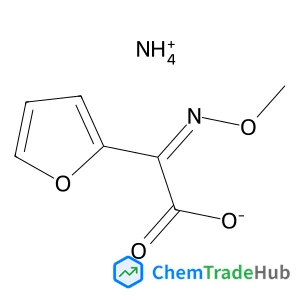
Ammonium (Z)-2-(furan-2-yl)-2-(methoxyimino)acetate
CAS Number:
97148-39-5
Molecular Formula:
C7H10N2O4
Recommended Suppliers






Disclaimer
This page provides academic journal information for reference and research purposes only. We are not affiliated with any journal publishers and do not handle publication submissions. For publication-related inquiries, please contact the respective journal publishers directly.
If you notice any inaccuracies in the information displayed, please contact us at support@chemtradehub.com. We will promptly review and address your concerns.