


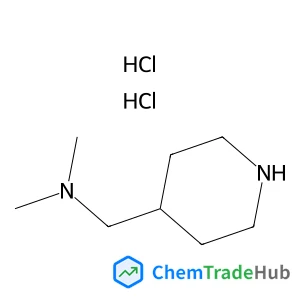
N,N-dimethyl(piperidin-4-yl)methanamine hydrochloride
CAS Number:
172281-72-0
Molecular Formula:
C8H20Cl2N2
Youjun He, Yongfang Li
Polymer solar cells (PSCs) are composed of a blend film of a conjugated polymer donor and a soluble fullerene derivative acceptor sandwiched between a PEDOT : PSS coated ITO positive electrode and a low workfunction metal negative electrode. The conjugated polymer donor and the fullerene derivative acceptor are the key photovoltaic materials for high performance PSCs. For the acceptors, although [6,6]-phenyl-C61-butyric acid methyl ester (PC60BM) and its corresponding C70 derivative PC70BM are dominantly used as the acceptors in PSC at present, several series of new fullerene derivatives with higher-lying LUMO energy level and better solubility were reported in recent years for further improving the power conversion efficiency of the PSCs. In this perspective paper, we reviewed the recent research progress on the new fullerene derivative acceptors, including various PC60BM-like C60 derivatives, PC60BM bisadduct, PC70BM bisadduct, indene-C60 bisadduct and indene-C70 bisadduct, trimetallic nitride endohedral fullerenes and other C60 derivatives with multi side chains. The synthesis and physicochemical properties of PC60BM and PC70BM were also introduced considering the importance of the two fullerene acceptors.

Chemical Communications

Russian Journal of Organic Chemistry

Russian Journal of General Chemistry

Journal of Saudi Chemical Society

Russian Chemical Bulletin

Russian Journal of Bioorganic Chemistry

Nature Medicine

Chemistry Education Research and Practice

Drug Discovery Today

Organic Process Research & Development
Zengjie Li, Xiang Liu, Jiawei Jiang, Wenbo Mi, Haili Bai
DOI: 10.1039/D0CP06362B
Matthew T. O. Okenyi, Laura E. Ratcliff
DOI: 10.1039/D0CP04236F
Raúl Quintero-Monsebaiz, Luis Ignacio Perea-Ramírez, Alberto Vela
DOI: 10.1039/D0CP05430E
Ming Hu
DOI: 10.1039/D0CP03372C
J. Puibasset, P. Judeinstein, J.-M. Zanotti
DOI: 10.1039/D0CP05387B
Elena L. Gromnitskaya, Igor V. Danilov, Vadim V. Brazhkin
DOI: 10.1039/D0CP04550K
Khalid Ahmed, Shaukatali Najikhan Inamdar, Nashiour Rohman, Adam A. Skelton
DOI: 10.1039/D0CP04498A
DOI: 10.1039/D0CP05947A
Kai Li, Dong-Hui Xu, Xin Wang, Xiang-Yang Liu
DOI: 10.1039/D0CP05362G
Sigismund T. A. G. Melissen, Tangui Le Bahers, Stephan N. Steinmann
DOI: 10.1039/D0CP06063A
Ethyl 4-chlorothieno[2,3-b]pyridine-5-carboxylate (CAS: 59713-58-5) can be synth...
5-Methyl-1H-indole-3-carbaldehyde (CAS: 52562-50-2) is subject to various regula...
(1,3-Dimethyl-2,4-dioxo-1,2,3,4-tetrahydro-5-pyrimidinyl)boronic acid is a white...
Waste containing Sulfocostunolide A (CAS: 1016983-51-9) should be handled with c...
When handling Murraxocin (CAS: 88478-44-8), ensure proper personal protective eq...
Formvar (CAS: 63148-64-1) is an alkyd resin characterized by a high molecular we...
(S)-4-benzyl-2-((benzyloxy)methyl)morpholine is generally safe when handled with...
Methyl 1-(5-bromo-2-pyrimidinyl)cyclopropanecarboxylate (CAS: 1447607-69-3) is p...
2-Methyl-1-phenyl-1-propanamine hydrochloride (CAS: 24290-47-9) is generally con...
3-(4-Bromophenyl)-2-methylpropanoic acid is synthesized through a multi-step pro...

Physical Chemistry Chemical Physics (PCCP) is an international journal co-owned by 19 physical chemistry and physics societies from around the world. This journal publishes original, cutting-edge research in physical chemistry, chemical physics and biophysical chemistry. To be suitable for publication in PCCP, articles must include significant innovation and/or insight into physical chemistry; this is the most important criterion that reviewers and Editors will judge against when evaluating submissions. The journal has a broad scope and welcomes contributions spanning experiment, theory, computation and data science. Topical coverage includes spectroscopy, dynamics, kinetics, statistical mechanics, thermodynamics, electrochemistry, catalysis, surface science, quantum mechanics, quantum computing and machine learning. Interdisciplinary research areas such as polymers and soft matter, materials, nanoscience, energy, surfaces/interfaces, and biophysical chemistry are welcomed if they demonstrate significant innovation and/or insight into physical chemistry. Joined experimental/theoretical studies are particularly appreciated when complementary and based on up-to-date approaches.
![9,9'-Spirobi[fluoren]-2-amine structure](https://static.chemtradehub.com/structs/118/118951-68-1-0d14.webp "9,9'-Spirobi[fluoren]-2-amine structure")
![2-Methyl-2-propanyl 1,6-diazaspiro[3.4]octane-6-carboxylate structure](https://static.chemtradehub.com/structs/115/1158749-79-1-81ee.webp "2-Methyl-2-propanyl 1,6-diazaspiro[3.4]octane-6-carboxylate structure")
![4-{1-[4-(4,4,5,5-Tetramethyl-1,3,2-dioxaborolan-2-yl)phenyl]cyclopropyl}morpholine structure](https://static.chemtradehub.com/structs/120/1206594-08-2-7afb.webp "4-{1-[4-(4,4,5,5-Tetramethyl-1,3,2-dioxaborolan-2-yl)phenyl]cyclopropyl}morpholine structure")
![Sodium 6-amino-3-[(E)-{4-[(E)-(4-aminophenyl)diazenyl]-2-methoxy-5-methylphenyl}diazenyl]-4-hydroxy-2-naphthalenesulfonate structure](https://static.chemtradehub.com/structs/294/2945-96-2-092f.webp "Sodium 6-amino-3-[(E)-{4-[(E)-(4-aminophenyl)diazenyl]-2-methoxy-5-methylphenyl}diazenyl]-4-hydroxy-2-naphthalenesulfonate structure")





