












Solutions of metals: solvated electrons
Literature Information
Publication Date
DOI
10.1039/CS9760500337
Impact Factor
54.564
Authors
View Original
Abstract
The first page of this article is displayed as the abstract.
Related Literature
Pseudo Jahn–Teller origin of cis–trans and other conformational changes. The role of double bonds
Pablo Garcia-Fernandez, Yang Liu, Isaac B. Bersuker, James E. Boggs
2011-01-17
Paper
DOI: 10.1039/C0CP00900H
Synthesis and characterization of nanogels of poly(N-isopropylacrylamide) by a combination of light and small-angle X-ray scattering
Thomas Alsted, Walter Richtering, Jan Skov Pedersen
2010-10-07
Paper
DOI: 10.1039/C0CP01359E
Fullerene derivative acceptors for high performance polymer solar cells
Youjun He, Yongfang Li
2010-12-22
Perspective
DOI: 10.1039/C0CP01178A
Electronic structure calculations of low-lying electronic states of O3
Bingbing Suo, Daiqian Xie, Yibo Lei, Yubin Wang
2010-12-10
Paper
DOI: 10.1039/C0CP01300E
Aggregation behavior of gemini surfactants and their interaction with macromolecules in aqueous solution
Yuchun Han, Yilin Wang
2011-01-12
Perspective
DOI: 10.1039/C0CP01196G
The ab initio calculation of molecular electric, magnetic and geometric properties
Radovan Bast, Ulf Ekström, Bin Gao, Trygve Helgaker, Kenneth Ruud, Andreas J. Thorvaldsen
2010-12-22
Perspective
DOI: 10.1039/C0CP01647K
Beryllium and boron decoration forms planar tetracoordinate carbon strips at the edge of graphene nanoribbons
Bo Xiao, Yi-hong Ding, Chia-chung Sun
2010-12-09
Paper
DOI: 10.1039/C0CP01498B
Design of optimally switchable molecules by genetic algorithms
Niss Ole Carstensen, Johannes M. Dieterich, Bernd Hartke
2010-12-15
Paper
DOI: 10.1039/C0CP01065K
Characterization and reactivity of oxygen-centred radicals over transition metal oxideclusters
Sheng-Gui He, Xun-Lei Ding
2011-01-05
Perspective
DOI: 10.1039/C0CP01171A
You might also like
Compound Q&A
What are the main uses of 1H-Indazole-6-carbonitrile (CAS: 141290-59-7)?
1H-Indazole-6-carbonitrile finds applications in pharmaceuticals, where it serve...
141290-59-71H-Indazole-6-carbon...
Compound Q&A
How should waste containing Dioctyl (2E)-2-butenedioate (CAS: 2997-85-5) be handled?
Waste containing Dioctyl (2E)-2-butenedioate (CAS: 2997-85-5) should be collecte...
2997-85-5Dioctyl (2E)-2-buten...
Compound Q&A
What industries use Sodium [(1,2-benzoxazol-3-ylmethyl)sulfonyl]azanide (CAS: 68291-98-5)?
Sodium [(1,2-benzoxazol-3-ylmethyl)sulfonyl]azanide is primarily used in pharmac...
68291-98-5Sodium [(1,2-benzoxa...
Compound Q&A
Are there alternatives to Dimethyl 4-(4,4,5,5-tetramethyl-1,3,2-dioxaborolan-2-yl)-2,6-pyridinedicarboxylate (CAS: 741709-66-0) in synthesis?
Dimethyl 4-(4,4,5,5-tetramethyl-1,3,2-dioxaborolan-2-yl)-2,6-pyridinedicarboxyla...
741709-66-0Dimethyl 4-(4,4,5,5-...
Compound Q&A
How should waste containing 2-Fluoro-6-hydrazinopyridine (CAS: 80714-39-2) be handled?
Waste containing 2-Fluoro-6-hydrazinopyridine (CAS: 80714-39-2) should be manage...
80714-39-22-Fluoro-6-hydrazino...
Compound Q&A
What is 6-Formyl-2-pyridinecarboxylic acid (CAS: 499214-11-8)?
6-Formyl-2-pyridinecarboxylic acid is an organic compound with the molecular for...
499214-11-86-Formyl-2-pyridinec...
Compound Q&A
What is the market or research trend for 3-(3,4-dimethoxyphenyl)-2,5-dimethyl-N-(2-morpholin-4-ylethyl)pyrazolo[1,5-a]pyrimidin-7-amine (CAS: 900874-91-1)?
Research trends for this compound indicate a focus on its potential applications...
900874-91-13-(3,4-dimethoxyphen...
Compound Q&A
How is 9H-Tribenzo[b,d,f]azepine (CAS: 29875-73-8) typically synthesized?
9H-Tribenzo[b,d,f]azepine is typically synthesized via a multi-step process invo...
29875-73-89H-Tribenzo[b,d,f]az...
Compound Q&A
How is 1-Cyclopropyl-7-ethoxy-6-fluoro-8-methoxy-4-oxo-1,4-dihydro-3-quinolinecarboxylic acid (CAS: 1797982-51-4) typically synthesized?
1-Cyclopropyl-7-ethoxy-6-fluoro-8-methoxy-4-oxo-1,4-dihydro-3-quinolinecarboxyli...
1797982-51-41-Cyclopropyl-7-etho...
Compound Q&A
How should waste containing Methyl 3-oxo-1,2,3,4-tetrahydro-6-quinoxalinecarboxylate (CAS: 671820-52-3) be handled?
Waste containing Methyl 3-oxo-1,2,3,4-tetrahydro-6-quinoxalinecarboxylate (CAS: ...
671820-52-3Methyl 3-oxo-1,2,3,4...
Source Journal
Chemical Society Reviews

CiteScore:
80.8
Self-citation Rate:
1.2%
Articles per Year:
250
Chem Soc Rev publishes review articles covering important topics at the forefront of the chemical sciences. Reviews should be of the very highest quality and international impact. We particularly encourage international and multidisciplinary collaborations among our authors. Our scope covers the breadth of the chemical sciences, including interdisciplinary topics where the article has a basis in chemistry. Topics include: Analytical chemistry Biomaterials chemistry Bioorganic/medicinal chemistry Catalysis Chemical Biology Coordination Chemistry Crystal Engineering Energy Sustainable chemistry Green chemistry Inorganic chemistry Inorganic materials Main group chemistry Nanoscience Organic chemistry Organic materials Organometallics Physical chemistry Supramolecular chemistry Synthetic methodology Theoretical and computational chemistry
Recommended Compounds
![Sodium 3-[(E)-(4-anilinophenyl)diazenyl]benzenesulfonate structure](https://static.chemtradehub.com/structs/587/587-98-4-035f.webp "Sodium 3-[(E)-(4-anilinophenyl)diazenyl]benzenesulfonate structure")
Sodium 3-[(E)-(4-anilinophenyl)diazenyl]benzenesulfonate
CAS Number:
587-98-4
Molecular Formula:
C18H14N3NaO3S

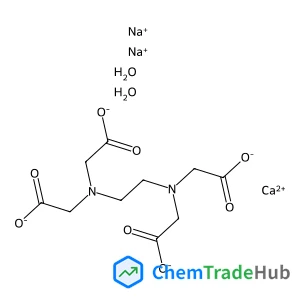
EthylenediaminetetraaceticacidcalciumDisodiumsalthydrate
CAS Number:
23411-34-9
Molecular Formula:
C10H16CaN2Na2O10
Recommended Suppliers






Disclaimer
This page provides academic journal information for reference and research purposes only. We are not affiliated with any journal publishers and do not handle publication submissions. For publication-related inquiries, please contact the respective journal publishers directly.
If you notice any inaccuracies in the information displayed, please contact us at support@chemtradehub.com. We will promptly review and address your concerns.