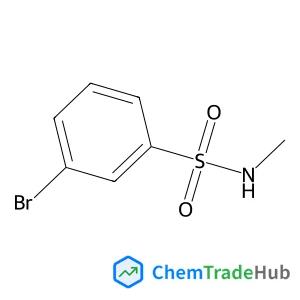
![2-Methyl-2-propanyl 1,6-diazaspiro[3.4]octane-6-carboxylate structure](https://static.chemtradehub.com/structs/115/1158749-79-1-81ee.webp "2-Methyl-2-propanyl 1,6-diazaspiro[3.4]octane-6-carboxylate structure")
2-Methyl-2-propanyl 1,6-diazaspiro[3.4]octane-6-carboxylate
CAS Number:
1158749-79-1
Molecular Formula:
C11H20N2O2
Jun-Hong Pu, Xing Zhao, Xiang-Jun Zha, Lu Bai, Kai Ke, Rui-Ying Bao, Zheng-Ying Liu, Ming-Bo Yang, Wei Yang
The development of wearable healthcare electronics has created higher demands on both the sensitivity and stretchability of flexible sensors. As it is generally difficult to obtain a trade-off between sensitivity and stretchability, the fabrication of strain sensors with both a wide operating range (≥100%) and high sensitivity (GF ≥ 100) remains a great challenge. Here, we propose for the first time a strategy based on the consolidation of two basic but seemingly paradoxical sensing mechanisms, i.e., slippage and crack propagation mechanisms, to greatly enhance the sensitivity of stretchable strain sensors. Based on stretchable polyurethane (PU) fibers, which can be easily woven into conventional fabrics to produce wearable devices, we present a multilayer sensing structured fiber sensor fabricated by layer-by-layer self-assembly of sliver nanowire (AgNW)/waterborne polyurethane (WPU) layers and MXene layers. The sensor simultaneously exhibits an ultrahigh sensitivity (GF = 1.6 × 10⁷) and a wide operating range (up to 100%), as well as great reliability and stability (1000 cycles) and fast response (344 ms) and relaxation (344 ms). Moreover, smart fabrics were fabricated by integrating fiber strain sensors into different clothes and a prototype body posture monitoring, analysis, and correction system was presented for healthcare applications. Our work not only breaks down the technological wall between high sensitivity and high stretchability of strain sensors, but also shows the great potential applications of wearable, comfortable, and non-intrusive electronics for real-time health monitoring.
Zheng Deng, Haojie Yu, Li Wang, Jiyang Liu, Kenneth J. Shea
DOI: 10.1039/C9TA03403J
Lingfei Zhao, Ying Tao, Hongpeng You
DOI: 10.1039/C7CE00097A
Joseph Baugh, Adetunji Alabi, Ahmed AlHajaj, Linda Zou, Robert A. W. Dryfe
DOI: 10.1039/C8TA09160A
Kazuhiro Yamato, Mark Kline, Bing Gong
DOI: 10.1039/C2CC36391G
Xiaoping Tao, Na Ta, Jianming Li, Xu Jin, Rengui Li, Can Li
DOI: 10.1039/C9TA03090E
Li Jin, Qingyuan Hu, Kun Yu, Yongyong Zhuang, Giuseppe Viola, Zhuo Xu, Xiaoyong Wei
DOI: 10.1039/C8TA10075F
Yuquan Feng, Min Li, Hengzhen Shi, Qunzeng Huang, Dongfang Qiu
DOI: 10.1039/C3CE26918C
Yannan Li, Li Yang, Mengqi Du, Guanjun Chang
DOI: 10.1039/C8AN01155A
Leigh Loots, Helene Wahl, Leandi van der Westhuizen, Delia A. Haynes, Tanya le Roex
DOI: 10.1039/C2CC36313E
Ethyl 4-chlorothieno[2,3-b]pyridine-5-carboxylate (CAS: 59713-58-5) can be synth...
5-Methyl-1H-indole-3-carbaldehyde (CAS: 52562-50-2) is subject to various regula...
(1,3-Dimethyl-2,4-dioxo-1,2,3,4-tetrahydro-5-pyrimidinyl)boronic acid is a white...
Waste containing Sulfocostunolide A (CAS: 1016983-51-9) should be handled with c...
When handling Murraxocin (CAS: 88478-44-8), ensure proper personal protective eq...
Formvar (CAS: 63148-64-1) is an alkyd resin characterized by a high molecular we...
(S)-4-benzyl-2-((benzyloxy)methyl)morpholine is generally safe when handled with...
Methyl 1-(5-bromo-2-pyrimidinyl)cyclopropanecarboxylate (CAS: 1447607-69-3) is p...
2-Methyl-1-phenyl-1-propanamine hydrochloride (CAS: 24290-47-9) is generally con...
3-(4-Bromophenyl)-2-methylpropanoic acid is synthesized through a multi-step pro...

Journal of Materials Chemistry A, B & C cover high quality studies across all fields of materials chemistry. The journals focus on those theoretical or experimental studies that report new understanding, applications, properties and synthesis of materials. The journals have a strong history of publishing quality reports of interest to interdisciplinary communities and providing an efficient and rigorous service through peer review and publication. The journals are led by an international team of Editors-in-Chief and Associate Editors who are all active researchers in their fields. Journal of Materials Chemistry A, B & C are separated by the intended application of the material studied. Broadly, applications in energy and sustainability are of interest to Journal of Materials Chemistry A, applications in biology and medicine are of interest to Journal of Materials Chemistry B, and applications in optical, magnetic and electronic devices are of interest to Journal of Materials Chemistry C. More than one Journal of Materials Chemistry journal may be suitable for certain fields and researchers are encouraged to submit their paper to the journal that they feel best fits for their particular article. Example topic areas within the scope of Journal of Materials Chemistry A are listed below. This list is neither exhaustive nor exclusive. Artificial photosynthesis Batteries Carbon dioxide conversion Catalysis Fuel cells Gas capture/separation/storage Green/sustainable materials Hydrogen generation Hydrogen storage Photocatalysis Photovoltaics Self-cleaning materials Self-healing materials Sensors Supercapacitors Thermoelectrics Water splitting Water treatment
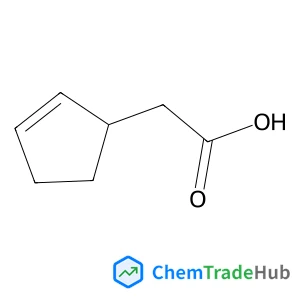
![Sodium 6-amino-3-[(E)-{4-[(E)-(4-aminophenyl)diazenyl]-2-methoxy-5-methylphenyl}diazenyl]-4-hydroxy-2-naphthalenesulfonate structure](https://static.chemtradehub.com/structs/294/2945-96-2-092f.webp "Sodium 6-amino-3-[(E)-{4-[(E)-(4-aminophenyl)diazenyl]-2-methoxy-5-methylphenyl}diazenyl]-4-hydroxy-2-naphthalenesulfonate structure")