













Assembly of Zn/Cd coordination polymers containing helixes or polycatenane structures tuned by the tri-pyridyl–bis-amide ligands with different spacer: syntheses, structures, photoluminescent and photocatalytic properties
Literature Information
Publication Date
2013-01-07
DOI
10.1039/C2CE26892B
Impact Factor
3.545
Authors
Xiuli Wang, Jingjing Huang, Lianli Liu, Guocheng Liu, Hongyan Lin, Juwen Zhang, Naili Chen, Yun Qu
View Original
Abstract
Four new d10 metal–organic coordination polymers tuned by the “V”-shaped tri-pyridyl–bis-amide ligands with different spacers, namely, [Zn(L1)(BDC)]·H2O (1), [Cd(L1)(BDC)]·H2O (2), [Zn(L2)(BDC)] (3) and [Cd(L2)(BDC)] (4) (L1 = N,N′-bis(pyridine-3-yl)pyridine-2,6-dicarboxamide, L2 = N,N′-bis(pyridine-3-yl)pyridine-3,5-dicarboxamide, H2BDC = 1,4-benzenedicarboxylic acid) have been synthesized under hydrothermal conditions. In complexes 1 and 2, the metal ions are linked by L1 to form left- and right-helical Zn/Cd–L1 chains, which are further extended into two-dimensional (2D) wave-like layers by BDC anions. In 3, two L2 ligands link two ZnII ions forming the Zn2(L2)2 loops, which are connected by BDC anions to form a (2·65) topological 2D network. In addition, the large Zn2(L2)2 loops are threaded by the BDC rods from above and below 2D layers so as to form 2D → 3D polyrotaxane and polycatenane structures. In 4, the CdII ions are linked by L2 ligands to generate 1D double chain ribbons with Cd2(L2)2 loops, which are further connected by the BDC linkers to form a 3D framework. Two identical 3D frameworks interpenetrate each other in a twofold mode, giving rise to a polyrotaxane and polycatenane array, which is relative limited. The diverse structures of complexes 1–4 demonstrate that the tri-pyridyl–bis-amide ligands and the central metals have significant effect on the final structures. The thermal stability and fluorescent properties of complexes 1–4 have been investigated. In addition, the title complexes exhibit photocatalytic activity for dye methylene blue degradation under UV light.
Related Literature
Evaluating the impact of Hartree–Fock exact exchange on the performance of global hybrid functionals for the vertical excited-state energies of fused-ring electron acceptors using TD-DFT
Muhammad Imran Rafiq, Baojing Zhou
2022-08-16
Paper
DOI: 10.1039/D2CP02228A
Computational investigation of van der Waals corrections in the adsorption properties of molecules on the Cu(111) surface
Eduardo O. Bartaquim, Raquel C. Bezerra, Albert F. B. Bittencourt, Juarez L. F. Da Silva
2022-08-07
Paper
DOI: 10.1039/D2CP02663E
In silico activation of dinitrogen with a light atom molecule
Stefan Mebs, Jens Beckmann
2022-08-15
Paper
DOI: 10.1039/D2CP02516G
Glucose-induced self-assembly and phase separation in hydrophilic triblock copolymers and the governing mechanism
Divya Patel, Amit K. Bhojani, Debes Ray, Dheeraj K. Singh, Sanyukta Bhattacharjee, Debabrata Seth, Vinod K. Aswal, Ketan Kuperkar, Pratap Bahadur
2022-08-10
Paper
DOI: 10.1039/D2CP01909D
Dissociation of ammonia borane and its subsequent nucleation on the Ru(0001) surface revealed by density functional theoretical simulations
Huanhuan Li, Ruiqi Zhao
2022-05-02
Paper
DOI: 10.1039/D1CP05957B
Semi-empirical and linear-scaling DFT methods to characterize duplex DNA and G-quadruplexes in the presence of interacting small molecules
Sawssen Elleuchi, Khaled Jarraya
2022-03-25
Paper
DOI: 10.1039/D2CP00214K
Electronic polarization effects on membrane translocation of anti-cancer drugs
Atiyeh (Najla) Hosseini, Mohammad Reza Ejtehadi
2022-04-18
Paper
DOI: 10.1039/D2CP00056C
A coarse-grained model of room-temperature ionic liquids between metal electrodes: a molecular dynamics study
Benjamin Bobin Ye, Zhen-Gang Wang
2022-04-28
Paper
DOI: 10.1039/D2CP00166G
DLSSAffinity: protein–ligand binding affinity prediction via a deep learning model
Huiwen Wang, Haoquan Liu, Shangbo Ning, Chengwei Zeng, Yunjie Zhao
2022-04-04
Paper
DOI: 10.1039/D1CP05558E
Adsorption properties of pyramidal superatomic molecules based on the structural framework of the Au20 cluster
Manli Zhang, Dawen Zhang, Yunhu Hu, Qiyong Zhu, Longjiu Cheng
2022-05-02
Paper
DOI: 10.1039/D2CP01552H
You might also like
Compound Q&A
How is Ethyl 4-chlorothieno[2,3-b]pyridine-5-carboxylate (CAS: 59713-58-5) typically synthesized?
Ethyl 4-chlorothieno[2,3-b]pyridine-5-carboxylate (CAS: 59713-58-5) can be synth...
59713-58-5Ethyl 4-chlorothieno...
Compound Q&A
What regulatory guidelines apply to 5-Methyl-1H-indole-3-carbaldehyde (CAS: 52562-50-2)?
5-Methyl-1H-indole-3-carbaldehyde (CAS: 52562-50-2) is subject to various regula...
52562-50-25-Methyl-1H-indole-3...
Compound Q&A
What are the physical and chemical properties of (1,3-Dimethyl-2,4-dioxo-1,2,3,4-tetrahydro-5-pyrimidinyl)boronic acid (CAS: 223418-73-3)?
(1,3-Dimethyl-2,4-dioxo-1,2,3,4-tetrahydro-5-pyrimidinyl)boronic acid is a white...
223418-73-3(1,3-Dimethyl-2,4-di...
Compound Q&A
How should waste containing Sulfocostunolide A (CAS: 1016983-51-9) be handled?
Waste containing Sulfocostunolide A (CAS: 1016983-51-9) should be handled with c...
1016983-51-9Sulfocostunolide A
Compound Q&A
What precautions should be taken when handling Murraxocin (CAS: 88478-44-8)?
When handling Murraxocin (CAS: 88478-44-8), ensure proper personal protective eq...
88478-44-8Murraxocin
Compound Q&A
What are the physical and chemical properties of Formvar (CAS: 63148-64-1)?
Formvar (CAS: 63148-64-1) is an alkyd resin characterized by a high molecular we...
63148-64-1Formvar(R)
Compound Q&A
Is (S)-4-benzyl-2-((benzyloxy)methyl)morpholine (CAS: 205242-66-6) safe?
(S)-4-benzyl-2-((benzyloxy)methyl)morpholine is generally safe when handled with...
205242-66-6(S)-4-benzyl-2-((ben...
Compound Q&A
What industries use Methyl 1-(5-bromo-2-pyrimidinyl)cyclopropanecarboxylate (CAS: 1447607-69-3)?
Methyl 1-(5-bromo-2-pyrimidinyl)cyclopropanecarboxylate (CAS: 1447607-69-3) is p...
1447607-69-3Methyl 1-(5-bromo-2-...
Compound Q&A
Is 2-Methyl-1-phenyl-1-propanamine hydrochloride (CAS: 24290-47-9) safe?
2-Methyl-1-phenyl-1-propanamine hydrochloride (CAS: 24290-47-9) is generally con...
24290-47-92-Methyl-1-phenyl-1-...
Compound Q&A
How is 3-(4-Bromophenyl)-2-methylpropanoic acid (CAS: 66735-01-1) typically synthesized?
3-(4-Bromophenyl)-2-methylpropanoic acid is synthesized through a multi-step pro...
66735-01-13-(4-Bromophenyl)-2-...
Source Journal
CrystEngComm

CiteScore:
5.5
Self-citation Rate:
7.7%
Articles per Year:
643
CrystEngComm is the forum for the design and understanding of crystalline materials. We welcome studies on the investigation of molecular behaviour within crystals, control of nucleation and crystal growth, engineering of crystal structures, and construction of crystalline materials with tuneable properties and functions. We publish hypothesis-driven research into… how crystal design affects thermodynamics, phase transitional behaviours, polymorphism, morphology control, solid state reactivity (crystal-crystal solution-crystal, and gas-crystal reactions), optoelectronics, ferroelectric materials, non-linear optics, molecular and bulk magnetism, conductivity and quantum computing, catalysis, absorption and desorption, and mechanical properties. Using Techniques and methods including… Single crystal and powder X-ray, electron, and neutron diffraction, solid-state spectroscopy, spectrometry, and microscopy, modelling and data mining, and empirical, semi-empirical and ab-initio theoretical evaluations. On crystalline and solid-state materials. We particularly welcome work on MOFs, coordination polymers, nanocrystals, host-guest and multi-component molecular materials. We also accept work on peptides and liquid crystals. All papers should involve the use or development of a design or optimisation strategy. Routine structural reports or crystal morphology descriptions, even when combined with an analysis of properties or potential applications, are generally considered to be outside the scope of the journal and are unlikely to be accepted.
Recommended Compounds
![2-Methyl-2-propanyl 1,6-diazaspiro[3.4]octane-6-carboxylate structure](https://static.chemtradehub.com/structs/115/1158749-79-1-81ee.webp "2-Methyl-2-propanyl 1,6-diazaspiro[3.4]octane-6-carboxylate structure")
2-Methyl-2-propanyl 1,6-diazaspiro[3.4]octane-6-carboxylate
CAS Number:
1158749-79-1
Molecular Formula:
C11H20N2O2
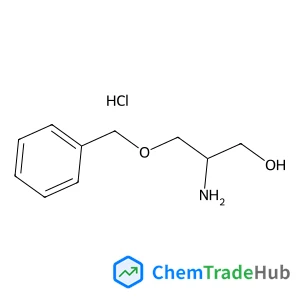
(R)-2-amino-3-(benzyloxy)propan-1-ol hydrochloride
CAS Number:
58577-95-0
Molecular Formula:
C10H16ClNO2
![4-{1-[4-(4,4,5,5-Tetramethyl-1,3,2-dioxaborolan-2-yl)phenyl]cyclopropyl}morpholine structure](https://static.chemtradehub.com/structs/120/1206594-08-2-7afb.webp "4-{1-[4-(4,4,5,5-Tetramethyl-1,3,2-dioxaborolan-2-yl)phenyl]cyclopropyl}morpholine structure")
4-{1-[4-(4,4,5,5-Tetramethyl-1,3,2-dioxaborolan-2-yl)phenyl]cyclopropyl}morpholine
CAS Number:
1206594-08-2
Molecular Formula:
C19H28BNO3
Recommended Suppliers




Disclaimer
This page provides academic journal information for reference and research purposes only. We are not affiliated with any journal publishers and do not handle publication submissions. For publication-related inquiries, please contact the respective journal publishers directly.
If you notice any inaccuracies in the information displayed, please contact us at support@chemtradehub.com. We will promptly review and address your concerns.