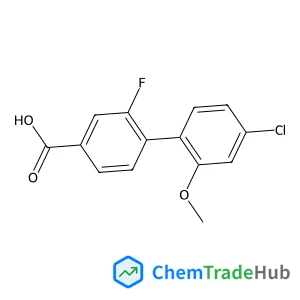
4-(4-Chloro-2-methoxyphenyl)-3-fluorobenzoic acid
CAS Number:
1261970-23-3
Molecular Formula:
C14H10ClFO3
M. B. Figueirêdo, H. J. Heeres, P. J. Deuss
Technical lignins are highly available and inexpensive feedstocks derived from current large scale biomass utilizing industries. Their valorization represents a bottleneck in the development of biorefineries, as the inherently complex lignin structure often suffers severe condensation during isolation, leading to their current application as low value fuel. Processes able to depolymerize technical lignins into value-added (intermediate) molecules are of great interest for the development of integrated, viable routes aiming at the full valorization of lignocellulosic biomass. Here, we report an effective ozone mediated depolymerization of four technical lignins (Indulin-AT Kraft, ball-milled Indulin-AT Kraft, Alcell organosolv and Fabiola organosolv) in ethanol under ambient conditions without the need for catalysts. 52–87 wt% of these nearly ethanol insoluble lignins was broken down into soluble fragments upon ozone exposure. The average molecular weight of the soluble fragments was shown to have decreased by 40–75% compared to the parent materials. A range of (di)carboxylic acids and (di)ethyl esters was identified, accounting for up to 40 wt% of the ozonated lignin oils. These products are the result of phenol ring-opening reactions as well as oxidative cleavage of unsaturated linking motifs followed by partial esterification. Reactivity varied substantially among the lignin feedstocks. For instance, lower particle sizes and higher degradation of the native lignin structure were shown to be beneficial for the effective action of the ozone. Our results show that a straightforward ozonation process under ambient conditions can depolymerize recalcitrant lignins into oxygenated fragments and low molecular weight products soluble in ethanol. These can potentially be used for the synthesis of high-value drop-in chemicals.
Kerstin Strupat, Dijana Šagi, Heiko Bönisch, Günter Schäfer, Jasna Peter-Katalinic
DOI: 10.1039/A908977B
HyoWon Kim, Yongju Lee, DongHoon Song, YongKeun Kwon, Eom-Ji Kim, EunAe Cho
DOI: 10.1039/D0SE00923G
Cheng Liu, Yi Yang, Jiahong Pan, Jianxi Yao, Linhua Hu
DOI: 10.1039/C6SE00041J
Takamitsu Futagami, Takaaki Sakai, Motonori Watanabe
DOI: 10.1039/C7SE00084G
Xu Lv, Fengyi Wang, Juan Du, Qian Liu, Yongsong Luo, Siyu Lu, Guang Chen, Shuyan Gao, Baozhan Zheng, Xuping Sun
DOI: 10.1039/D0SE00828A
Zhihong Wang
DOI: 10.1039/D0SE00878H
Tais da C. Soares, Paulo R. M. Silva, Gilberto A. Romeiro, Mauricio G. Fonseca, Luciano N. Batista
DOI: 10.1039/C6SE00017G
James Murowchick, Xiaobo Chen
DOI: 10.1039/C6SE00058D
Atiweena Krittayavathananon, Peerapan Dittanet, Pinit Kidkhunthod, Montree Sawangphruk
DOI: 10.1039/C7SE00052A
2-(2-Chloroacetamido)-3-phenylpropanoic acid (CAS: 7765-11-9) is generally consi...
2-(Benzyloxy)-5-bromobenzoic acid can be handled safely if appropriate precautio...
(4-Methyl-1,2,5-oxadiazol-3-yl)methanamine hydrochloride is a chemical compound ...
2-(5-Hexylthiophen-2-yl)-4,4,5,5-tetramethyl-1,3,2-dioxaborolane (CAS: 917985-54...
While 4-(8-Methyl-9H-1,3-dioxolo[4,5-h][2,3]benzodiazepin-5-yl)benzenamine (CAS:...
The market for tert-butyl 3-hydroxy-4,5,7,8-tetrahydro-2H-pyrazolo[3,4-d]azepine...
Waste containing 3,5-Diamino-1H-pyrazole-4-carbonitrile (CAS: 6844-58-2) should ...
(6-Fluoro-3-pyridinyl)boronic acid can be synthesized through the reaction of 6-...
Dibenzyl carbonimidoylbiscarbamate (CAS: 10065-79-9) finds applications in vario...
The market for (beta,beta,2,3,4,5,6-~2~H_7_)Phenylalanine (CAS: 74228-83-4) is g...
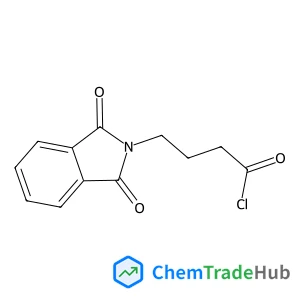
![5-Chloropyrrolo[2,1-f][1,2,4]triazin-4(3H)-one structure](https://static.chemtradehub.com/structs/888/888720-60-3-4f7c.webp "5-Chloropyrrolo[2,1-f][1,2,4]triazin-4(3H)-one structure")
![2-Methyl-2-propanyl 4-oxo-3,9-diazabicyclo[4.2.1]nonane-9-carboxylate structure](https://static.chemtradehub.com/structs/131/1312456-05-5-9a15.webp "2-Methyl-2-propanyl 4-oxo-3,9-diazabicyclo[4.2.1]nonane-9-carboxylate structure")