












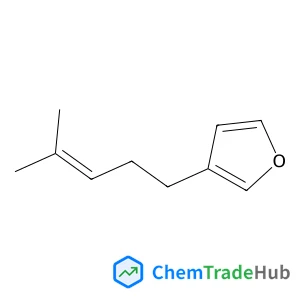
The absolute configurations of hyperilongenols A–C: rare 12,13-seco-spirocyclic polycyclic polyprenylated acylphloroglucinols with enolizable β,β′-tricarbonyl systems from Hypericum longistylum Oliv.
Literature Information
Publication Date
2019-03-20
DOI
10.1039/C9QO00245F
Impact Factor
5.281
Authors
Na Zhang, Zhengyi Shi, Yi Guo, Shuangshuang Xie, Yuben Qiao, Xiao-Nian Li, Yongbo Xue, Zengwei Luo, Hucheng Zhu, Chunmei Chen, Yonghui Zhang
View Original
Abstract
Three novel 12,13-seco-spirocyclic polycyclic polyprenylated acylphloroglucinol (PPAP) derivatives, named hyperilongenols A–C (1–3), were isolated from the stems and leaves of Hypericum longistylum Oliv. Their planar structures were established by a combination of 1D and 2D NMR, HRESIMS data, and chemical derivatization. Their absolute configurations were defined using electronic circular dichroism (ECD) spectroscopy and X-ray crystallography. Compounds 1–3 represent the first examples of naturally occurring 12,13-seco-spirocyclic PPAPs with an enolizable β,β′-tricarbonyl system. The O-methylation of compounds 1–3, coupled with comprehensive analyses of their X-ray diffraction data and variable-temperature 1H NMR spectra collected in different solvents, allowed us to propose a general mechanism underlying the formation of inseparable C-24 epimers of hyperilongenol A (1), decipher the solvent effects on the enolizable β,β′-tricarbonyl enol protons, and explore the possibilities of keto–enol interconversions of compounds 1–3. Moreover, a reasonable proposal for the structural determination of PPAPs with enolizable β-dicarbonyl and β,β′-tricarbonyl systems was developed. In addition, an in vitro bioassay showed that 2 exhibited potent antibacterial activity against Staphylococcus aureus.
Related Literature
Co-ordination chemistry of palladium cations in Pd-H-ZSM-5 as revealed by FTIR spectra of adsorbed and co-adsorbed probe molecules (CO and NO)
K. Chakarova, E. Ivanova, K. Hadjiivanov, D. Klissurski, H. Knözinger
2004-04-23
Paper
DOI: 10.1039/B401934B
Collision-induced non-adiabatic transitions between the ion-pair states of molecular iodine: A challenge for experiment and theory
Timur V. Tscherbul, Alexei A. Buchachenko, Mikhail E. Akopyan, Sergey A. Poretsky, Anatoly M. Pravilov, Thomas A. Stephenson
2004-05-18
Invited Article
DOI: 10.1039/B402655A
Comparison of the modified Poisson–Boltzmann theory with recent density functional theory and simulation results in the planar electric double layer
Christopher W. Outhwaite
2004-04-26
Paper
DOI: 10.1039/B316098J
Linear relationship between activation energies and reaction energies for coverage-dependent dissociation reactions on rhodium surfaces
Oliver R. Inderwildi, Dirk Lebiedz, Jürgen Warnatz
2005-06-01
Communication
DOI: 10.1039/B506773A
Solvent effect on the distance distribution between spin labels in aggregated spin labeled trichogin GA IV dimer peptides as studied by pulsed electron–electron double resonance
A. D. Milov, Yu. D. Tsvetkov, F. Formaggio, S. Oancea, C. Toniolo, J. Raap
2004-04-14
Paper
DOI: 10.1039/B313701E
Quantum free energies of the conformers of glycine on an ab initio potential energy surface
Thomas F. Miller, III, David C. Clary
2004-03-04
Paper
DOI: 10.1039/B314644H
Vibrational analysis of capped [Leu]enkephalin
Tim M. Watson, Jonathan D. Hirst
2004-02-23
Paper
DOI: 10.1039/B315501C
Thermal and physical properties of an archetypal organic ionic plastic crystal electrolyte
Steven J. Pas, Jennifer M. Pringle, Maria Forsyth, Douglas R. MacFarlane
2004-04-23
Paper
DOI: 10.1039/B400452C
Time-resolved in situXAS study of the preparation of supported gold clusters
Eveline Bus, Roel Prins, Jeroen A. van Bokhoven
2007-05-04
Paper
DOI: 10.1039/B702747H
You might also like
Compound Q&A
How should waste containing (6-Bromo-2-naphthyl)oxy](dimethyl)(2-methyl-2-propanyl)silane be handled?
Waste containing (6-Bromo-2-naphthyl)oxy](dimethyl)(2-methyl-2-propanyl)silane (...
100751-65-3[(6-Bromo-2-naphthyl...
Compound Q&A
How is 7-Fluoro-4-isoquinolinecarboxylic acid (CAS: 1841081-40-0) typically synthesized?
7-Fluoro-4-isoquinolinecarboxylic acid can be synthesized via a multi-step proce...
1841081-40-07-Fluoro-4-isoquinol...
Compound Q&A
What are the physical and chemical properties of 2,3,5,6-Tetrabromothieno[3,2-b]thiophene (CAS: 124638-53-5)?
2,3,5,6-Tetrabromothieno[3,2-b]thiophene is a crystalline compound with a high m...
124638-53-52,3,5,6-Tetrabromoth...
Compound Q&A
Is 1-[4-(Benzylamino)-7,8-dihydro-5H-pyrano[4,3-d]pyrimidin-2-yl]-2-methyl-1H-indole-4-carboxamide (CAS: 1542705-92-9) safe?
1-[4-(Benzylamino)-7,8-dihydro-5H-pyrano[4,3-d]pyrimidin-2-yl]-2-methyl-1H-indol...
1542705-92-91-[4-(Benzylamino)-7...
Compound Q&A
What is the market or research trend for imidazo[5,1-d]-1,2,3,5-tetrazine-8-carboxylic acid, 3,4-dihydro-3-methyl-4-oxo- (CAS: 113942-30-6)?
The market for imidazo[5,1-d]-1,2,3,5-tetrazine-8-carboxylic acid, 3,4-dihydro-3...
113942-30-6Imidazo[5,1-d]-1,2,3...
Compound Q&A
What is 3-(Triisopropylsilyl)propiolaldehyde (CAS: 163271-80-5)?
3-(Triisopropylsilyl)propiolaldehyde is a synthetic organic compound with the CA...
163271-80-53-(Triisopropylsilyl...
Compound Q&A
What regulatory guidelines apply to 6-Nitro-2H-1,4-benzoxazin-3(4H)-one (CAS: 81721-87-1)?
6-Nitro-2H-1,4-benzoxazin-3(4H)-one (CAS: 81721-87-1) is subject to various regu...
81721-87-16-Nitro-2H-1,4-benzo...
Compound Q&A
How should waste containing (3-Fluorophenyl)(4-{[(2-methyl-2-propanyl)oxy]carbonyl}-1-piperazinyl)acetic acid (CAS: 885272-91-3) be handled?
Waste containing (3-Fluorophenyl)(4-{[(2-methyl-2-propanyl)oxy]carbonyl}-1-piper...
885272-91-3(3-Fluorophenyl)(4-{...
Compound Q&A
What are the physical and chemical properties of N,N'-4,4'-Biphenyldiyldiisonicotinamide (CAS: 55119-40-9)?
N,N'-4,4'-Biphenyldiyldiisonicotinamide is a white crystalline solid with a mole...
55119-40-9N,N'-4,4'-Biphenyldi...
Compound Q&A
What industries use 6-Bromo-8-fluoro-2-quinazolinol (CAS: 1036756-15-6)?
6-Bromo-8-fluoro-2-quinazolinol is primarily used in the pharmaceutical industry...
1036756-15-66-Bromo-8-fluoro-2-q...
Source Journal
Organic Chemistry Frontiers

CiteScore:
7.8
Self-citation Rate:
8.7%
Articles per Year:
724
Organic Chemistry Frontiers publishes high-quality research from across organic chemistry. Emphases are placed on studies that make significant contributions to the field of organic chemistry by reporting either new or significantly improved protocols or methodologies. Topics include, but are not limited to the following: Organic synthesis Development of synthetic methodologies Catalysis Natural products Functional organic materials Supramolecular and macromolecular chemistry Physical and computational organic chemistry
Recommended Compounds
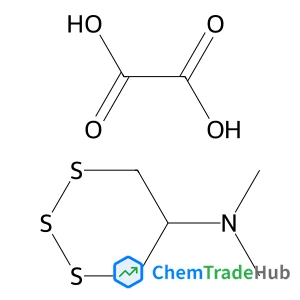
Oxalic acid compound with cyclohexylsulfamothioic O-acid (11)
CAS Number:
31895-22-4
Molecular Formula:
C7H13NO4S3
![N-[(E)-Phenylmethylene]benzenesulfonamide structure](https://static.chemtradehub.com/structs/139/13909-34-7-8167.webp "N-[(E)-Phenylmethylene]benzenesulfonamide structure")
Recommended Suppliers







Disclaimer
This page provides academic journal information for reference and research purposes only. We are not affiliated with any journal publishers and do not handle publication submissions. For publication-related inquiries, please contact the respective journal publishers directly.
If you notice any inaccuracies in the information displayed, please contact us at support@chemtradehub.com. We will promptly review and address your concerns.