













Quantum free energies of the conformers of glycine on an ab initio potential energy surface
Literature Information
Publication Date
2004-03-04
DOI
10.1039/B314644H
Impact Factor
3.676
Authors
Thomas F. Miller, III, David C. Clary
View Original
Abstract
The torsional path integral Monte Carlo (TPIMC) technique is used to study the five lowest-energy conformers of glycine. The theoretical method provides an anharmonic and quantum-mechanical description of conformational free energy and is used for the first time with an ab initio potential energy surface. The 3-dimensional torsional potential energy surface of glycine was obtained at the MP2/6-311++G** level of theory and is optimized with respect to the non-torsional degrees of freedom. Calculated conformer populations compare well with those reported in recent matrix-isolation infrared spectroscopy experiments. An additional conformer, not yet observed, is predicted to be heavily populated in the thermal equilibria probed by experiment, and a new explanation for its elusiveness is provided. Quantum effects, such as zero point energy, are found to substantially alter conformer populations, and an algorithm for estimating the role of non-torsional vibrations in the conformational thermodynamics of a molecule is introduced.
Related Literature
Intrinsically fluorescent gold nanoclusters stabilized within a copper storage protein that follow the Irving–Williams trend in metal ion sensing
Dhanashree Selvan, Pallavi Prasad, Skyler Crane, Abubkr Abuhagr, Richard Covington, Kateryna Artyushkova, Guda Ramakrishna, Saumen Chakraborty
2019-04-26
Paper
DOI: 10.1039/C9AN00426B
An electrochemical sensor for the detection of p-nitrophenol based on a cyclodextrin-decorated gold nanoparticle–mesoporous carbon hybrid
Yongying Zhou, Jin Zhao, Shenghua Li, Minjie Guo, Zhi Fan
2019-05-30
Paper
DOI: 10.1039/C9AN00722A
Rapid bladder cancer cell detection from clinical urine samples using an ultra-thin silicone membrane
Jennie H. Appel, Hao Ren, Mandy L. Y. Sin, Joseph C. Liao, Junseok Chae
2015-11-09
Paper
DOI: 10.1039/C5AN01616A
Microfluidics for research and applications in oncology
Parthiv Kant Chaudhuri
2015-05-11
Critical Review
DOI: 10.1039/C5AN00382B
Liquid biopsy for detection of actionable oncogenic mutations in human cancers and electric field induced release and measurement liquid biopsy (eLB)
Michael Tu, David Chia, Fang Wei, David Wong
2015-12-08
Minireview
DOI: 10.1039/C5AN01863C
Fluorescent visual quantitation of cell-secreted sialoglycoconjugates by chemoselective recognition and hybridization chain reaction
Yingying Xiong, Yunlong Chen, Lin Ding, Xiaoqiang Liu, Huangxian Ju
2019-06-07
Paper
DOI: 10.1039/C9AN00572B
Serum protein biomarkers relevant to hepatocellular carcinoma and their detection
Eric Waidely, Abdul-Rahman Obaid Al-Yuobi, A. S. Bashammakh, Mohammad S. El-Shahawi, Roger M. Leblanc
2015-11-11
Critical Review
DOI: 10.1039/C5AN01884F
Colorimetric switchable linker-based bioassay for ultrasensitive detection of prostate-specific antigen as a cancer biomarker
Jungwoo Hahn, Eunghee Kim, Youngsang You
2019-05-27
Paper
DOI: 10.1039/C9AN00552H
Postsynthetic functionalization of water stable zirconium metal organic frameworks for high performance copper removal
Yao Xie, Guiqin Ye, Suping Peng, Shiyuan Jiang, Yang Wang, Xiaoya Hu
2019-07-03
Paper
DOI: 10.1039/C9AN00981G
Cancer biomarker discovery using DNA aptamers
Cheng Jin, Jin Li, Xiaobing Zhang
2015-10-30
Critical Review
DOI: 10.1039/C5AN01918D
You might also like
Compound Q&A
How should waste containing (6-Bromo-2-naphthyl)oxy](dimethyl)(2-methyl-2-propanyl)silane be handled?
Waste containing (6-Bromo-2-naphthyl)oxy](dimethyl)(2-methyl-2-propanyl)silane (...
100751-65-3[(6-Bromo-2-naphthyl...
Compound Q&A
How is 7-Fluoro-4-isoquinolinecarboxylic acid (CAS: 1841081-40-0) typically synthesized?
7-Fluoro-4-isoquinolinecarboxylic acid can be synthesized via a multi-step proce...
1841081-40-07-Fluoro-4-isoquinol...
Compound Q&A
What are the physical and chemical properties of 2,3,5,6-Tetrabromothieno[3,2-b]thiophene (CAS: 124638-53-5)?
2,3,5,6-Tetrabromothieno[3,2-b]thiophene is a crystalline compound with a high m...
124638-53-52,3,5,6-Tetrabromoth...
Compound Q&A
Is 1-[4-(Benzylamino)-7,8-dihydro-5H-pyrano[4,3-d]pyrimidin-2-yl]-2-methyl-1H-indole-4-carboxamide (CAS: 1542705-92-9) safe?
1-[4-(Benzylamino)-7,8-dihydro-5H-pyrano[4,3-d]pyrimidin-2-yl]-2-methyl-1H-indol...
1542705-92-91-[4-(Benzylamino)-7...
Compound Q&A
What is the market or research trend for imidazo[5,1-d]-1,2,3,5-tetrazine-8-carboxylic acid, 3,4-dihydro-3-methyl-4-oxo- (CAS: 113942-30-6)?
The market for imidazo[5,1-d]-1,2,3,5-tetrazine-8-carboxylic acid, 3,4-dihydro-3...
113942-30-6Imidazo[5,1-d]-1,2,3...
Compound Q&A
What is 3-(Triisopropylsilyl)propiolaldehyde (CAS: 163271-80-5)?
3-(Triisopropylsilyl)propiolaldehyde is a synthetic organic compound with the CA...
163271-80-53-(Triisopropylsilyl...
Compound Q&A
What regulatory guidelines apply to 6-Nitro-2H-1,4-benzoxazin-3(4H)-one (CAS: 81721-87-1)?
6-Nitro-2H-1,4-benzoxazin-3(4H)-one (CAS: 81721-87-1) is subject to various regu...
81721-87-16-Nitro-2H-1,4-benzo...
Compound Q&A
How should waste containing (3-Fluorophenyl)(4-{[(2-methyl-2-propanyl)oxy]carbonyl}-1-piperazinyl)acetic acid (CAS: 885272-91-3) be handled?
Waste containing (3-Fluorophenyl)(4-{[(2-methyl-2-propanyl)oxy]carbonyl}-1-piper...
885272-91-3(3-Fluorophenyl)(4-{...
Compound Q&A
What are the physical and chemical properties of N,N'-4,4'-Biphenyldiyldiisonicotinamide (CAS: 55119-40-9)?
N,N'-4,4'-Biphenyldiyldiisonicotinamide is a white crystalline solid with a mole...
55119-40-9N,N'-4,4'-Biphenyldi...
Compound Q&A
What industries use 6-Bromo-8-fluoro-2-quinazolinol (CAS: 1036756-15-6)?
6-Bromo-8-fluoro-2-quinazolinol is primarily used in the pharmaceutical industry...
1036756-15-66-Bromo-8-fluoro-2-q...
Source Journal
Physical Chemistry Chemical Physics

CiteScore:
5.5
Self-citation Rate:
10.3%
Articles per Year:
3036
Physical Chemistry Chemical Physics (PCCP) is an international journal co-owned by 19 physical chemistry and physics societies from around the world. This journal publishes original, cutting-edge research in physical chemistry, chemical physics and biophysical chemistry. To be suitable for publication in PCCP, articles must include significant innovation and/or insight into physical chemistry; this is the most important criterion that reviewers and Editors will judge against when evaluating submissions. The journal has a broad scope and welcomes contributions spanning experiment, theory, computation and data science. Topical coverage includes spectroscopy, dynamics, kinetics, statistical mechanics, thermodynamics, electrochemistry, catalysis, surface science, quantum mechanics, quantum computing and machine learning. Interdisciplinary research areas such as polymers and soft matter, materials, nanoscience, energy, surfaces/interfaces, and biophysical chemistry are welcomed if they demonstrate significant innovation and/or insight into physical chemistry. Joined experimental/theoretical studies are particularly appreciated when complementary and based on up-to-date approaches.
Recommended Compounds

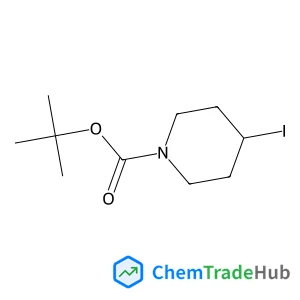
2-Methyl-2-propanyl 4-iodo-1-piperidinecarboxylate
CAS Number:
301673-14-3
Molecular Formula:
C10H18INO2


Recommended Suppliers






Disclaimer
This page provides academic journal information for reference and research purposes only. We are not affiliated with any journal publishers and do not handle publication submissions. For publication-related inquiries, please contact the respective journal publishers directly.
If you notice any inaccuracies in the information displayed, please contact us at support@chemtradehub.com. We will promptly review and address your concerns.