













Solvent effect on the distance distribution between spin labels in aggregated spin labeled trichogin GA IV dimer peptides as studied by pulsed electron–electron double resonance
Literature Information
Publication Date
2004-04-14
DOI
10.1039/B313701E
Impact Factor
3.676
Authors
A. D. Milov, Yu. D. Tsvetkov, F. Formaggio, S. Oancea, C. Toniolo, J. Raap
View Original
Abstract
Pulsed electron–electron double resonance (PELDOR) was used to study aggregate formation in frozen glassy solutions of mono- and double-spin labeled trichogin GA IV dimers in a toluene–methanol mixture. The modified method proposed and used for the distance distribution function calculation from the PELDOR data. Distance distribution functions between spin labels in the peptide molecules and their aggregates in solution were determined as a function of solvent composition. Double-labeled peptide molecules in aggregates in solutions with low methanol content display two types of structures, i.e. the α-helix with a 2.8 nm distance between labels and the 310-helix with a 3.2 nm distance between labels. As the methanol content of the solvent increases, a part of conformations at 3.2 nm changes. An increase of the methanol content leads to disruption of the aggregates and a change to the peptide conformation as well. In pure methanol peptides fail to form aggregates and a wide distribution of distances between labels centered at 3 nm were observed.
Related Literature
An electrochemical-TUNEL method for sensitive detection of apoptotic cells
Shanhu Liu, Ziyi Zhang, Shiwei Zhou, Li-Ping Jiang, Jun-Jie Zhu
2015-10-19
Communication
DOI: 10.1039/C5AN01780G
Real-time imaging of cancer cell chemotaxis in paper-based scaffolds
Rachael M. Kenney, Matthew W. Boyce, Andrew S. Truong, C. Robert Bagnell
2015-11-09
Paper
DOI: 10.1039/C5AN01787D
Novel approaches for biomolecule immobilization in microscale systems
Chuanpin Chen, Wenfang Liu, Tingting Hong
2019-05-02
Critical Review
DOI: 10.1039/C9AN00212J
A robust electrochemiluminescence immunoassay for carcinoembryonic antigen detection based on a microtiter plate as a bridge and Au@Pd nanorods as a peroxidase mimic
Xuehui Pang, Dan Wu, Hongmin Ma, Zhaoqing Yan, Jiatao Zhang, Bin Du, Qin Wei
2015-11-16
Paper
DOI: 10.1039/C5AN02053K
Smartphone based multispectral imager and its potential for point-of-care testing
Hui Ding, Chen Chen, Haicheng Zhao, Ying Yue, Chunyang Han
2019-06-03
Paper
DOI: 10.1039/C9AN00853E
Fluorescent visual quantitation of cell-secreted sialoglycoconjugates by chemoselective recognition and hybridization chain reaction
Yingying Xiong, Yunlong Chen, Lin Ding, Xiaoqiang Liu, Huangxian Ju
2019-06-07
Paper
DOI: 10.1039/C9AN00572B
Chicken, beams, and Campylobacter: rapid differentiation of foodborne bacteria via vibrational spectroscopy and MALDI-mass spectrometry
Howbeer Muhamadali, Danielle Weaver, Abdu Subaihi, Najla AlMasoud, Drupad K. Trivedi, David I. Ellis, Dennis Linton, Royston Goodacre
2015-10-26
Paper
DOI: 10.1039/C5AN01945A
Detection and isolation of circulating exosomes and microvesicles for cancer monitoring and diagnostics using micro-/nano-based devices
Jina Ko, Erica Carpenter
2015-09-08
Critical Review
DOI: 10.1039/C5AN01610J
You might also like
Compound Q&A
How should waste containing (6-Bromo-2-naphthyl)oxy](dimethyl)(2-methyl-2-propanyl)silane be handled?
Waste containing (6-Bromo-2-naphthyl)oxy](dimethyl)(2-methyl-2-propanyl)silane (...
100751-65-3[(6-Bromo-2-naphthyl...
Compound Q&A
How is 7-Fluoro-4-isoquinolinecarboxylic acid (CAS: 1841081-40-0) typically synthesized?
7-Fluoro-4-isoquinolinecarboxylic acid can be synthesized via a multi-step proce...
1841081-40-07-Fluoro-4-isoquinol...
Compound Q&A
What are the physical and chemical properties of 2,3,5,6-Tetrabromothieno[3,2-b]thiophene (CAS: 124638-53-5)?
2,3,5,6-Tetrabromothieno[3,2-b]thiophene is a crystalline compound with a high m...
124638-53-52,3,5,6-Tetrabromoth...
Compound Q&A
Is 1-[4-(Benzylamino)-7,8-dihydro-5H-pyrano[4,3-d]pyrimidin-2-yl]-2-methyl-1H-indole-4-carboxamide (CAS: 1542705-92-9) safe?
1-[4-(Benzylamino)-7,8-dihydro-5H-pyrano[4,3-d]pyrimidin-2-yl]-2-methyl-1H-indol...
1542705-92-91-[4-(Benzylamino)-7...
Compound Q&A
What is the market or research trend for imidazo[5,1-d]-1,2,3,5-tetrazine-8-carboxylic acid, 3,4-dihydro-3-methyl-4-oxo- (CAS: 113942-30-6)?
The market for imidazo[5,1-d]-1,2,3,5-tetrazine-8-carboxylic acid, 3,4-dihydro-3...
113942-30-6Imidazo[5,1-d]-1,2,3...
Compound Q&A
What is 3-(Triisopropylsilyl)propiolaldehyde (CAS: 163271-80-5)?
3-(Triisopropylsilyl)propiolaldehyde is a synthetic organic compound with the CA...
163271-80-53-(Triisopropylsilyl...
Compound Q&A
What regulatory guidelines apply to 6-Nitro-2H-1,4-benzoxazin-3(4H)-one (CAS: 81721-87-1)?
6-Nitro-2H-1,4-benzoxazin-3(4H)-one (CAS: 81721-87-1) is subject to various regu...
81721-87-16-Nitro-2H-1,4-benzo...
Compound Q&A
How should waste containing (3-Fluorophenyl)(4-{[(2-methyl-2-propanyl)oxy]carbonyl}-1-piperazinyl)acetic acid (CAS: 885272-91-3) be handled?
Waste containing (3-Fluorophenyl)(4-{[(2-methyl-2-propanyl)oxy]carbonyl}-1-piper...
885272-91-3(3-Fluorophenyl)(4-{...
Compound Q&A
What are the physical and chemical properties of N,N'-4,4'-Biphenyldiyldiisonicotinamide (CAS: 55119-40-9)?
N,N'-4,4'-Biphenyldiyldiisonicotinamide is a white crystalline solid with a mole...
55119-40-9N,N'-4,4'-Biphenyldi...
Compound Q&A
What industries use 6-Bromo-8-fluoro-2-quinazolinol (CAS: 1036756-15-6)?
6-Bromo-8-fluoro-2-quinazolinol is primarily used in the pharmaceutical industry...
1036756-15-66-Bromo-8-fluoro-2-q...
Source Journal
Physical Chemistry Chemical Physics

CiteScore:
5.5
Self-citation Rate:
10.3%
Articles per Year:
3036
Physical Chemistry Chemical Physics (PCCP) is an international journal co-owned by 19 physical chemistry and physics societies from around the world. This journal publishes original, cutting-edge research in physical chemistry, chemical physics and biophysical chemistry. To be suitable for publication in PCCP, articles must include significant innovation and/or insight into physical chemistry; this is the most important criterion that reviewers and Editors will judge against when evaluating submissions. The journal has a broad scope and welcomes contributions spanning experiment, theory, computation and data science. Topical coverage includes spectroscopy, dynamics, kinetics, statistical mechanics, thermodynamics, electrochemistry, catalysis, surface science, quantum mechanics, quantum computing and machine learning. Interdisciplinary research areas such as polymers and soft matter, materials, nanoscience, energy, surfaces/interfaces, and biophysical chemistry are welcomed if they demonstrate significant innovation and/or insight into physical chemistry. Joined experimental/theoretical studies are particularly appreciated when complementary and based on up-to-date approaches.
Recommended Compounds
![(2S)-2-({[(2-Methyl-2-propanyl)oxy]carbonyl}amino)-4-pentynoic acid structure](https://static.chemtradehub.com/structs/630/63039-48-5-b66d.webp "(2S)-2-({[(2-Methyl-2-propanyl)oxy]carbonyl}amino)-4-pentynoic acid structure")
(2S)-2-({[(2-Methyl-2-propanyl)oxy]carbonyl}amino)-4-pentynoic acid
CAS Number:
63039-48-5
Molecular Formula:
C10H15NO4
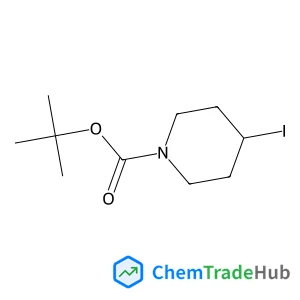
2-Methyl-2-propanyl 4-iodo-1-piperidinecarboxylate
CAS Number:
301673-14-3
Molecular Formula:
C10H18INO2


Recommended Suppliers





Disclaimer
This page provides academic journal information for reference and research purposes only. We are not affiliated with any journal publishers and do not handle publication submissions. For publication-related inquiries, please contact the respective journal publishers directly.
If you notice any inaccuracies in the information displayed, please contact us at support@chemtradehub.com. We will promptly review and address your concerns.