












Unraveling the kinetics of the structural development during polymerization-induced self-assembly: decoupling the polymerization and the micelle structure
Literature Information
Publication Date
2020-01-14
DOI
10.1039/C9PY01810G
Impact Factor
5.582
Authors
Rintaro Takahashi, Shotaro Miwa, Ji Ha Lee, Shota Fujii, Noboru Ohta, Kazuo Sakurai
View Original
Abstract
Upon extending a hydrophobic polymer chain from the end of a preceding hydrophilic chain in aqueous solutions, the resultant block copolymers may eventually undergo self-assembly. Further chain propagation continues in the newly formed hydrophobic polymer rich domain. This process is often referred to as polymerization-induced self-assembly (PISA). Its kinetics are determined by the polymerization and the micelle formation/growth, which may influence each other, possibly leading to a highly complex process of structural development. In this study, we examined PISA in aqueous solution on the reversible addition fragmentation chain transfer (RAFT) dispersion polymerization of poly(N-acryloylmorpholine)-b-poly(N-acryloylthiomorpholine). Using in situ small-angle X-ray scattering (SAXS) and nuclear magnetic resonance spectroscopy (NMR), the polymerization and micelle formation were observed. In the analysis, because the time scale of the micelle formation/growth is much shorter than that of the polymerization, the polymerization and micelle fomarion/growth can be decoupled. Thus, these were separately analyzed in depth, and a combination of the kinetics of RAFT polymerization and the simple scaling theory of the micellar structures can quantitatively describe the overall micellar structural development during PISA. This study provides an unprecedented insight into the processes underlying PISA and deepens our quantitative understanding of it.
Related Literature
Spectroscopic observation of nitrogen anions N− in solid matrices
I. B. Bykhalo, A. A. Pelmenev, S. Mao, A. Meraki, P. T. McColgan, D. M. Lee, V. V. Khmelenko
2016-05-18
Paper
DOI: 10.1039/C6CP01080F
Salt effects on the picosecond dynamics of lysozyme hydration water investigated by terahertz time-domain spectroscopy and an insight into the Hofmeister series for protein stability and solubility
Katsuyoshi Aoki, Kentaro Shiraki, Toshiaki Hattori
2016-05-19
Paper
DOI: 10.1039/C5CP06324H
Origin of non-linearity in phase solubility: solubilisation by cyclodextrin beyond stoichiometric complexation
Thomas W. J. Nicol, Seishi Shimizu
2016-05-20
Paper
DOI: 10.1039/C6CP01582D
First-principles study of thermal properties of borophene
Hongyi Sun, Qingfang Li, X. G. Wan
2016-05-03
Paper
DOI: 10.1039/C6CP02029A
Nuclear size effects in vibrational spectra
Adel Almoukhalalati, Avijit Shee, Trond Saue
2016-05-09
Paper
DOI: 10.1039/C6CP01913G
Controlling electronic effects and intermolecular packing in contorted polyaromatic hydrocarbons (c-PAHs): towards high mobility field effect transistors
Kalishankar Bhattacharyya, Titas Kumar Mukhopadhyay, Ayan Datta
2016-05-05
Paper
DOI: 10.1039/C6CP02387H
Why is a proton transformed into a hydride by [NiFe] hydrogenases? An intrinsic reactivity analysis based on conceptual DFT
Siyao Qiu
2016-05-11
Paper
DOI: 10.1039/C6CP00948D
A computational study of the interaction of graphene structures with biomolecular units
Diego López Carballeira, Nicolás Ramos-Berdullas, Ignacio Pérez-Juste, José Luis Cagide Fajín, M. Natália D. S. Cordeiro, Marcos Mandado
2016-05-06
Paper
DOI: 10.1039/C6CP00545D
UV laser photoactivation of hexachloroplatinate bound to individual nucleobases in vacuo as molecular level probes of a model photopharmaceutical
Edward Matthews, Ananya Sen, Naruo Yoshikawa, Ed Bergström, Caroline E. H. Dessent
2016-05-12
Paper
DOI: 10.1039/C6CP01676F
The first UV absorption band of l-tryptophan is not due to two simultaneous orthogonal electronic transitions differing in the dipole moment
2016-05-09
Paper
DOI: 10.1039/C6CP00790B
You might also like
Compound Q&A
Is 4-Benzyl-2,2-dimethylmorpholine (CAS: 84761-04-6) safe?
4-Benzyl-2,2-dimethylmorpholine is generally considered safe when handled under ...
84761-04-64-Benzyl-2,2-dimethy...
Compound Q&A
What is (5,6-Dimethoxy-3-pyridinyl)boronic acid (CAS: 1346526-61-1)?
(5,6-Dimethoxy-3-pyridinyl)boronic acid is a chemical compound with the molecula...
1346526-61-1(5,6-Dimethoxy-3-pyr...
Compound Q&A
How is 1,1,3,3-Tetramethyl-1,3-bis(2-methyl-2-propanyl)disiloxane (CAS: 67875-55-2) typically synthesized?
1,1,3,3-Tetramethyl-1,3-bis(2-methyl-2-propanyl)disiloxane is synthesized throug...
67875-55-21,1,3,3-Tetramethyl-...
Compound Q&A
What are the main uses of (2R,4S)-1-Boc-4-methylpyrrolidine-2-carboxylic acid (CAS: 1018818-04-6)?
(2R,4S)-1-Boc-4-methylpyrrolidine-2-carboxylic acid is primarily used as a build...
1018818-04-6(2R,4S)-1-Boc-4-meth...
Compound Q&A
What precautions should be taken when handling 2,3-Dichloroacrylonitrile (CAS: 22410-58-8)?
When handling 2,3-Dichloroacrylonitrile, it is crucial to wear appropriate perso...
22410-58-82,3-Dichloroacryloni...
Compound Q&A
How should (S)-1-(o-Tolyl)ethanamine hydrochloride (CAS: 1332832-16-2) be stored?
(S)-1-(o-Tolyl)ethanamine hydrochloride should be stored in a cool, dry place to...
1332832-16-2(S)-1-(o-Tolyl)ethan...
Compound Q&A
What are the physical and chemical properties of Benzyl [1-(hydroxyamino)-1-imino-2-methyl-2-propanyl]carbamate (CAS: 518047-98-8)?
Benzyl [1-(hydroxyamino)-1-imino-2-methyl-2-propanyl]carbamate (CAS: 518047-98-8...
518047-98-8Benzyl [1-(hydroxyam...
Compound Q&A
What industries use 2-Methyloxazole-5-carbaldehyde (CAS: 885273-42-7)?
2-Methyloxazole-5-carbaldehyde is used in the pharmaceutical industry for the sy...
885273-42-72-Methyloxazole-5-ca...
Compound Q&A
What is the market or research trend for 2-Methyl-2-propanyl 4-[(1S)-1-hydroxyethyl]-1-piperidinecarboxylate (CAS: 389889-82-1)?
The market for 2-Methyl-2-propanyl 4-[(1S)-1-hydroxyethyl]-1-piperidinecarboxyla...
389889-82-12-Methyl-2-propanyl ...
Compound Q&A
Is 1-Butyl-3-methylpyridinium bromide (CAS: 26576-85-2) safe?
1-Butyl-3-methylpyridinium bromide is generally considered safe for laboratory u...
26576-85-21-Butyl-3-methylpyri...
Source Journal
Polymer Chemistry

CiteScore:
8.6
Self-citation Rate:
7.3%
Articles per Year:
457
Polymer Chemistry welcomes submissions in all areas of polymer science that have a strong focus on macromolecular chemistry. Manuscripts may cover a broad range of fields, yet no direct application focus is required.
Recommended Compounds
![3-(6-Nitrobenzo[d][1,3]dioxol-5-yl)acrylic acid structure](https://static.chemtradehub.com/structs/631/6315-90-8-6b36.webp "3-(6-Nitrobenzo[d][1,3]dioxol-5-yl)acrylic acid structure")
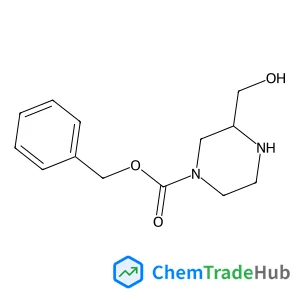
Benzyl 3-(hydroxymethyl)-1-piperazinecarboxylate
CAS Number:
191739-40-9
Molecular Formula:
C13H18N2O3

Recommended Suppliers






Disclaimer
This page provides academic journal information for reference and research purposes only. We are not affiliated with any journal publishers and do not handle publication submissions. For publication-related inquiries, please contact the respective journal publishers directly.
If you notice any inaccuracies in the information displayed, please contact us at support@chemtradehub.com. We will promptly review and address your concerns.