


Effects of linear and branched side chains on the redox and optoelectronic properties of 3,4-dialkoxythiophene polymers
Literature Information
Publication Date
2020-02-21
DOI
10.1039/C9PY01720H
Impact Factor
5.582
Authors
Melony A. Ochieng
View Original
Abstract
Identification of relevant structure–property relationships on solution-processable conjugated polymers have been shown to improve the performance of various redox active devices. While most research efforts have focused on the conjugated backbone, less focus has been given to the relative impact of side chain structure. Here, we report a side chain variation study tuning the optoelectronic properties on a series of 3,4-dioxythiophene-based polymers with a common conjugated backbone and differing alkyl side chains. Using a range of analysis methods, it was determined that changing from linear to branched alkyl side chains affects ionization potential, optical bandgap, perceived color, electrochromic contrast, switching speed, and switching stability. Specifically, the polymers with branched side chains have higher onsets of oxidation and optical bandgaps, and demonstrate sudden coloration change compared to polymers bearing linear side chains. This work provides a foundation for establishing structure–property relationships on the effects of alkyl side chains on the next generation of electrochromic conjugated polymers.
Recommended Journals

Saudi Pharmaceutical Journal

Russian Journal of Coordination Chemistry

Current Opinion in Solid State & Materials Science

Russian Journal of General Chemistry

Acta Materialia

Drug Discovery Today

Russian Chemical Bulletin

Russian Journal of Organic Chemistry

Russian Journal of Bioorganic Chemistry

Chemistry Education Research and Practice
Related Literature
New Friedel–Crafts strategy for preparing 3-acylindoles
Lian-Hua Li, Zhi-Jie Niu, Yong-Min Liang
2018-10-03
Communication
DOI: 10.1039/C8OB02094A
Synthesis, absolute configuration and conformation of optically active 1,2-homoheptafulvalene
Shunji Ito, Mitsuhiro Kurita, Sigeru Kikuchi, Toyonobu Asao, Yoshitora Ito, Masaji Oda, Hideo Sotokawa, Akio Tajiri, Noboru Morita
2003-01-15
Paper
DOI: 10.1039/B210949M
The type I rat fatty acid synthase ACP shows structural homology and analogous biochemical properties to type II ACPs
Michelle A. C. Reed, Michael Schweizer, Anna E. Szafranska, Chris Arthur, Thomas P. Nicholson, Russell J. Cox, John Crosby, Matthew P. Crump, Thomas J. Simpson
2003-01-03
Paper
DOI: 10.1039/B208941F
A new synthesis of porphobilinogen analogues, inhibitors of hydroxymethylbilane synthase
Raef Ahmed, Finian J. Leeper
2002-11-08
Communication
DOI: 10.1039/B209613G
Atropisomeric meroterpenoids with rare triketone-phloroglucinol-terpene hybrids from Baeckea frutescens
Ji-Qin Hou, Bao-Lin Wang, Chao Han, Jian Xu, Zhe Wang, Qi-Wei He, Pei-Lin Zhang, Shu-Min Zhao, Xin Pei, Hao Wang
2018-10-18
Paper
DOI: 10.1039/C8OB02433B
Direct synthesis of indenes via a rhodium-catalyzed multicomponent Csp2–H annulation reaction
Pierre Querard, Chao-Jun Li
2018-10-15
Communication
DOI: 10.1039/C8OB02359J
Experimental charge density of octafluoro-1,2-dimethylenecyclobutane: atomic volumes and charges in a perfluorinated hydrocarbon
Dieter Lentz, Mona Patzschke, Ansgar Bach, Stephan Scheins, Peter Luger
2002-12-17
Paper
DOI: 10.1039/B208704A
Chiral lithium amide base-mediated rearrangement of meso-cyclohexene oxides: asymmetric synthesis of amino- and aziridinocyclohexenols
Peter O'Brien, Christopher D. Pilgram
2003-01-20
Paper
DOI: 10.1039/B210608F
Immune responses against Lewis Y tumor-associated carbohydrate antigen displayed densely on self-assembling nanocarriers
Yuji Yamazaki, Yukiko Nambu, Masashi Ohmae, Manabu Sugai, Shunsaku Kimura
2018-10-03
Paper
DOI: 10.1039/C8OB01955J
Facilitated transport of sodium or potassium chloride across vesicle membranes using a ditopic salt-binding macrobicycle
Atanas V. Koulov, Joseph M. Mahoney, Bradley D. Smith
2002-11-28
Communication
DOI: 10.1039/B208873H
You might also like
Compound Q&A
Is 4-Benzyl-2,2-dimethylmorpholine (CAS: 84761-04-6) safe?
4-Benzyl-2,2-dimethylmorpholine is generally considered safe when handled under ...
84761-04-64-Benzyl-2,2-dimethy...
Compound Q&A
What is (5,6-Dimethoxy-3-pyridinyl)boronic acid (CAS: 1346526-61-1)?
(5,6-Dimethoxy-3-pyridinyl)boronic acid is a chemical compound with the molecula...
1346526-61-1(5,6-Dimethoxy-3-pyr...
Compound Q&A
How is 1,1,3,3-Tetramethyl-1,3-bis(2-methyl-2-propanyl)disiloxane (CAS: 67875-55-2) typically synthesized?
1,1,3,3-Tetramethyl-1,3-bis(2-methyl-2-propanyl)disiloxane is synthesized throug...
67875-55-21,1,3,3-Tetramethyl-...
Compound Q&A
What are the main uses of (2R,4S)-1-Boc-4-methylpyrrolidine-2-carboxylic acid (CAS: 1018818-04-6)?
(2R,4S)-1-Boc-4-methylpyrrolidine-2-carboxylic acid is primarily used as a build...
1018818-04-6(2R,4S)-1-Boc-4-meth...
Compound Q&A
What precautions should be taken when handling 2,3-Dichloroacrylonitrile (CAS: 22410-58-8)?
When handling 2,3-Dichloroacrylonitrile, it is crucial to wear appropriate perso...
22410-58-82,3-Dichloroacryloni...
Compound Q&A
How should (S)-1-(o-Tolyl)ethanamine hydrochloride (CAS: 1332832-16-2) be stored?
(S)-1-(o-Tolyl)ethanamine hydrochloride should be stored in a cool, dry place to...
1332832-16-2(S)-1-(o-Tolyl)ethan...
Compound Q&A
What are the physical and chemical properties of Benzyl [1-(hydroxyamino)-1-imino-2-methyl-2-propanyl]carbamate (CAS: 518047-98-8)?
Benzyl [1-(hydroxyamino)-1-imino-2-methyl-2-propanyl]carbamate (CAS: 518047-98-8...
518047-98-8Benzyl [1-(hydroxyam...
Compound Q&A
What industries use 2-Methyloxazole-5-carbaldehyde (CAS: 885273-42-7)?
2-Methyloxazole-5-carbaldehyde is used in the pharmaceutical industry for the sy...
885273-42-72-Methyloxazole-5-ca...
Compound Q&A
What is the market or research trend for 2-Methyl-2-propanyl 4-[(1S)-1-hydroxyethyl]-1-piperidinecarboxylate (CAS: 389889-82-1)?
The market for 2-Methyl-2-propanyl 4-[(1S)-1-hydroxyethyl]-1-piperidinecarboxyla...
389889-82-12-Methyl-2-propanyl ...
Compound Q&A
Is 1-Butyl-3-methylpyridinium bromide (CAS: 26576-85-2) safe?
1-Butyl-3-methylpyridinium bromide is generally considered safe for laboratory u...
26576-85-21-Butyl-3-methylpyri...
Source Journal
Polymer Chemistry

CiteScore:
8.6
Self-citation Rate:
7.3%
Articles per Year:
457
Polymer Chemistry welcomes submissions in all areas of polymer science that have a strong focus on macromolecular chemistry. Manuscripts may cover a broad range of fields, yet no direct application focus is required.
Recommended Compounds
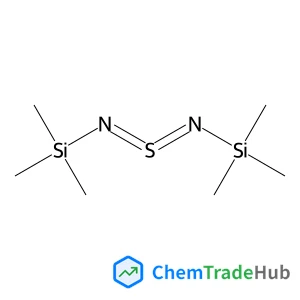
1,3-Bis(trimethylsilyl)-2lambda~4~-diazathia-1,2-diene
CAS Number:
18156-25-7
Molecular Formula:
C6H18N2SSi2

![3-({2-[(2R,4S)-4-Fluoro-2-methyl-1-pyrrolidinyl]-2-oxoethyl}amino)-3-methyl-1-(1-pyrrolidinyl)-1-butanone structure](https://static.chemtradehub.com/structs/118/1186426-66-3-b2e9.webp "3-({2-[(2R,4S)-4-Fluoro-2-methyl-1-pyrrolidinyl]-2-oxoethyl}amino)-3-methyl-1-(1-pyrrolidinyl)-1-butanone structure")
3-({2-[(2R,4S)-4-Fluoro-2-methyl-1-pyrrolidinyl]-2-oxoethyl}amino)-3-methyl-1-(1-pyrrolidinyl)-1-butanone
CAS Number:
1186426-66-3
Molecular Formula:
C16H28FN3O2
Recommended Suppliers







Disclaimer
This page provides academic journal information for reference and research purposes only. We are not affiliated with any journal publishers and do not handle publication submissions. For publication-related inquiries, please contact the respective journal publishers directly.
If you notice any inaccuracies in the information displayed, please contact us at support@chemtradehub.com. We will promptly review and address your concerns.