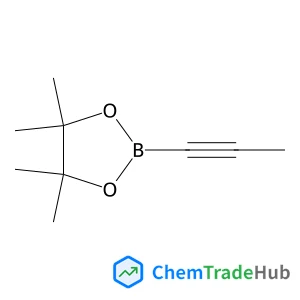
4,4,5,5-Tetramethyl-2-(1-propyn-1-YL)-1,3,2-dioxaborolane
CAS Number:
347389-75-7
Molecular Formula:
C9H15BO2
Yuji Yamazaki, Yukiko Nambu, Masashi Ohmae, Manabu Sugai, Shunsaku Kimura
Immune responses against Lewis y (LY) displayed on nanocarriers at different surface densities were studied. The high surface density of LY was obtained by the A2B-type amphiphilic polypeptides having LY at the two terminals [LY-poly(sarcosine)2-b-(L- or D-Leu-Aib)6]. The equimolar mixture of these two amphiphilic polypeptides formed interdigitated planar sheet-like molecular assemblies densely displaying LY (G4). G4 seemed to induce the anti-LY IgM upon immunization to BALB/c mice by only a single administration. However, the amount of anti-LY IgM produced was moderate and significantly less than that induced by two administrations of the other molecular assembly (G1) with the average surface density of LY at a 1/4 of that of G4. Further, the anti-LY IgM produced after two administrations of G4 lowered the avidity more than after one administration.
Estevão F. Mai, Marta A. Machado, Thomas E. Davies, Jose A. Lopez-Sanchez, Victor Teixeira da Silva
DOI: 10.1039/C4GC00920G
Virginia P. Silva Nykänen, Outi Härkönen, Antti Nykänen, Panu Hiekkataipale, Janne Ruokolainen, Olli Ikkala
DOI: 10.1039/C4GC00794H
P. Moriel, A. B. García
DOI: 10.1039/C4GC00755G
DOI: 10.1039/C4GC00602J
Azaz Gogda
DOI: 10.1039/C4GC01070A
François Jérôme, Michel Ferreira, Hervé Bricout, Stéphane Menuel, Eric Monflier, Sébastien Tilloy
DOI: 10.1039/C4GC00591K
Shuang-Shuang Liu, Xiang Liu, Lei Yu, Yong-Mei Liu, He-Yong He, Yong Cao
DOI: 10.1039/C4GC00869C
Wu-Jun Liu, Ke Tian, Hong Jiang, Han-Qing Yu
DOI: 10.1039/C4GC00599F
Hao Chen, Qinyan Ye, Xulin He, Jingjing Ding, Yongzheng Zhang, Junfeng Han, Jiang Liu, Cheng Liao, Jun Mei, Woonming Lau
DOI: 10.1039/C4GC00142G
Zhenping Zhu, Yupeng Wu, Tianjian Zhao, Li Li
DOI: 10.1039/C4GC00413B
2-Methylbenzene-1,4-diamine dihydrochloride (CAS: 615-45-2) should be stored in ...
(1S,4S)-2,5-Diazabicyclo[2.2.1]heptane dihydrobromide is generally considered sa...
(6-Chloropyridazin-3-YL)methanamine finds applications in the pharmaceutical ind...
2-Fluoro-3-methylphenol is primarily used in the synthesis of pharmaceuticals, p...
When handling 3-Methoxy-4-nitrobenzonitrile, it is important to wear appropriate...
When handling 1,3-Oxazolo[4,5-b]pyridine-2(3H)-thione (CAS: 211949-57-4), it is ...
4-Ethynylbenzamide (CAS: 90347-86-7) falls under various regulatory guidelines i...
3-(2-Ethylphenyl)-2-thioxo-4-imidazolidinone is primarily used as an intermediat...
(2-Fluoro-6-methoxyphenyl)acetic acid, also known as 4-fluoro-3-methoxybenzoic a...
Market trends for 2-[4-(Hydroxymethyl)phenoxy]ethanol (CAS: 102196-18-9) indicat...

Organic & Biomolecular Chemistry (OBC) publishes original and high impact research and reviews in organic chemistry. We welcome research that shows new or significantly improved protocols or methodologies in total synthesis, synthetic methodology or physical and theoretical organic chemistry as well as research that shows a significant advance in the organic chemistry or molecular design aspects of chemical biology, catalysis, supramolecular and macromolecular chemistry, theoretical chemistry, mechanism-oriented physical organic chemistry, medicinal chemistry or natural products. Articles published in the journal should report new work which makes a highly-significant impact in the field. Routine and incremental work is generally not suitable for publication in the journal. More details about key areas of our scope are below. In all cases authors should include in their article clear rationale for why their research has been carried out.
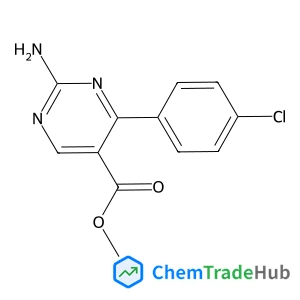
![1-Benzyl-1,7-diazaspiro[4.4]nonane dihydrochloride structure](https://static.chemtradehub.com/structs/115/1159822-71-5-0320.webp "1-Benzyl-1,7-diazaspiro[4.4]nonane dihydrochloride structure")