


A molecular electron density theory study of the enhanced reactivity of aza aromatic compounds participating in Diels–Alder reactions
Literature Information
Publication Date
2019-12-09
DOI
10.1039/C9OB02467K
Impact Factor
3.876
Authors
Luis R. Domingo, Patricia Pérez
View Original
Abstract
The enhanced reactivity of a series of four aza aromatic compounds (AACs) participating in the Diels–Alder (DA) reactions with ethylene has been studied using Molecular Electron Density Theory (MEDT). The analysis of the electronic structure of these AACs allows establishing that the substitution of the C–H unity by the isoelectronic N: unity linearly decreases the ring electron density (RED) of these compounds and concomitantly decreases their aromatic character and increases their electrophilic character. These behaviours not only decrease drastically the activation energies of these DA reactions, but also increase the reaction energies when they are compared with the very unfavourable DA reaction between benzene and ethylene. Very good correlations between the NICS(0) values and the electrophilicity ω indices of these AACs with the RED values are found. The present MEDT study makes it possible to establish two empirical electron density unity (EDU) indices accounting for the contribution of the 〉C and 〉N unities, 2.77 and 2.19 e, respectively, for the RED, which is mainly responsible for the reactivity of these AACs. Comprehensive chemical concepts such as electron density, aromaticity and electrophilicity make it possible to explain the chemical reactivity of these AACs participating in DA reactions towards ethylene.
Recommended Journals

Acta Materialia

Russian Journal of Organic Chemistry

Russian Journal of Coordination Chemistry

Chemistry Education Research and Practice

New Journal of Chemistry

Organic Process Research & Development

Journal of Saudi Chemical Society

Current Opinion in Colloid & Interface Science

Saudi Pharmaceutical Journal

Journal of Peptide Science
Related Literature
Pneumatic nano-sieve for CRISPR-based detection of drug-resistant bacteria
Ruonan Peng, Fengjun Xu, Richard Hailstone, Yujie Men, Ke Du
2023-10-18
Communication
DOI: 10.1039/D3NH00365E
A solely biobased strain sensor with an ultra-precision response via a surface graphitization strategy
Zhihao Yang, Ying Yuan, Bin Wang, Xiaojun Shen, Xiluan Wang, Tong-Qi Yuan
2023-11-02
Paper
DOI: 10.1039/D3TA04872A
Frame-by-frame observations of structure fluctuations in single mass-selected Au clusters using aberration-corrected electron microscopy
Cesare Roncaglia, Diana Nelli, El Yakout El Koraychy, Riccardo Ferrando, Thomas J. A. Slater, Richard E. Palmer
2023-10-19
Communication
DOI: 10.1039/D3NH00291H
Enhancing paracellular and transcellular permeability using nanotechnological approaches for the treatment of brain and retinal diseases
Asmaa Khalil, Alexandre Barras, Rabah Boukherroub, David Devos, Sabine Szunerits
2023-09-13
Review Article
DOI: 10.1039/D3NH00306J
A low-self-discharge high-loading polysulfide cathode design for lithium–sulfur cells
Cheng-Che Wu, Yun-Chung Ho
2023-11-01
Paper
DOI: 10.1039/D3TA05632E
Fe(iii)-carboxythiolate layered metal–organic frameworks with interest as active materials for rechargeable alkali-ion batteries
Nusik Gedikoglu, Pablo Salcedo-Abraira, Nathalie Guillou, Nicolas Dupré, Christophe Payen, Philippe Poizot, Thomas Devic
2023-10-20
Paper
DOI: 10.1039/D3TA05353A
Microfluidic synthesis of nanomaterials for biomedical applications
2023-09-05
Review Article
DOI: 10.1039/D3NH00217A
Synergistic multi-selective photocatalysis and real-time optical thermometry of CsPbBr3/BiOI/TiO2@PAN flexible nanofibers
Yanyan Li, Edwin Yue Bun Pun
2023-10-25
Paper
DOI: 10.1039/D3TA04964G
Nitrogen-rich porous organic polymer as a promising adsorbent for iodine capture from organic solvents
Fatemeh Khosravi Esmaeiltarkhani, Mohammad Dinari, Nazanin Mokhtari
2023-12-26
Paper
DOI: 10.1039/D3NJ04674E
You might also like
Compound Q&A
What regulatory guidelines apply to 6-Bromo-2-methylimidazo[1,2-a]pyrimidine (CAS: 1111638-05-1)?
6-Bromo-2-methylimidazo[1,2-a]pyrimidine (CAS: 1111638-05-1) falls under various...
1111638-05-16-Bromo-2-methylimid...
Compound Q&A
Are there alternatives to 1-Pyrrolidineethanol, β-methyl-α-phenyl-, (αS,βR) (CAS: 123620-80-4) in synthesis?
While there are no direct alternatives, similar compounds like 1-Pyrrolidineetha...
123620-80-41-Pyrrolidineethanol...
Compound Q&A
Is 4-Methyl-2,6-bis(2-methyl-2-propanyl)phenyl methylcarbamate (CAS: 1918-11-2) safe?
4-Methyl-2,6-bis(2-methyl-2-propanyl)phenyl methylcarbamate (CAS: 1918-11-2) is ...
1918-11-24-Methyl-2,6-bis(2-m...
Compound Q&A
How should 2-(3-Bromo-4-fluorophenyl)-1,3-dioxolane (CAS: 77771-04-1) be stored?
2-(3-Bromo-4-fluorophenyl)-1,3-dioxolane (CAS: 77771-04-1) should be stored in a...
77771-04-12-(3-Bromo-4-fluorop...
Compound Q&A
What are the physical and chemical properties of 4,5,6,7-Tetrahydro-1H-indazole hydrochloride (CAS: 18161-11-0)?
4,5,6,7-Tetrahydro-1H-indazole hydrochloride is a white crystalline solid with a...
18161-11-04,5,6,7-Tetrahydro-1...
Compound Q&A
What is (2R)-1-Methoxy-3-phenyl-2-propanamine (CAS: 59919-07-2)?
(2R)-1-Methoxy-3-phenyl-2-propanamine is a chiral organic compound with the CAS ...
59919-07-2(2R)-1-Methoxy-3-phe...
Compound Q&A
What industries use Ethyl 1-(1-phenylethyl)-1H-imidazole-5-carboxylate (CAS: 56649-47-9)?
Ethyl 1-(1-phenylethyl)-1H-imidazole-5-carboxylate is used in various industries...
56649-47-9Ethyl 1-(1-phenyleth...
Compound Q&A
What regulatory guidelines apply to 4-[(1E,3S)-1-(4-Hydroxyphenyl)-1,4-pentadien-3-yl]phenol (CAS: 17676-24-3)?
4-[(1E,3S)-1-(4-Hydroxyphenyl)-1,4-pentadien-3-yl]phenol (CAS: 17676-24-3) falls...
17676-24-34-[(1E,3S)-1-(4-Hydr...
Compound Q&A
What industries use (S)-3-Amino-5-phenylpentanoic acid hydrochloride (CAS: 331846-97-0)?
(S)-3-Amino-5-phenylpentanoic acid hydrochloride is primarily used in the pharma...
331846-97-0(S)-3-Amino-5-phenyl...
Compound Q&A
How is 7-methoxy-1-benzothiophene-2-carboxylic acid (CAS: 88791-07-5) typically synthesized?
7-Methoxy-1-benzothiophene-2-carboxylic acid is typically synthesized by reactin...
88791-07-57-methoxy-1-benzothi...
Source Journal
Organic & Biomolecular Chemistry

CiteScore:
3.4
Self-citation Rate:
10.3%
Articles per Year:
1041
Organic & Biomolecular Chemistry (OBC) publishes original and high impact research and reviews in organic chemistry. We welcome research that shows new or significantly improved protocols or methodologies in total synthesis, synthetic methodology or physical and theoretical organic chemistry as well as research that shows a significant advance in the organic chemistry or molecular design aspects of chemical biology, catalysis, supramolecular and macromolecular chemistry, theoretical chemistry, mechanism-oriented physical organic chemistry, medicinal chemistry or natural products. Articles published in the journal should report new work which makes a highly-significant impact in the field. Routine and incremental work is generally not suitable for publication in the journal. More details about key areas of our scope are below. In all cases authors should include in their article clear rationale for why their research has been carried out.
Recommended Compounds

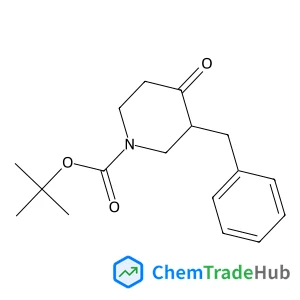
2-Methyl-2-propanyl 3-benzyl-4-oxo-1-piperidinecarboxylate
CAS Number:
193274-82-7
Molecular Formula:
C17H23NO3
Recommended Suppliers



Disclaimer
This page provides academic journal information for reference and research purposes only. We are not affiliated with any journal publishers and do not handle publication submissions. For publication-related inquiries, please contact the respective journal publishers directly.
If you notice any inaccuracies in the information displayed, please contact us at support@chemtradehub.com. We will promptly review and address your concerns.