












![1-[4-(4-Methyl-1H-imidazol-1-yl)phenyl]ethanone structure](https://static.chemtradehub.com/structs/142/142161-53-3-7f55.webp "1-[4-(4-Methyl-1H-imidazol-1-yl)phenyl]ethanone structure")
A low-self-discharge high-loading polysulfide cathode design for lithium–sulfur cells
Literature Information
Publication Date
2023-11-01
DOI
10.1039/D3TA05632E
Impact Factor
12.732
Authors
Cheng-Che Wu, Yun-Chung Ho
View Original
Abstract
Lithium–sulfur batteries are a promising energy storage system with high energy density. However, during prolonged storage, they are prone to rapid capacity-fade, which is caused by severe self-discharge. This significantly shortens batteries' shelf life and impairs their long-term performance. This self-discharge effect has rarely been discussed in the literature. In this study, we develop a low-self-discharge polysulfide cathode with a carbonized electrospun nanofiber substrate. This cathode design achieves a high areal sulfur loading (4.03 mg cm−2) and a high sulfur content (66.8 wt%), while maintaining a low capacity-fade rate (0.26% per day) over a long storage time (90 days). In addition to the high capacity retention, it also maintains high lithium-ion diffusion coefficients after long-term storage. As a result, the rested low-self-discharge polysulfide cathode achieves a long cycle life (200 cycles) with stable electrochemistry. We further evaluate the long-term low-self-discharge performance of our lithium–sulfur cell via a series of quantitative analyses and performance analyses of the self-discharge behavior of the high-loading polysulfide cathode. The results provide key insights into the electrochemistry that occurs during the long-term storage of lithium–sulfur cells and into the low-self-discharge behavior of our designed cathode.
Related Literature
Photochemical induced growth and aggregation of metal nanoparticles in diode-array spectrophotometer via excited dimethyl-sulfoxide
Tomer Zidki
2010-08-31
Paper
DOI: 10.1039/C0CP01037E
Gas–surface energy exchange and thermal accommodation of CO2 and Ar in collisions with methyl, hydroxyl, and perfluorinated self-assembled monolayers
Jessica W. Lu, William A. Alexander, John R. Morris
2010-08-20
Paper
DOI: 10.1039/B921893A
Synthesis and photophysics of monodisperse co-oligomers consisting of alternating thiophene and perylene bisimide‡
Yuchao Ma, Yishi Wu, Yanxia Zhao, Hongbing Fu, Jiannian Yao
2010-10-29
Paper
DOI: 10.1039/C0CP01166E
Some fundamental properties and reactions of ice surfaces at low temperatures
Seong-Chan Park, Eui-Seong Moon, Heon Kang
2010-08-03
Perspective
DOI: 10.1039/C003592K
Freezing single molecule dynamics on interfaces and in polymers
Stefan Krause, Pedro F. Aramendia, Daniela Täuber, Christian von Borczyskowski
2010-12-08
Paper
DOI: 10.1039/C0CP01713B
Temperature dependence of coarse-grained potentials for liquid hexane
Karim Farah, Aoife Catherine Fogarty, Michael Christian Böhm, Florian Müller-Plathe
2010-12-15
Paper
DOI: 10.1039/C0CP01333A
Product pair correlation in CH3OH photodissociation at 157 nm: the OH + CH3 channel
Andre T. J. B. Eppink, Bo Jiang, Gerrit C. Groenenboom, Xueming Yang, David H. Parker
2010-11-26
Paper
DOI: 10.1039/C0CP01794A
Step-wise proton-coupled electron transfer extended to aminobenzoquinone modified monolayers
Wenbin Zhang, Ian J. Burgess
2010-11-24
Paper
DOI: 10.1039/C0CP01251C
Influence of phosphate anion adsorption on the kinetics of oxygen electroreduction on low index Pt(hkl) single crystals
Qinggang He, Xiaofang Yang, Wei Chen, Sanjeev Mukerjee, Bruce Koel, Shaowei Chen
2010-08-20
Paper
DOI: 10.1039/C0CP00433B
You might also like
Compound Q&A
What precautions should be taken when handling lithium chloride hydrate (1:1:1) (CAS: 16712-20-2)?
When handling lithium chloride hydrate (1:1:1) (CAS: 16712-20-2), it is importan...
16712-20-2Lithium chloride hyd...
Compound Q&A
Is 4-(4H-1,2,4-Triazol-4-yl)piperidine (CAS: 690261-92-8) safe?
4-(4H-1,2,4-Triazol-4-yl)piperidine is generally considered safe for use in phar...
690261-92-84-(4H-1,2,4-Triazol-...
Compound Q&A
How should waste containing 1,3-Thiazole-2-carboxamide (CAS: 16733-85-0) be handled?
Waste containing 1,3-Thiazole-2-carboxamide (CAS: 16733-85-0) should be collecte...
16733-85-01,3-Thiazole-2-carbo...
Compound Q&A
What regulatory guidelines apply to 5-(Difluoromethyl)-2-fluorobenzonitrile (CAS: 934175-58-3)?
5-(Difluoromethyl)-2-fluorobenzonitrile (CAS: 934175-58-3) is subject to regulat...
934175-58-35-(Difluoromethyl)-2...
Compound Q&A
How is Methyl 3-acetamido-2-thiophenecarboxylate (CAS: 22288-79-5) typically synthesized?
Methyl 3-acetamido-2-thiophenecarboxylate can be synthesized by the reaction of ...
22288-79-5Methyl 3-acetamido-2...
Compound Q&A
What is 4-Isoquinolinecarbonitrile (CAS: 34846-65-6)?
4-Isoquinolinecarbonitrile is a chemical compound with the CAS number 34846-65-6...
34846-65-64-Isoquinolinecarbon...
Compound Q&A
How should Methyl 1H-1,2,3-triazole-4-carboxylate (CAS: 877309-59-6) be stored?
Store Methyl 1H-1,2,3-triazole-4-carboxylate (CAS: 877309-59-6) in a cool, dry p...
877309-59-6Methyl 1H-1,2,3-tria...
Compound Q&A
What regulatory guidelines apply to 6-Bromo[1,3]thiazolo[5,4-b]pyridin-2-amine (CAS: 1160791-13-8)?
6-Bromo[1,3]thiazolo[5,4-b]pyridin-2-amine (CAS: 1160791-13-8) is subject to the...
1160791-13-86-Bromo[1,3]thiazolo...
Compound Q&A
Is (2S,3S)-2-Ammonio-3-(3,4-dihydroxyphenyl)-3-hydroxypropanoate (CAS: 23651-95-8) safe?
(2S,3S)-2-Ammonio-3-(3,4-dihydroxyphenyl)-3-hydroxypropanoate (CAS: 23651-95-8) ...
23651-95-8(2S,3S)-2-Ammonio-3-...
Compound Q&A
What are the physical and chemical properties of 7-bromo-3-methyl-3,4-dihydroquinazolin-4-one (CAS: 1293987-84-4)?
7-Bromo-3-methyl-3,4-dihydroquinazolin-4-one is a solid with a crystalline form....
1293987-84-47-bromo-3-methyl-3,4...
Source Journal
Journal of Materials Chemistry A

CiteScore:
19.5
Self-citation Rate:
4.7%
Articles per Year:
2211
Journal of Materials Chemistry A, B & C cover high quality studies across all fields of materials chemistry. The journals focus on those theoretical or experimental studies that report new understanding, applications, properties and synthesis of materials. The journals have a strong history of publishing quality reports of interest to interdisciplinary communities and providing an efficient and rigorous service through peer review and publication. The journals are led by an international team of Editors-in-Chief and Associate Editors who are all active researchers in their fields. Journal of Materials Chemistry A, B & C are separated by the intended application of the material studied. Broadly, applications in energy and sustainability are of interest to Journal of Materials Chemistry A, applications in biology and medicine are of interest to Journal of Materials Chemistry B, and applications in optical, magnetic and electronic devices are of interest to Journal of Materials Chemistry C. More than one Journal of Materials Chemistry journal may be suitable for certain fields and researchers are encouraged to submit their paper to the journal that they feel best fits for their particular article. Example topic areas within the scope of Journal of Materials Chemistry A are listed below. This list is neither exhaustive nor exclusive. Artificial photosynthesis Batteries Carbon dioxide conversion Catalysis Fuel cells Gas capture/separation/storage Green/sustainable materials Hydrogen generation Hydrogen storage Photocatalysis Photovoltaics Self-cleaning materials Self-healing materials Sensors Supercapacitors Thermoelectrics Water splitting Water treatment
Recommended Compounds
![5,10-Dihydroindeno[2,1-a]indene structure](https://static.chemtradehub.com/structs/654/6543-29-9-71ca.webp "5,10-Dihydroindeno[2,1-a]indene structure")
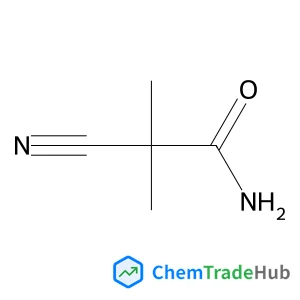

4-(Bromomethyl)-1-cyclohexyl-2-(trifluoromethyl)benzene
CAS Number:
800381-60-6
Molecular Formula:
C14H16BrF3

Recommended Suppliers






Disclaimer
This page provides academic journal information for reference and research purposes only. We are not affiliated with any journal publishers and do not handle publication submissions. For publication-related inquiries, please contact the respective journal publishers directly.
If you notice any inaccuracies in the information displayed, please contact us at support@chemtradehub.com. We will promptly review and address your concerns.