


Enhancing paracellular and transcellular permeability using nanotechnological approaches for the treatment of brain and retinal diseases
Literature Information
Publication Date
2023-09-13
DOI
10.1039/D3NH00306J
Impact Factor
10.989
Authors
Asmaa Khalil, Alexandre Barras, Rabah Boukherroub, David Devos, Sabine Szunerits
View Original
Abstract
Paracellular permeability across epithelial and endothelial cells is, in large part, regulated by apical intercellular junctions also referred to as tight junctions (TJs). These junctions contribute to the spatial definition of different tissue compartments within organisms, separating them from the outside world as well as from inner compartments, with their primary physiological role of maintaining tissue homeostasis. TJs restrict the free, passive diffusion of ions and hydrophilic small molecules through paracellular clefts and are important for appropriate cell polarization and transporter protein localisation, supporting the controlled transcellular diffusion of smaller and larger hydrophilic as well as hydrophobic substances. This traditional diffusion barrier concept of TJs has been challenged lately, owing to a better understanding of the components that are associated with TJs. It is now well-established that mutations in TJ proteins are associated with a range of human diseases and that a change in the membrane fluidity of neighbouring cells can open possibilities for therapeutics to cross intercellular junctions. Nanotechnological approaches, exploiting ultrasound or hyperosmotic agents and permeation enhancers, are the paradigm for achieving enhanced paracellular diffusion. The other widely used transport route of drugs is via transcellular transport, allowing the passage of a variety of pro-drugs and nanoparticle-encapsulated drugs via different mechanisms based on receptors and others. For a long time, there was an expectation that lipidic nanocarriers and polymeric nanostructures could revolutionize the field for the delivery of RNA and protein-based therapeutics across different biological barriers equipped with TJs (e.g., blood–brain barrier (BBB), retina–blood barrier (RBB), corneal TJs, etc.). However, only a limited increase in therapeutic efficiency has been reported for most systems until now. The purpose of this review is to explore the reasons behind the current failures and to examine the emergence of synthetic and cell-derived nanomaterials and nanotechnological approaches as potential game-changers in enhancing drug delivery to target locations both at and across TJs using innovative concepts. Specifically, we will focus on recent advancements in various nanotechnological strategies enabling the bypassing or temporally opening of TJs to the brain and to the retina, and discuss their advantages and limitations.
Recommended Journals

Topics in Catalysis

Bioorganic & Medicinal Chemistry Letters

Journal of Chemical Sciences

Chinese Journal of Chemistry

Bioorganic & Medicinal Chemistry

Herald of the Russian Academy of Sciences

Medicinal Chemistry Research

Biocatalysis and Biotransformation

Cellulose

Critical Reviews in Solid State and Materials Sciences
Related Literature
Visualization of oxygenreduction sites at Ptelectrodes on YSZ by means of 18Otracer incorporation: the width of the electrochemically active zone
Alexander Karl Opitz, Herbert Hutter, Jürgen Fleig
2010-08-25
Paper
DOI: 10.1039/C0CP00309C
Pd(ii) immobilized on mesoporous silica by N-heterocyclic carbeneionic liquids and catalysis for hydrogenation‡
Gang Liu, Minqiang Hou, Tianbin Wu, Tao Jiang, Honglei Fan, Guanying Yang, Buxing Han
2011-01-12
Paper
DOI: 10.1039/C0CP01213K
Inorganic nanocrystals self ordered in 2D superlattices: how versatile are the physical and chemical properties?
M. P. Pileni
2010-08-25
Perspective
DOI: 10.1039/C0CP00456A
Mechanism study on inhibited Ru(bpy)32+ electrochemiluminescence between coreactants
Lingling Xue, Bin Qiu, Zhenyu Lin, Donghwan Kim, Guonan Chen
2010-08-27
Paper
DOI: 10.1039/C004277C
Theoretical study of the infrared and Raman line shapes of liquid methanol
Renhui Zheng, Yuanyuan Sun, Qiang Shi
2010-11-09
Paper
DOI: 10.1039/C0CP01145B
Synthesis and enhanced photocatalytic performance of graphene-Bi2WO6 composite
Erping Gao, Wenzhong Wang, Meng Shang, Jiehui Xu
2010-12-16
Paper
DOI: 10.1039/C0CP01749C
Structure–activity relationship (SAR) for the prediction of gas-phase ozonolysis rate coefficients: an extension towards heteroatomic unsaturated species
Max R. McGillen, Alex T. Archibald, Trevor Carey, Kimberley E. Leather, Dudley E. Shallcross, John C. Wenger, Carl J. Percival
2010-12-14
Paper
DOI: 10.1039/C0CP01732A
Structural features and protonation site of epibatidine in the gas phase: an investigation through infrared multiphoton dissociation spectroscopy and computational chemistry
Alexandre P. Atkinson, Aurélien Planchat, Jérôme Graton, Gilles Grégoire, Jean-Yves Le Questel
2010-12-06
Paper
DOI: 10.1039/C0CP01605E
Radiolysis of water in nanoporous gold
F. Poidevin, M. H. Mathon
2010-09-08
Paper
DOI: 10.1039/C0CP00967A
Electronic coherences and vibrational wave-packets in single molecules studied with femtosecond phase-controlled spectroscopy
Richard Hildner, Daan Brinks, Fernando D. Stefani
2011-01-14
Paper
DOI: 10.1039/C0CP02231D
You might also like
Compound Q&A
What precautions should be taken when handling lithium chloride hydrate (1:1:1) (CAS: 16712-20-2)?
When handling lithium chloride hydrate (1:1:1) (CAS: 16712-20-2), it is importan...
16712-20-2Lithium chloride hyd...
Compound Q&A
Is 4-(4H-1,2,4-Triazol-4-yl)piperidine (CAS: 690261-92-8) safe?
4-(4H-1,2,4-Triazol-4-yl)piperidine is generally considered safe for use in phar...
690261-92-84-(4H-1,2,4-Triazol-...
Compound Q&A
How should waste containing 1,3-Thiazole-2-carboxamide (CAS: 16733-85-0) be handled?
Waste containing 1,3-Thiazole-2-carboxamide (CAS: 16733-85-0) should be collecte...
16733-85-01,3-Thiazole-2-carbo...
Compound Q&A
What regulatory guidelines apply to 5-(Difluoromethyl)-2-fluorobenzonitrile (CAS: 934175-58-3)?
5-(Difluoromethyl)-2-fluorobenzonitrile (CAS: 934175-58-3) is subject to regulat...
934175-58-35-(Difluoromethyl)-2...
Compound Q&A
How is Methyl 3-acetamido-2-thiophenecarboxylate (CAS: 22288-79-5) typically synthesized?
Methyl 3-acetamido-2-thiophenecarboxylate can be synthesized by the reaction of ...
22288-79-5Methyl 3-acetamido-2...
Compound Q&A
What is 4-Isoquinolinecarbonitrile (CAS: 34846-65-6)?
4-Isoquinolinecarbonitrile is a chemical compound with the CAS number 34846-65-6...
34846-65-64-Isoquinolinecarbon...
Compound Q&A
How should Methyl 1H-1,2,3-triazole-4-carboxylate (CAS: 877309-59-6) be stored?
Store Methyl 1H-1,2,3-triazole-4-carboxylate (CAS: 877309-59-6) in a cool, dry p...
877309-59-6Methyl 1H-1,2,3-tria...
Compound Q&A
What regulatory guidelines apply to 6-Bromo[1,3]thiazolo[5,4-b]pyridin-2-amine (CAS: 1160791-13-8)?
6-Bromo[1,3]thiazolo[5,4-b]pyridin-2-amine (CAS: 1160791-13-8) is subject to the...
1160791-13-86-Bromo[1,3]thiazolo...
Compound Q&A
Is (2S,3S)-2-Ammonio-3-(3,4-dihydroxyphenyl)-3-hydroxypropanoate (CAS: 23651-95-8) safe?
(2S,3S)-2-Ammonio-3-(3,4-dihydroxyphenyl)-3-hydroxypropanoate (CAS: 23651-95-8) ...
23651-95-8(2S,3S)-2-Ammonio-3-...
Compound Q&A
What are the physical and chemical properties of 7-bromo-3-methyl-3,4-dihydroquinazolin-4-one (CAS: 1293987-84-4)?
7-Bromo-3-methyl-3,4-dihydroquinazolin-4-one is a solid with a crystalline form....
1293987-84-47-bromo-3-methyl-3,4...
Source Journal
Nanoscale Horizons

CiteScore:
16.3
Self-citation Rate:
3.4%
Articles per Year:
138
Nanoscale Horizons is a leading journal for the publication of exceptionally high-quality, innovative nanoscience and nanotechnology. The journal places an emphasis on original research that demonstrates a new concept or a new way of thinking (a conceptual advance), rather than primarily reporting technological improvements. However, outstanding articles featuring truly breakthrough developments such as record performance alone may also be published in the journal. For work to be published it must be of significant general interest to our community-spanning readership. Topics covered in the journal include, but are not limited to: Synthesis of nanostructured and nanoscale materials Quantum materials 2D materials Layered materials Layered quantum materials Characterisation of functional nanoscale materials and bio-assemblies Properties of nanoscale materials Self-assembly and molecular organisation Complex hybrid nanostructures Nanocomposites, nanoparticles, nanocrystalline materials, and nanoclusters Nanotubes, molecular nanowires and nanocrystals Molecular nanoscience Nanocatalysis Theoretical modelling Single-molecules Plasmonics Nanoelectronics and molecular electronics Nanophotonics Nanochips, nanosensors, nanofluidics and nanofabrication Carbon-based nanoscale materials and devices Biomimetic materials Nanobiotechnology/bionanomaterials Nanomedicine Regulatory approaches and risk assessment
Recommended Compounds
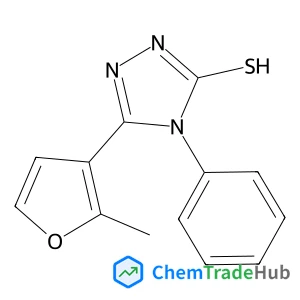
5-(2-Methyl-3-furyl)-4-phenyl-2,4-dihydro-3H-1,2,4-triazole-3-thione
CAS Number:
346464-59-3
Molecular Formula:
C13H11N3OS
![6-(Benzyloxy)-8-(2-bromoacetyl)-2H-benzo[b][1,4]oxazin-3(4H)-one structure](https://static.chemtradehub.com/structs/926/926319-53-1-2287.webp "6-(Benzyloxy)-8-(2-bromoacetyl)-2H-benzo[b][1,4]oxazin-3(4H)-one structure")
6-(Benzyloxy)-8-(2-bromoacetyl)-2H-benzo[b][1,4]oxazin-3(4H)-one
CAS Number:
926319-53-1
Molecular Formula:
C17H14BrNO4


Recommended Suppliers






Disclaimer
This page provides academic journal information for reference and research purposes only. We are not affiliated with any journal publishers and do not handle publication submissions. For publication-related inquiries, please contact the respective journal publishers directly.
If you notice any inaccuracies in the information displayed, please contact us at support@chemtradehub.com. We will promptly review and address your concerns.