












Reactivity and mechanism of α-nucleophile scaffolds as catalytic organophosphate scavengers
Literature Information
Publication Date
2019-03-26
DOI
10.1039/C9OB00503J
Impact Factor
3.876
Authors
Kelly Yang, Sierra Bowden, Victoria Varnau
View Original
Abstract
Despite their unique benefits imparted by their structure and reactivity, certain α-nucleophile molecules remain underexplored as chemical inactivators for the topical decontamination of reactive organophosphates (OPs). Here, we present a library of thirty α-nucleophile scaffolds, each designed with either a pyridinium aldoxime (PAM) or hydroxamic acid (HA) α-nucleophile core tethered to a polar or charged scaffold for optimized physicochemical properties and reactivity. These library compounds were screened for their abilities to catalyze the hydrolysis of a model OP, paraoxon (POX), in kinetic assays. These screening experiments led to the identification of multiple lead compounds with the ability to inactivate POX two- to four-times more rapidly than Dekon 139—the active ingredient currently used for skin decontamination of OPs. Our mechanistic studies, performed under variable pH and temperature conditions suggested that the differences in the reactivity and activation energy of these compounds are fundamentally attributable to the core nucleophilicity and pKa. Following their screening and mechanistic studies, select lead compounds were further evaluated and demonstrated greater efficacy than Dekon 139 in the topical decontamination of POX in an ex vivo porcine skin model. In addition to OP reactivity, several compounds in the PAM class displayed a dual mode of activity, as they retained the ability to reactivate POX-inhibited acetylcholine esterase (AChE). In summary, this report describes a rationale for the hydrophilic scaffold design of α-nucleophiles, and it offers advanced insights into their chemical reactivity, mechanism, and practical utility as OP decontaminants.
Recommended Journals
Related Literature
The influence of polyanion molecular weight on polyelectrolyte multilayers at surfaces: elasticity and susceptibility to saloplasticity of strongly dissociated synthetic polymers at fluid–fluid interfaces
Wen-Fei Dong, James K. Ferri
2017-06-30
Paper
DOI: 10.1039/C7CP02614E
SO3 formation from the X-ray photolysis of SO2 astrophysical ice analogues: FTIR spectroscopy and thermodynamic investigations
Víctor de Souza Bonfim, Roberto Barbosa de Castilho, Leonardo Baptista
2017-09-19
Paper
DOI: 10.1039/C7CP03679E
Formation of titanium dioxide core–shell microcapsules through a binary-phase spray technique
Jonatan Bergek, Björn Elgh, Anders E. C. Palmqvist, Lars Nordstierna
2017-07-31
Paper
DOI: 10.1039/C7CP02571H
Ligand displacement induced morphologies in block copolymer/quantum dot hybrids and formation of core–shell hybrid nanoobjects
Sajan Singh, Pratick Samanta, Rajiv Srivastava, Andriy Horechyy, Uta Reuter, Hsin-Lung Chen, Bhanu Nandan
2017-09-28
Paper
DOI: 10.1039/C7CP04343K
The emergent intramolecular hydrogen bonding effect on the electronic structures of organic electron acceptors
Takashi Takeda, Yasutaka Suzuki, Jun Kawamata, Shin-ichiro Noro, Takayoshi Nakamura, Tomoyuki Akutagawa
2017-08-07
Communication
DOI: 10.1039/C7CP04402J
Electroluminescence of [Ru(bpy)3]2+ at gold and silver screen-printed electrodes followed by real-time spectroelectrochemistry
Daniel Martín-Yerga, Alejandro Pérez-Junquera, David Hernández-Santos, Pablo Fanjul-Bolado
2017-08-14
Communication
DOI: 10.1039/C7CP04568A
Unveiling universal trends for the energy level alignment in organic/oxide interfaces
José I. Martínez, Fernando Flores, José Ortega, Sylvie Rangan, Charles M. Ruggieri, Robert A. Bartynski
2017-08-08
Perspective
DOI: 10.1039/C7CP03853D
A systematic study of the influence of mesoscale structuring on the kinetics of a chemical reaction
Sebastian Krickl, Thomas Buchecker, Andreas Uwe Meyer, Isabelle Grillo, Didier Touraud, Pierre Bauduin, Burkhard König, Arno Pfitzner, Werner Kunz
2017-06-20
Paper
DOI: 10.1039/C7CP02134H
A first principles study of spinel ZnFe2O4 for electrode materials in lithium-ion batteries
Haoyue Guo, Yiman Zhang
2017-09-06
Paper
DOI: 10.1039/C7CP04590E
Properties of kinetic transition networks for atomic clusters and glassy solids
John W. R. Morgan, Dhagash Mehta, David J. Wales
2017-09-07
Paper
DOI: 10.1039/C7CP03346J
You might also like
Compound Q&A
What is 3-Fluoro-2-methylbenzylamine (CAS: 771573-36-5)?
3-Fluoro-2-methylbenzylamine is an organic compound with the CAS number 771573-3...
771573-36-53-Fluoro-2-methylben...
Compound Q&A
Is Tert-butyl 2-(oxetan-3-ylidene)acetate (CAS: 1207175-03-8) safe?
Tert-butyl 2-(oxetan-3-ylidene)acetate is considered safe for its intended uses ...
1207175-03-8Tert-butyl 2-(oxetan...
Compound Q&A
What precautions should be taken when handling 4-Acetyl-2-fluorobenzonitrile (CAS: 214760-18-6)?
Proper personal protective equipment (PPE) such as gloves, goggles, and a lab co...
214760-18-64-Acetyl-2-fluoroben...
Compound Q&A
How is 2-Ethyl-4-methyl-1,3-thiazole (CAS: 15679-12-6) typically synthesized?
2-Ethyl-4-methyl-1,3-thiazole is commonly synthesized via the reaction of thiour...
15679-12-62-Ethyl-4-methyl-1,3...
Compound Q&A
How should 5',5''-([2,2'-Bithiophene]-5,5'-diyl)bis(([1,1':3',1''-terphenyl]-4,4''-dicarboxylic acid)) (CAS: 1227780-71-3) be stored?
This compound should be stored in a cool, dry place away from direct sunlight an...
1227780-71-35',5''''-([2,2'-Bith...
Compound Q&A
What regulatory guidelines apply to L-Lysine Acetate Salt (CAS: 52315-92-1)?
L-Lysine Acetate Salt (CAS: 52315-92-1) is subject to various regulatory guideli...
52315-92-1L-LYSINE ACETATE SAL...
Compound Q&A
Is 6-Fluoro-3-hydroxy-2-pyrazinecarboxamide (CAS: 259793-96-9) safe?
6-Fluoro-3-hydroxy-2-pyrazinecarboxamide (CAS: 259793-96-9) is generally conside...
259793-96-96-Fluoro-3-hydroxy-2...
Compound Q&A
What are the physical and chemical properties of 1,1'-Sulfonylbis(1H-imidazole) (CAS: 7189-69-7)?
1,1'-Sulfonylbis(1H-imidazole) is a crystalline solid with a molecular weight of...
7189-69-71,1'-Sulfonylbis(1H-...
Compound Q&A
What industries use 4-methyl-7-nitro-1H-indole-3-carbonitrile (CAS: 289483-82-5)?
4-Methyl-7-nitro-1H-indole-3-carbonitrile (CAS: 289483-82-5) is primarily used i...
289483-82-54-methyl-7-nitro-1H-...
Compound Q&A
How should waste containing 5-Bromo-3-indolyl-beta-galactoside (CAS: 97753-82-7) be handled?
Waste containing 5-Bromo-3-indolyl-beta-galactoside (CAS: 97753-82-7) should be ...
97753-82-75-Bromo-3-indolyl-be...
Source Journal
Organic & Biomolecular Chemistry

CiteScore:
3.4
Self-citation Rate:
10.3%
Articles per Year:
1041
Organic & Biomolecular Chemistry (OBC) publishes original and high impact research and reviews in organic chemistry. We welcome research that shows new or significantly improved protocols or methodologies in total synthesis, synthetic methodology or physical and theoretical organic chemistry as well as research that shows a significant advance in the organic chemistry or molecular design aspects of chemical biology, catalysis, supramolecular and macromolecular chemistry, theoretical chemistry, mechanism-oriented physical organic chemistry, medicinal chemistry or natural products. Articles published in the journal should report new work which makes a highly-significant impact in the field. Routine and incremental work is generally not suitable for publication in the journal. More details about key areas of our scope are below. In all cases authors should include in their article clear rationale for why their research has been carried out.
Recommended Compounds
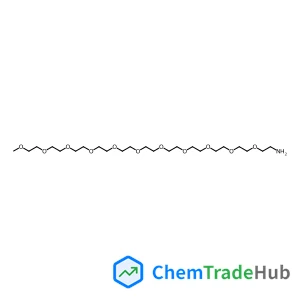
2,5,8,11,14,17,20,23,26,29,32-Undecaoxatetratriacontan-34-amine
CAS Number:
854601-60-8
Molecular Formula:
C23H49NO11
![1,1'-[(E)-1,2-Ethenediyl]bis(4-bromobenzene) structure](https://static.chemtradehub.com/structs/188/18869-30-2-c907.webp "1,1'-[(E)-1,2-Ethenediyl]bis(4-bromobenzene) structure")
Recommended Suppliers





Disclaimer
This page provides academic journal information for reference and research purposes only. We are not affiliated with any journal publishers and do not handle publication submissions. For publication-related inquiries, please contact the respective journal publishers directly.
If you notice any inaccuracies in the information displayed, please contact us at support@chemtradehub.com. We will promptly review and address your concerns.