











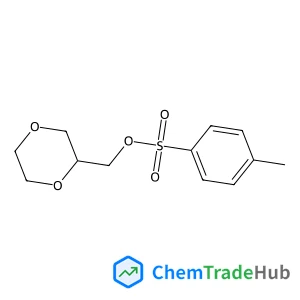
(S)-(1,4-Dioxan-2-yl)methyl 4-methylbenzenesulfonate
CAS Number:
917882-64-5
Molecular Formula:
C12H16O5S
Ranjan Kumar Acharyya, Pratik Pal, Shrestha Chatterjee, Samik Nanda
Asymmetric total synthesis of the naturally occurring cryptoconcatone I, which possesses a γ-Z-butenolide framework, is described here for the first time. Asymmetric propargylation, E-selective cross metathesis, and regioselective reductive epoxide ring opening were employed to access the enantiopure terminal alkyne. Late stage bimetallic cascade cyclization of the alkyne with (Z)-3-bromoacrylic acid afforded the natural product in an efficient way.
Qiang Sun
DOI: 10.1039/C6CP07589D
Hans-Gert Korth, Peter Mulder, Thomas Paul
DOI: 10.1039/C6CP04187F
Jan-Michael Mewes, Kyle T. Harris, David Lee Phillips, Andreas Dreuw
DOI: 10.1039/C6CP05499D
Ji-Chuang Hu, Lin-Lin Xu, Hai-Fang Li, David Yubero Valdivielso, André Fielicke, Sheng-Gui He, Jia-Bi Ma
DOI: 10.1039/C6CP06896K
K. Ragavendran, H. Xia, P. Mandal, A. K. Arof
DOI: 10.1039/C6CP07289E
Junran Lu, Lin Li, Hongxiao Cao, Yi Li, Jihong Yu
DOI: 10.1039/C6CP06217B
Damayanti Bagchi, Tuhin Kumar Maji, Samim Sardar, Chinmoy Bhattacharya, Debjani Karmakar, Samir Kumar Pal
DOI: 10.1039/C6CP08016B
Christina Roth
DOI: 10.1039/C6CP08360A
Laura Fernandez, Sebastian Thussing, Alexander Mänz, Jörg Sundermeyer, Gregor Witte, Peter Jakob
DOI: 10.1039/C6CP07922A
Zhenhai Yu, Yong Wang, John Schneeloch, Chunyu Li, Ruidan Zhong, Zhiguo Liu, Genda Gu
DOI: 10.1039/C6CP07324G
2-(2-Chloroacetamido)-3-phenylpropanoic acid (CAS: 7765-11-9) is generally consi...
2-(Benzyloxy)-5-bromobenzoic acid can be handled safely if appropriate precautio...
(4-Methyl-1,2,5-oxadiazol-3-yl)methanamine hydrochloride is a chemical compound ...
2-(5-Hexylthiophen-2-yl)-4,4,5,5-tetramethyl-1,3,2-dioxaborolane (CAS: 917985-54...
While 4-(8-Methyl-9H-1,3-dioxolo[4,5-h][2,3]benzodiazepin-5-yl)benzenamine (CAS:...
The market for tert-butyl 3-hydroxy-4,5,7,8-tetrahydro-2H-pyrazolo[3,4-d]azepine...
Waste containing 3,5-Diamino-1H-pyrazole-4-carbonitrile (CAS: 6844-58-2) should ...
(6-Fluoro-3-pyridinyl)boronic acid can be synthesized through the reaction of 6-...
Dibenzyl carbonimidoylbiscarbamate (CAS: 10065-79-9) finds applications in vario...
The market for (beta,beta,2,3,4,5,6-~2~H_7_)Phenylalanine (CAS: 74228-83-4) is g...

Organic & Biomolecular Chemistry (OBC) publishes original and high impact research and reviews in organic chemistry. We welcome research that shows new or significantly improved protocols or methodologies in total synthesis, synthetic methodology or physical and theoretical organic chemistry as well as research that shows a significant advance in the organic chemistry or molecular design aspects of chemical biology, catalysis, supramolecular and macromolecular chemistry, theoretical chemistry, mechanism-oriented physical organic chemistry, medicinal chemistry or natural products. Articles published in the journal should report new work which makes a highly-significant impact in the field. Routine and incremental work is generally not suitable for publication in the journal. More details about key areas of our scope are below. In all cases authors should include in their article clear rationale for why their research has been carried out.
![Ethyl thieno[3,2-f]quinoline-2-carboxylate structure](https://static.chemtradehub.com/structs/299/29948-26-3-f62b.webp "Ethyl thieno[3,2-f]quinoline-2-carboxylate structure")
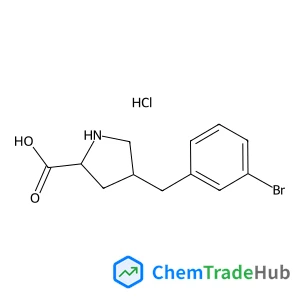
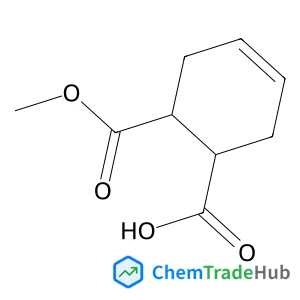
![{3-[Bis(4-hydroxyphenyl)methyl]-1-[2-(dimethylamino)ethyl]-1H-indol-2-yl}[4-(2-chlorophenyl)-1-piperazinyl]methanone structure](https://static.chemtradehub.com/structs/170/170365-25-0-e4d7.webp "{3-[Bis(4-hydroxyphenyl)methyl]-1-[2-(dimethylamino)ethyl]-1H-indol-2-yl}[4-(2-chlorophenyl)-1-piperazinyl]methanone structure")




