












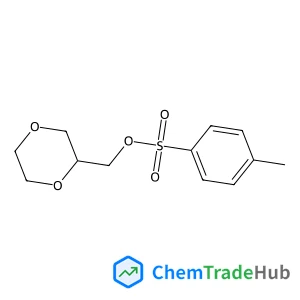
(S)-(1,4-Dioxan-2-yl)methyl 4-methylbenzenesulfonate
CAS Number:
917882-64-5
Molecular Formula:
C12H16O5S
Damayanti Bagchi, Tuhin Kumar Maji, Samim Sardar, Chinmoy Bhattacharya, Debjani Karmakar, Samir Kumar Pal
The immense pharmacological relevance of the herbal medicine curcumin including anti-cancer and anti-Alzheimer effects, suggests it to be a superior alternative to synthesised drugs. The diverse functionalities with minimal side effects intensify the use of curcumin not only as a dietary supplement but also as a therapeutic agent. Besides all this effectiveness, some recent literature reported the presence of deleterious heavy metal contaminants from various sources in curcumin leading to potential health hazards. In this regard, we attempt to fabricate ZnO based nanoprobes to detect metal conjugated curcumin. We have synthesized and structurally characterized the ZnO nanorods (NR). Three samples namely curcumin (pure), Zn–curcumin (non-toxic metal attached to curcumin) and Hg–curcumin (toxic heavy metal attached to curcumin) were prepared for consideration. The samples were electrochemically deposited onto ZnO surfaces and the attachment was confirmed by cyclic voltammetry experiments. Moreover, to confirm a molecular level interaction picosecond-resolved PL-quenching of ZnO NR due to Förster Resonance Energy Transfer (FRET) from donor ZnO NR to the acceptor curcumin moieties was employed. The attachment proximity of ZnO NR and curcumin moieties depends on the size of metals. First principles analysis suggests a variance of attachment sites and heavy metal Hg conjugated curcumin binds through a peripheral hydroxy group to NR. We fabricated a facile photovoltaic device consisting of ZnO NR as the working electrode with Pt counter electrode and iodide-triiodide as the electrolyte. The trend in photocurrent under visible light illumination suggests an enhancement in the case of heavy metal ions due to long range interaction and greater accumulation of charge at the active electrode. Our results provide a detailed physical insight into interfacial processes that are crucial for detecting heavy-metal attached phytomedicines and are thus expected to find vast application as sensors for the detection of selective metal contaminants.
Ryoya Kobayashi, Toshihiro Takashima, Satoshi Tanigawa, Shugo Takeuchi, Bunsho Ohtani
DOI: 10.1039/C6CP02903E
Avishek Banik, Mohammad Shaad Ansari, Tushar Kanta Sahu, Mohammad Qureshi
DOI: 10.1039/C6CP05544C
Mario Borgwardt, Martin Wilke, Igor Yu. Kiyan
DOI: 10.1039/C6CP05655E
Mario Gutierrez, Boiko Cohen, Félix Sánchez, Abderrazzak Douhal
DOI: 10.1039/C6CP03791G
Matin Kaufmann, Daniel Leicht, Raffael Schwan, Devendra Mani, Gerhard Schwaab, Martina Havenith
DOI: 10.1039/C6CP05042E
Jongseob Kim, Choong-Heui Chung, Ki-Ha Hong
DOI: 10.1039/C6CP02886A
DOI: 10.1039/C6CP04298H
Hao Su, Xiang Sheng, Yongjun Liu
DOI: 10.1039/C6CP04918D
W. Strek, R. Tomala, L. Marciniak, M. Lukaszewicz, B. Cichy, M. Stefanski, D. Hreniak, A. Kedziorski, M. Krosnicki, L. Seijo
DOI: 10.1039/C6CP04904D
2-(2-Chloroacetamido)-3-phenylpropanoic acid (CAS: 7765-11-9) is generally consi...
2-(Benzyloxy)-5-bromobenzoic acid can be handled safely if appropriate precautio...
(4-Methyl-1,2,5-oxadiazol-3-yl)methanamine hydrochloride is a chemical compound ...
2-(5-Hexylthiophen-2-yl)-4,4,5,5-tetramethyl-1,3,2-dioxaborolane (CAS: 917985-54...
While 4-(8-Methyl-9H-1,3-dioxolo[4,5-h][2,3]benzodiazepin-5-yl)benzenamine (CAS:...
The market for tert-butyl 3-hydroxy-4,5,7,8-tetrahydro-2H-pyrazolo[3,4-d]azepine...
Waste containing 3,5-Diamino-1H-pyrazole-4-carbonitrile (CAS: 6844-58-2) should ...
(6-Fluoro-3-pyridinyl)boronic acid can be synthesized through the reaction of 6-...
Dibenzyl carbonimidoylbiscarbamate (CAS: 10065-79-9) finds applications in vario...
The market for (beta,beta,2,3,4,5,6-~2~H_7_)Phenylalanine (CAS: 74228-83-4) is g...

Physical Chemistry Chemical Physics (PCCP) is an international journal co-owned by 19 physical chemistry and physics societies from around the world. This journal publishes original, cutting-edge research in physical chemistry, chemical physics and biophysical chemistry. To be suitable for publication in PCCP, articles must include significant innovation and/or insight into physical chemistry; this is the most important criterion that reviewers and Editors will judge against when evaluating submissions. The journal has a broad scope and welcomes contributions spanning experiment, theory, computation and data science. Topical coverage includes spectroscopy, dynamics, kinetics, statistical mechanics, thermodynamics, electrochemistry, catalysis, surface science, quantum mechanics, quantum computing and machine learning. Interdisciplinary research areas such as polymers and soft matter, materials, nanoscience, energy, surfaces/interfaces, and biophysical chemistry are welcomed if they demonstrate significant innovation and/or insight into physical chemistry. Joined experimental/theoretical studies are particularly appreciated when complementary and based on up-to-date approaches.
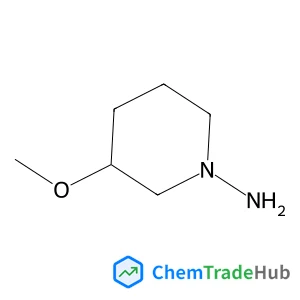
![Ethyl ({[(2-methyl-2-propanyl)oxy]carbonyl}amino)(2-pyridinyl)acetate structure](https://static.chemtradehub.com/structs/313/313490-90-3-dd15.webp "Ethyl ({[(2-methyl-2-propanyl)oxy]carbonyl}amino)(2-pyridinyl)acetate structure")
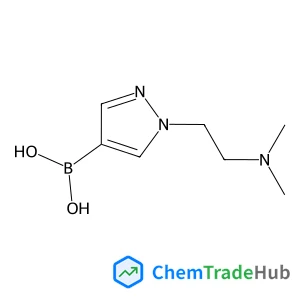
![2-[(E)-(2-Methoxyphenyl)diazenyl]-3-oxo-N-(2-oxo-2,3-dihydro-1H-benzimidazol-5-yl)butanamide structure](https://static.chemtradehub.com/structs/821/82199-12-0-f1d0.webp "2-[(E)-(2-Methoxyphenyl)diazenyl]-3-oxo-N-(2-oxo-2,3-dihydro-1H-benzimidazol-5-yl)butanamide structure")



