











Direct C–S bond formation via C–O bond activation of phenols in a crossover Pd/Cu dual-metal catalysis system
Literature Information
Publication Date
2019-04-10
DOI
10.1039/C9OB00313D
Impact Factor
3.876
Authors
Vahid Khakyzadeh, Abed Rostami, Hojat Veisi, Behzad Shirmardi Shaghasemi, Erik Reimhult, Yuanzhi Xia, Sima Darvishi
View Original
Abstract
A dual-metal catalysis system including a newly prepared nanoparticle [SiO2@organic-linker(OL)@Pd(II)] and CuI was introduced with ultra-high catalytic activity (high turnover number (TON), up to 19 000) to a one-pot and odorless synthesis of unsymmetrical aryl sulfides by crossover C–S bond formation. The reaction proceeds via C–O bond activation of phenols and direct C–S bond formation in the presence of S8 as an oddorless sulfur source and aryl boronic acids under mild conditions (room temperature). The catalyst could be recycled up to five times without an obvious change in its activity.
Related Literature
Adsorption of CO on the rutile TiO2(110) surface: a dispersion-corrected density functional theory study
João P. Prates Ramalho, Francesc Illas, José R. B. Gomes
2016-12-20
Paper
DOI: 10.1039/C6CP06971A
Dynamic phase change and local structures in IL-containing mixtures: classical MD simulations and experiments
Yang Wu, Xia Wang, Qiaozhen Liu, Dawei Fang, Xuefei Jiang, Wei Guan
2016-12-16
Paper
DOI: 10.1039/C6CP06300D
Structural, elastic, electronic, and optical properties of the tricycle-like phosphorene
Yang Zhang, Zhi-Feng Wu, Peng-Fei Gao, Dang-Qi Fang, Er-Hu Zhang, Sheng-Li Zhang
2016-12-12
Paper
DOI: 10.1039/C6CP07575D
Reactions driving conformational movements (molecular motors) in gels: conformational and structural chemical kinetics
2016-12-06
Perspective
DOI: 10.1039/C6CP06735B
Excited state proton transfer in 2′-hydroxychalcone derivatives
Michael Dommett, Rachel Crespo-Otero
2016-12-22
Paper
DOI: 10.1039/C6CP07541J
Hysteresis phenomena in perovskite solar cells: the many and varied effects of ionic accumulation
Daniel A. Jacobs, Yiliang Wu, Heping Shen, Chog Barugkin, Fiona J. Beck, Thomas P. White, Klaus Weber, Kylie R. Catchpole
2017-01-03
Paper
DOI: 10.1039/C6CP06989D
Distant ultrafast energy transfer in a trimetallic {Ru–Ru–Cr} complex facilitated by hole delocalization
Alejandro Cadranel, Jaired E. Tate, Paola S. Oviedo, Shiori Yamazaki, José H. Hodak, Luis M. Baraldo, Valeria D. Kleiman
2016-12-20
Paper
DOI: 10.1039/C6CP06562G
Gold-supported two-dimensional cobalt oxyhydroxide (CoOOH) and multilayer cobalt oxide islands
Jakob Fester, Alex Walton, Zheshen Li, Jeppe V. Lauritsen
2016-12-21
Paper
DOI: 10.1039/C6CP07901F
Electrode–particle impacts: a users guide
Stanislav V. Sokolov, Shaltiel Eloul, Enno Kätelhön, Christopher Batchelor-McAuley, Richard G. Compton
2016-11-22
Perspective
DOI: 10.1039/C6CP07788A
Three-dimensional metal–organic framework derived porous CoP3 concave polyhedrons as superior bifunctional electrocatalysts for the evolution of hydrogen and oxygen
Tianli Wu, Mingyu Pi, Xiaodeng Wang, Dingke Zhang, Shijian Chen
2016-12-14
Paper
DOI: 10.1039/C6CP07294A
You might also like
Compound Q&A
Is 2-(2-chloroacetamido)-3-phenylpropanoic acid (CAS: 7765-11-9) safe?
2-(2-Chloroacetamido)-3-phenylpropanoic acid (CAS: 7765-11-9) is generally consi...
7765-11-92-(2-chloroacetamido...
Compound Q&A
Is 2-(Benzyloxy)-5-bromobenzoic acid (CAS: 62176-31-2) safe?
2-(Benzyloxy)-5-bromobenzoic acid can be handled safely if appropriate precautio...
62176-31-22-(Benzyloxy)-5-brom...
Compound Q&A
What is (4-Methyl-1,2,5-oxadiazol-3-yl)methanamine hydrochloride (CAS: 1159825-48-5)?
(4-Methyl-1,2,5-oxadiazol-3-yl)methanamine hydrochloride is a chemical compound ...
1159825-48-5(4-Methyl-1,2,5-oxad...
Compound Q&A
What is 2-(5-Hexylthiophen-2-yl)-4,4,5,5-tetramethyl-1,3,2-dioxaborolane (CAS: 917985-54-7)?
2-(5-Hexylthiophen-2-yl)-4,4,5,5-tetramethyl-1,3,2-dioxaborolane (CAS: 917985-54...
917985-54-72-(5-Hexylthiophen-2...
Compound Q&A
Are there alternatives to 4-(8-Methyl-9H-1,3-dioxolo[4,5-h][2,3]benzodiazepin-5-yl)benzenamine (CAS: 102771-26-6) in synthesis?
While 4-(8-Methyl-9H-1,3-dioxolo[4,5-h][2,3]benzodiazepin-5-yl)benzenamine (CAS:...
102771-26-64-(8-Methyl-9H-1,3-d...
Compound Q&A
What is the market or research trend for tert-butyl 3-hydroxy-4,5,7,8-tetrahydro-2H-pyrazolo[3,4-d]azepine-6-carboxylate (CAS: 851376-80-2)?
The market for tert-butyl 3-hydroxy-4,5,7,8-tetrahydro-2H-pyrazolo[3,4-d]azepine...
851376-80-2tert-butyl 3-hydroxy...
Compound Q&A
How should waste containing 3,5-Diamino-1H-pyrazole-4-carbonitrile (CAS: 6844-58-2) be handled?
Waste containing 3,5-Diamino-1H-pyrazole-4-carbonitrile (CAS: 6844-58-2) should ...
6844-58-23,5-Diamino-1H-pyraz...
Compound Q&A
How is (6-Fluoro-3-pyridinyl)boronic acid (CAS: 351019-18-6) typically synthesized?
(6-Fluoro-3-pyridinyl)boronic acid can be synthesized through the reaction of 6-...
351019-18-6(6-Fluoro-3-pyridiny...
Compound Q&A
What industries use Dibenzyl carbonimidoylbiscarbamate (CAS: 10065-79-9)?
Dibenzyl carbonimidoylbiscarbamate (CAS: 10065-79-9) finds applications in vario...
10065-79-9Dibenzyl carbonimido...
Compound Q&A
What is the market or research trend for (beta,beta,2,3,4,5,6-~2~H_7_)Phenylalanine (CAS: 74228-83-4)?
The market for (beta,beta,2,3,4,5,6-~2~H_7_)Phenylalanine (CAS: 74228-83-4) is g...
74228-83-4(beta,beta,2,3,4,5,6...
Source Journal
Organic & Biomolecular Chemistry

CiteScore:
3.4
Self-citation Rate:
10.3%
Articles per Year:
1041
Organic & Biomolecular Chemistry (OBC) publishes original and high impact research and reviews in organic chemistry. We welcome research that shows new or significantly improved protocols or methodologies in total synthesis, synthetic methodology or physical and theoretical organic chemistry as well as research that shows a significant advance in the organic chemistry or molecular design aspects of chemical biology, catalysis, supramolecular and macromolecular chemistry, theoretical chemistry, mechanism-oriented physical organic chemistry, medicinal chemistry or natural products. Articles published in the journal should report new work which makes a highly-significant impact in the field. Routine and incremental work is generally not suitable for publication in the journal. More details about key areas of our scope are below. In all cases authors should include in their article clear rationale for why their research has been carried out.
Recommended Compounds
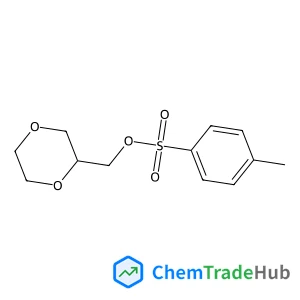
(S)-(1,4-Dioxan-2-yl)methyl 4-methylbenzenesulfonate
CAS Number:
917882-64-5
Molecular Formula:
C12H16O5S
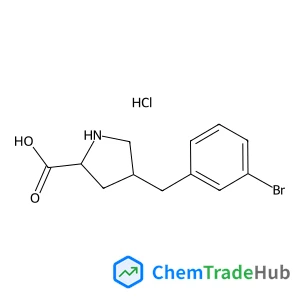
(2S,4R)-4-(3-Bromobenzyl)pyrrolidine-2-carboxylic acid hydrochloride
CAS Number:
1049734-10-2
Molecular Formula:
C12H15BrClNO2
Recommended Suppliers



Disclaimer
This page provides academic journal information for reference and research purposes only. We are not affiliated with any journal publishers and do not handle publication submissions. For publication-related inquiries, please contact the respective journal publishers directly.
If you notice any inaccuracies in the information displayed, please contact us at support@chemtradehub.com. We will promptly review and address your concerns.