Trichloro(3,3,4,4,5,5,6,6,7,7,8,8,8-tridecafluorooctyl)silane
CAS Number:
78560-45-9
Molecular Formula:
C8H4Cl3F13Si
A graphical abstract is available for this content
K. McCluskey
DOI: 10.1039/C6CP08798A
M. Consuelo Cuquerella, Virginie Lhiaubet-Vallet, Miguel A. Miranda, Francisco Bosca
DOI: 10.1039/C6CP08485K
Jinchang Yin, Chaorui Li, Deqi Chen, Jiajun Yang, Huan Liu, Wenyong Hu, Yuanzhi Shao
DOI: 10.1039/C6CP06712C
Min Li
DOI: 10.1039/C6CP07958J
V. V. Medvedev, E. Gullikson, B. Padavala, J. H. Edgar, R. W. E. van de Kruijs, F. Bijkerk, D. Prendergast
DOI: 10.1039/C6CP06967C
Dylan J. Sures, Stefano A. Serapian, Károly Kozma, Pedro I. Molina, Carles Bo, May Nyman
DOI: 10.1039/C6CP08454K
Sean R. Tachibana, Longteng Tang, Yanli Wang, Weimin Liu
DOI: 10.1039/C6CP08821J
Diana P. Slough, Hongtao Yu, Sean M. McHugh, Yu-Shan Lin
DOI: 10.1039/C6CP07700E
E. Portenkirchner, G. Neri, J. Lichtinger, J. Brumbarov, R. Gernhäuser, J. Kunze-Liebhäuser
DOI: 10.1039/C7CP00180K
1H-Indazole-6-carbonitrile finds applications in pharmaceuticals, where it serve...
Waste containing Dioctyl (2E)-2-butenedioate (CAS: 2997-85-5) should be collecte...
Sodium [(1,2-benzoxazol-3-ylmethyl)sulfonyl]azanide is primarily used in pharmac...
Dimethyl 4-(4,4,5,5-tetramethyl-1,3,2-dioxaborolan-2-yl)-2,6-pyridinedicarboxyla...
Waste containing 2-Fluoro-6-hydrazinopyridine (CAS: 80714-39-2) should be manage...
6-Formyl-2-pyridinecarboxylic acid is an organic compound with the molecular for...
Research trends for this compound indicate a focus on its potential applications...
9H-Tribenzo[b,d,f]azepine is typically synthesized via a multi-step process invo...
1-Cyclopropyl-7-ethoxy-6-fluoro-8-methoxy-4-oxo-1,4-dihydro-3-quinolinecarboxyli...
Waste containing Methyl 3-oxo-1,2,3,4-tetrahydro-6-quinoxalinecarboxylate (CAS: ...

Physical Chemistry Chemical Physics (PCCP) is an international journal co-owned by 19 physical chemistry and physics societies from around the world. This journal publishes original, cutting-edge research in physical chemistry, chemical physics and biophysical chemistry. To be suitable for publication in PCCP, articles must include significant innovation and/or insight into physical chemistry; this is the most important criterion that reviewers and Editors will judge against when evaluating submissions. The journal has a broad scope and welcomes contributions spanning experiment, theory, computation and data science. Topical coverage includes spectroscopy, dynamics, kinetics, statistical mechanics, thermodynamics, electrochemistry, catalysis, surface science, quantum mechanics, quantum computing and machine learning. Interdisciplinary research areas such as polymers and soft matter, materials, nanoscience, energy, surfaces/interfaces, and biophysical chemistry are welcomed if they demonstrate significant innovation and/or insight into physical chemistry. Joined experimental/theoretical studies are particularly appreciated when complementary and based on up-to-date approaches.
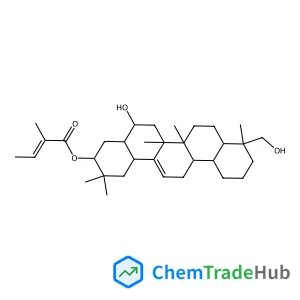

![N-[(9H-Fluoren-9-ylmethoxy)carbonyl]serine structure](https://static.chemtradehub.com/structs/737/73724-45-5-b0dc.webp "N-[(9H-Fluoren-9-ylmethoxy)carbonyl]serine structure")