













Structure and dysprosium dopant engineering of gadolinium oxide nanoparticles for enhanced dual-modal magnetic resonance and fluorescence imaging
Literature Information
Publication Date
2017-01-23
DOI
10.1039/C6CP06712C
Impact Factor
3.676
Authors
Jinchang Yin, Chaorui Li, Deqi Chen, Jiajun Yang, Huan Liu, Wenyong Hu, Yuanzhi Shao
View Original
Abstract
We report a class of multi-functional core–shell nanoarchitectures, consisting of silica nanospheres as the core and Gd2O3:Dy3+ nanocrystals as the ultra-thin shell, that enable unique multi-color living cell imaging and remarkable in vivo magnetic resonance imaging. These types of targeted cell imaging nanoarchitectures can be used as a variety of fluorescence nanoprobes due to the multi-color emissions of the Gd2O3:Dy3+ nanophosphor. We also proposed a strategy of modulating core–shell structure design to achieve an enhanced magnetic resonance contrast ability of Gd2O3 nanoagents, and the classical Solomon–Bloembergen–Morgan theory was applied to explicate the mechanism underlying the enhancement. The as-synthesized ligand-free nanomaterial possesses a suitable particle size for cellular uptake as well as avoiding penetrating the blood–brain barrier with good water-solubility, stability, dispersibility and uniformity. The extremely low cytotoxicity and favorable biocompatibility obtained from in vitro and in vivo bioassays of the as-designed nanoparticles indicate their excellent potential as a candidate for functioning as a targeted nanoprobe.
Related Literature
ELDOR-detected NMR beyond hyperfine couplings: a case study with Cu(ii)-porphyrin dimers
Nino Wili, Sabine Richert, Bart Limburg, Simon J. Clarke, Harry L. Anderson, Christiane R. Timmel, Gunnar Jeschke
2019-05-21
Paper
DOI: 10.1039/C9CP01760G
Vibrational sum-frequency generation spectroscopy of electrode surfaces: studying the mechanisms of sustainable fuel generation and utilisation
Adrian M. Gardner, Khezar H. Saeed, Alexander J. Cowan
2019-05-23
Perspective
DOI: 10.1039/C9CP02225B
Chemical pressure–chemical knowledge: squeezing bonds and lone pairs within the valence shell electron pair repulsion model
A. Lobato, H. H. Osman, M. A. Salvadó, M. Taravillo, J. M. Recio
2019-05-10
Paper
DOI: 10.1039/C9CP00913B
Understanding the loss mechanisms in high-performance solution-processed small molecule bulk heterojunction solar cells doped with a PFN impurity
Ali Aghassi, Cormac D. Fay
2019-05-24
Paper
DOI: 10.1039/C9CP01732A
A Monte Carlo model for self-assembly of polytetrafluoroethylene nanoparticle films via repulsive electrostatic interactions
Chuan Du, Dong Feng, Chaolang Chen, Jiadao Wang
2019-05-20
Paper
DOI: 10.1039/C9CP01856E
Modifications in coordination structure of Mg[TFSA]2-based supporting salts for high-voltage magnesium rechargeable batteries
Kenji Tatesaka, Kenya Soh, Hyuma Masu, Ashu Choudhary, Ryuta Ise, Hiroaki Imai, Tatsuya Takeguchi, Kiyoshi Kanamura
2019-04-17
Paper
DOI: 10.1039/C9CP01400D
Interface-tuned selective reductive coupling of nitroarenes to aromatic azo and azoxy: a first-principles-based microkinetics study
Lidong Zhang, Zheng-Jiang Shao, Xiao-Ming Cao
2019-05-20
Paper
DOI: 10.1039/C9CP01795J
Depletion of atmospheric organic trace gases due to their uptake by an ensemble of aqueous aerosols evolving via concurrent condensation and chemical aging
Yuri S. Djikaev, Eli Ruckenstein
2019-05-28
Paper
DOI: 10.1039/C9CP01386E
You might also like
Compound Q&A
What are the main uses of 1H-Indazole-6-carbonitrile (CAS: 141290-59-7)?
1H-Indazole-6-carbonitrile finds applications in pharmaceuticals, where it serve...
141290-59-71H-Indazole-6-carbon...
Compound Q&A
How should waste containing Dioctyl (2E)-2-butenedioate (CAS: 2997-85-5) be handled?
Waste containing Dioctyl (2E)-2-butenedioate (CAS: 2997-85-5) should be collecte...
2997-85-5Dioctyl (2E)-2-buten...
Compound Q&A
What industries use Sodium [(1,2-benzoxazol-3-ylmethyl)sulfonyl]azanide (CAS: 68291-98-5)?
Sodium [(1,2-benzoxazol-3-ylmethyl)sulfonyl]azanide is primarily used in pharmac...
68291-98-5Sodium [(1,2-benzoxa...
Compound Q&A
Are there alternatives to Dimethyl 4-(4,4,5,5-tetramethyl-1,3,2-dioxaborolan-2-yl)-2,6-pyridinedicarboxylate (CAS: 741709-66-0) in synthesis?
Dimethyl 4-(4,4,5,5-tetramethyl-1,3,2-dioxaborolan-2-yl)-2,6-pyridinedicarboxyla...
741709-66-0Dimethyl 4-(4,4,5,5-...
Compound Q&A
How should waste containing 2-Fluoro-6-hydrazinopyridine (CAS: 80714-39-2) be handled?
Waste containing 2-Fluoro-6-hydrazinopyridine (CAS: 80714-39-2) should be manage...
80714-39-22-Fluoro-6-hydrazino...
Compound Q&A
What is 6-Formyl-2-pyridinecarboxylic acid (CAS: 499214-11-8)?
6-Formyl-2-pyridinecarboxylic acid is an organic compound with the molecular for...
499214-11-86-Formyl-2-pyridinec...
Compound Q&A
What is the market or research trend for 3-(3,4-dimethoxyphenyl)-2,5-dimethyl-N-(2-morpholin-4-ylethyl)pyrazolo[1,5-a]pyrimidin-7-amine (CAS: 900874-91-1)?
Research trends for this compound indicate a focus on its potential applications...
900874-91-13-(3,4-dimethoxyphen...
Compound Q&A
How is 9H-Tribenzo[b,d,f]azepine (CAS: 29875-73-8) typically synthesized?
9H-Tribenzo[b,d,f]azepine is typically synthesized via a multi-step process invo...
29875-73-89H-Tribenzo[b,d,f]az...
Compound Q&A
How is 1-Cyclopropyl-7-ethoxy-6-fluoro-8-methoxy-4-oxo-1,4-dihydro-3-quinolinecarboxylic acid (CAS: 1797982-51-4) typically synthesized?
1-Cyclopropyl-7-ethoxy-6-fluoro-8-methoxy-4-oxo-1,4-dihydro-3-quinolinecarboxyli...
1797982-51-41-Cyclopropyl-7-etho...
Compound Q&A
How should waste containing Methyl 3-oxo-1,2,3,4-tetrahydro-6-quinoxalinecarboxylate (CAS: 671820-52-3) be handled?
Waste containing Methyl 3-oxo-1,2,3,4-tetrahydro-6-quinoxalinecarboxylate (CAS: ...
671820-52-3Methyl 3-oxo-1,2,3,4...
Source Journal
Physical Chemistry Chemical Physics

CiteScore:
5.5
Self-citation Rate:
10.3%
Articles per Year:
3036
Physical Chemistry Chemical Physics (PCCP) is an international journal co-owned by 19 physical chemistry and physics societies from around the world. This journal publishes original, cutting-edge research in physical chemistry, chemical physics and biophysical chemistry. To be suitable for publication in PCCP, articles must include significant innovation and/or insight into physical chemistry; this is the most important criterion that reviewers and Editors will judge against when evaluating submissions. The journal has a broad scope and welcomes contributions spanning experiment, theory, computation and data science. Topical coverage includes spectroscopy, dynamics, kinetics, statistical mechanics, thermodynamics, electrochemistry, catalysis, surface science, quantum mechanics, quantum computing and machine learning. Interdisciplinary research areas such as polymers and soft matter, materials, nanoscience, energy, surfaces/interfaces, and biophysical chemistry are welcomed if they demonstrate significant innovation and/or insight into physical chemistry. Joined experimental/theoretical studies are particularly appreciated when complementary and based on up-to-date approaches.
Recommended Compounds

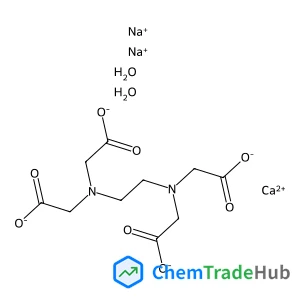
EthylenediaminetetraaceticacidcalciumDisodiumsalthydrate
CAS Number:
23411-34-9
Molecular Formula:
C10H16CaN2Na2O10

Recommended Suppliers




Disclaimer
This page provides academic journal information for reference and research purposes only. We are not affiliated with any journal publishers and do not handle publication submissions. For publication-related inquiries, please contact the respective journal publishers directly.
If you notice any inaccuracies in the information displayed, please contact us at support@chemtradehub.com. We will promptly review and address your concerns.