












Sulfate modified g-C3N4 with enhanced photocatalytic activity towards hydrogen evolution: the role of sulfate in photocatalysis
Literature Information
Publication Date
2020-04-06
DOI
10.1039/C9CP07002H
Impact Factor
3.676
Authors
Qianwen Chen, Yun Zhao, Lei Zeng, Chunzhen Yang, Feng Huang
View Original
Abstract
Sulfate modified graphitic carbon nitride (g-C3N4) was prepared by simple co-pyrolysis of dicyandiamide and ammonium sulfate, and shows seven times higher photocatalytic activity towards hydrogen production than pristine g-C3N4. The origin of its improved photocatalytic activity was comprehensively investigated, and it was found that there are two kinds of sulfate (strongly adsorbed sulfate and a weakly adsorbed one) in the modified sample, both of which play important but slightly different roles in the photocatalysis. Compared to the strongly adsorbed one, the weakly adsorbed sulfate is more beneficial for charge separation and thus promotes more electrons to participate in the photocatalytic reaction. By applying the above synthesis method, most sulfate in our best photocatalyst exists as weakly adsorbed species, which is confirmed by advanced characterization techniques as well as DFT calculations. The increased number of electrons and improved charge separation, which are induced by the weakly adsorbed sulfate, are key to boosting the photocatalytic activity of g-C3N4. Hence, this work provides comprehensive insights into the effect of sulfate on the photocatalytic activity of g-C3N4, which help in the design of more efficient photocatalysts by suitable surface modification.
Recommended Journals
Related Literature
The fate of plasma-generated oxygen atoms in aqueous solutions: non-equilibrium atmospheric pressure plasmas as an efficient source of atomic O(aq)
J. Benedikt, A. Shaw, B. R. Buckley, F. Iza, S. Schäkermann, J. E. Bandow
2018-04-19
Paper
DOI: 10.1039/C8CP00197A
The reaction of fluorine atoms with methanol: yield of CH3O/CH2OH and rate constant of the reactions CH3O + CH3O and CH3O + HO2
Emmanuel Assaf, Coralie Schoemaecker, Luc Vereecken, Christa Fittschen
2017-11-06
Paper
DOI: 10.1039/C7CP05770A
Excimer formation and evolution of excited state properties in discrete dimeric stacking of an anthracene derivative: a computational investigation
Yu Gao, Haichao Liu, Shitong Zhang, Qiang Gu, Yue Shen, Yunpeng Ge, Bing Yang
2018-04-06
Paper
DOI: 10.1039/C8CP00834E
Plasmonic sphere-on-plane systems with semiconducting polymer spacer layers
Binxing Yu, Jill I. Tracey, Zhongkai Cheng, Martin Vacha
2018-03-26
Paper
DOI: 10.1039/C8CP01314D
Unique orientations and rotational dynamics of a 1-butyl-3-methyl-imidazolium hexafluorophosphate ionic liquid at the gas–liquid interface: the effects of the hydrogen bond and hydrophobic interactions
Fangjia Fu, Li Li, Zhen Yang, Zheng Wan, Yi Luo, Na Hu, Xiangshu Chen, Guixiang Zeng
2018-04-04
Paper
DOI: 10.1039/C8CP00839F
Dynamical modes of two almost identical chemical oscillators connected via both pulsatile and diffusive coupling
2018-04-03
Paper
DOI: 10.1039/C7CP08032H
Direct observation of stepwise intermolecular proton and hydrogen transfer between alcohols and the triplet state of 4-nitro-1-naphthol
Fengjin Zhang, Di Zhang, Yong Du, Peipei Jin, Yanying Zhao, Xuming Zheng, Jiadan Xue
2018-04-17
Paper
DOI: 10.1039/C8CP00484F
Vibrational spectroscopy of hydrogens in diamond: a quantum mechanical treatment
Francesco Silvio Gentile, Simone Salustro, Anna Maria Ferrari, Philippe D'Arco, Roberto Dovesi
2018-04-04
Paper
DOI: 10.1039/C8CP00596F
Effects of crystal structure and composition on the photocatalytic performance of Ta–O–N functional materials
Qing-Lu Liu, Zong-Yan Zhao, Jian-Hong Yi
2018-03-27
Paper
DOI: 10.1039/C8CP00432C
You might also like
Compound Q&A
What are the main uses of 1-(3-Aminophenyl)-3-[(3R)-1-(3,3-dimethyl-2-oxobutyl)-2-oxo-5-(2-pyridinyl)-2,3-dihydro-1H-1,4-benzodiazepin-3-yl]urea (CAS: 155412-88-7)?
This compound is mainly used as an intermediate in the synthesis of antipsychoti...
155412-88-71-(3-Aminophenyl)-3-...
Compound Q&A
How should waste containing 1-(D-Ribofuranosyl)-1,4-dihydro-3-pyridinecarboxamide (CAS: 19132-12-8) be handled?
Waste containing 1-(D-Ribofuranosyl)-1,4-dihydro-3-pyridinecarboxamide (CAS: 191...
19132-12-81-(D-Ribofuranosyl)-...
Compound Q&A
What regulatory guidelines apply to 2-Methyl-2-propanyl 3-bromo-3-(hydroxymethyl)-1-azetidinecarboxylate (CAS: 2007919-81-3)?
2-Methyl-2-propanyl 3-bromo-3-(hydroxymethyl)-1-azetidinecarboxylate (CAS: 20079...
2007919-81-32-Methyl-2-propanyl ...
Compound Q&A
What is N-(4-Chloro-2-pyridinyl)acetamide (CAS: 245056-66-0)?
N-(4-Chloro-2-pyridinyl)acetamide (CAS: 245056-66-0) is a chemical compound with...
245056-66-0N-(4-Chloro-2-pyridi...
Compound Q&A
What is 5-Chloro-2-hydroxybenzoic acid (CAS: 321-14-2)?
5-Chloro-2-hydroxybenzoic acid, also known as 5-chlorosalicylic acid, is an arom...
321-14-25-Chloro-2-hydroxybe...
Compound Q&A
What precautions should be taken when handling 1,1-Dichloro-1-fluoroethane (CAS: 1717-00-6)?
When handling 1,1-Dichloro-1-fluoroethane (CAS: 1717-00-6), it is important to u...
1717-00-61,1-Dichloro-1-fluor...
Compound Q&A
What are the physical and chemical properties of Fmoc-(2S,3R)-3-phenylpyrrolidine-2-carboxylic acid (CAS: 281655-32-1)?
Fmoc-(2S,3R)-3-phenylpyrrolidine-2-carboxylic acid is a white crystalline solid ...
281655-32-1Fmoc-(2S,3R)-3-pheny...
Compound Q&A
What are the main uses of 4-Amino-5-bromo-2-pyridinecarboxylic acid (CAS: 1363381-01-4)?
4-Amino-5-bromo-2-pyridinecarboxylic acid is primarily used as a precursor in th...
1363381-01-44-Amino-5-bromo-2-py...
Compound Q&A
What precautions should be taken when handling (S)-tert-butyl 2-((2-(4-bromophenyl)-2-oxoethyl)carbamoyl)pyrrolidine-1-carboxylate (CAS: 1007881-98-2)?
Handling this compound should be done with personal protective equipment (PPE) i...
1007881-98-2(S)-tert-butyl 2-((2...
Compound Q&A
What precautions should be taken when handling 8-bromo-2,2-dimethyl-3,4-dihydro-2H-1,4-benzoxazin-3-one (CAS: 688363-73-7)?
When handling 8-bromo-2,2-dimethyl-3,4-dihydro-2H-1,4-benzoxazin-3-one, use prop...
688363-73-78-bromo-2,2-dimethyl...
Source Journal
Physical Chemistry Chemical Physics

CiteScore:
5.5
Self-citation Rate:
10.3%
Articles per Year:
3036
Physical Chemistry Chemical Physics (PCCP) is an international journal co-owned by 19 physical chemistry and physics societies from around the world. This journal publishes original, cutting-edge research in physical chemistry, chemical physics and biophysical chemistry. To be suitable for publication in PCCP, articles must include significant innovation and/or insight into physical chemistry; this is the most important criterion that reviewers and Editors will judge against when evaluating submissions. The journal has a broad scope and welcomes contributions spanning experiment, theory, computation and data science. Topical coverage includes spectroscopy, dynamics, kinetics, statistical mechanics, thermodynamics, electrochemistry, catalysis, surface science, quantum mechanics, quantum computing and machine learning. Interdisciplinary research areas such as polymers and soft matter, materials, nanoscience, energy, surfaces/interfaces, and biophysical chemistry are welcomed if they demonstrate significant innovation and/or insight into physical chemistry. Joined experimental/theoretical studies are particularly appreciated when complementary and based on up-to-date approaches.
Recommended Compounds
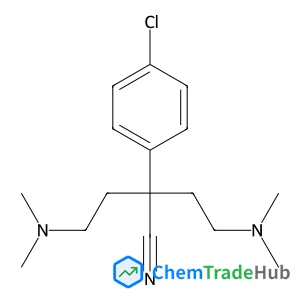
2-(4-Chlorophenyl)-4-(dimethylamino)-2-(2-(dimethylamino)ethyl)butanenitrile
CAS Number:
1246816-57-8
Molecular Formula:
C16H24ClN3
Recommended Suppliers





Disclaimer
This page provides academic journal information for reference and research purposes only. We are not affiliated with any journal publishers and do not handle publication submissions. For publication-related inquiries, please contact the respective journal publishers directly.
If you notice any inaccuracies in the information displayed, please contact us at support@chemtradehub.com. We will promptly review and address your concerns.