












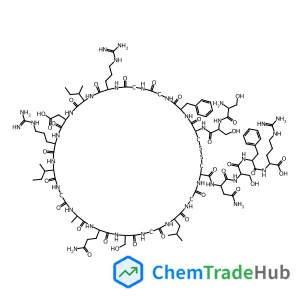
Protein–protein interactions within photosystem II under photoprotection: the synergy between CP29 minor antenna, subunit S (PsbS) and zeaxanthin at all-atom resolution
Literature Information
Publication Date
2018-04-03
DOI
10.1039/C8CP01226A
Impact Factor
3.676
Authors
View Original
Abstract
The assembly and disassembly of protein complexes within cells are crucial life-sustaining processes. In photosystem II (PSII) of higher plants, there is a delicate yet obscure balance between light harvesting and photo-protection under fluctuating light conditions, that involves protein–protein complexes. Recent breakthroughs in molecular dynamics (MD) simulations are combined with new approaches herein to provide structural and energetic insight into such a complex between the CP29 minor antenna and the PSII subunit S (PsbS). The microscopic model involves extensive sampling of bound and dissociated states at atomic resolution in the presence of photo-protective zeaxanthin (Zea), and reveals well defined protein–protein cross-sections. The complex is placed within PSII, and macroscopic connections are emerging (PsbS–CP29–CP24–CP47) along the energy transfer pathways from the antenna to the PSII core. These connections explain macroscopic observations in the literature, while the previously obscured atomic scale details are now revealed. The implications of these findings are discussed in the context of the Non-Photochemical Quenching (NPQ) of chlorophyll fluorescence, the down-regulatory mechanism of photosynthesis, that enables the protection of PSII against excess excitation load. Zea is found at the PsbS–CP29 cross-section and a pH-dependent equilibrium between PsbS dimer/monomers and the PsbS–CP29 dissociation/association is identified as the target for engineering tolerant plants with increased crop and biomass yields. Finally, the new MD based approaches can be used to probe protein–protein interactions in general, and the PSII structure provided can initiate large scale molecular simulations of the photosynthetic apparatus, under NPQ conditions.
Related Literature
The gelation influence on diffusion and conductivity enhancement effect in renewable ionic gels based on a LMWG
M. Bielejewski, A. Rachocki, J. Kaszyńska, J. Tritt-Goc
2018-01-24
Paper
DOI: 10.1039/C7CP07740H
Optical absorption and photoconductivity in iodine-excess ionic liquids: the case of 1-alkyl-3-methyl imidazolium iodides
Masami Aono, Hisashi Miyazaki, Takahiro Takekiyo, Seiji Tsuzuki, Hiroshi Abe
2018-01-25
Paper
DOI: 10.1039/C7CP07387A
An organoferroelasticity driven by molecular conformational change
Sajjad Husain Mir, Satoshi Takamizawa
2017-12-04
Communication
DOI: 10.1039/C7CP07206F
Tuning the singlet fission relevant energetic levels of quinoidal bithiophene compounds by means of backbone modifications and functional group introduction
Li Shen, Xuemin Wang, Heyuan Liu, Xiyou Li
2018-01-23
Paper
DOI: 10.1039/C7CP08313K
A mobile precursor determines protein resistance on nanostructured surfaces
Kang Wang, Ye Chen, Xiangjun Gong, Jianlong Xia, Junpeng Zhao, Lei Shen
2018-04-23
Paper
DOI: 10.1039/C8CP00887F
Modulation of electronic and magnetic properties of edge hydrogenated armchair phosphorene nanoribbons by transition metal adsorption
Yong-Chao Rao, Peng Zhang, Shun-Fang Li, Xiang-Mei Duan, Su-Huai Wei
2018-04-13
Paper
DOI: 10.1039/C8CP00880A
Marangoni convection at electrogenerated hydrogen bubbles
Xuegeng Yang, Dominik Baczyzmalski, Christian Cierpka, Gerd Mutschke
2018-03-29
Communication
DOI: 10.1039/C8CP01050A
Nonvolatile ternary resistive switching memory devices based on the polymer composites containing zinc oxide nanoparticles
Xuduo Bai
2018-01-24
Paper
DOI: 10.1039/C7CP07887K
You might also like
Compound Q&A
What are the main uses of 1-(3-Aminophenyl)-3-[(3R)-1-(3,3-dimethyl-2-oxobutyl)-2-oxo-5-(2-pyridinyl)-2,3-dihydro-1H-1,4-benzodiazepin-3-yl]urea (CAS: 155412-88-7)?
This compound is mainly used as an intermediate in the synthesis of antipsychoti...
155412-88-71-(3-Aminophenyl)-3-...
Compound Q&A
How should waste containing 1-(D-Ribofuranosyl)-1,4-dihydro-3-pyridinecarboxamide (CAS: 19132-12-8) be handled?
Waste containing 1-(D-Ribofuranosyl)-1,4-dihydro-3-pyridinecarboxamide (CAS: 191...
19132-12-81-(D-Ribofuranosyl)-...
Compound Q&A
What regulatory guidelines apply to 2-Methyl-2-propanyl 3-bromo-3-(hydroxymethyl)-1-azetidinecarboxylate (CAS: 2007919-81-3)?
2-Methyl-2-propanyl 3-bromo-3-(hydroxymethyl)-1-azetidinecarboxylate (CAS: 20079...
2007919-81-32-Methyl-2-propanyl ...
Compound Q&A
What is N-(4-Chloro-2-pyridinyl)acetamide (CAS: 245056-66-0)?
N-(4-Chloro-2-pyridinyl)acetamide (CAS: 245056-66-0) is a chemical compound with...
245056-66-0N-(4-Chloro-2-pyridi...
Compound Q&A
What is 5-Chloro-2-hydroxybenzoic acid (CAS: 321-14-2)?
5-Chloro-2-hydroxybenzoic acid, also known as 5-chlorosalicylic acid, is an arom...
321-14-25-Chloro-2-hydroxybe...
Compound Q&A
What precautions should be taken when handling 1,1-Dichloro-1-fluoroethane (CAS: 1717-00-6)?
When handling 1,1-Dichloro-1-fluoroethane (CAS: 1717-00-6), it is important to u...
1717-00-61,1-Dichloro-1-fluor...
Compound Q&A
What are the physical and chemical properties of Fmoc-(2S,3R)-3-phenylpyrrolidine-2-carboxylic acid (CAS: 281655-32-1)?
Fmoc-(2S,3R)-3-phenylpyrrolidine-2-carboxylic acid is a white crystalline solid ...
281655-32-1Fmoc-(2S,3R)-3-pheny...
Compound Q&A
What are the main uses of 4-Amino-5-bromo-2-pyridinecarboxylic acid (CAS: 1363381-01-4)?
4-Amino-5-bromo-2-pyridinecarboxylic acid is primarily used as a precursor in th...
1363381-01-44-Amino-5-bromo-2-py...
Compound Q&A
What precautions should be taken when handling (S)-tert-butyl 2-((2-(4-bromophenyl)-2-oxoethyl)carbamoyl)pyrrolidine-1-carboxylate (CAS: 1007881-98-2)?
Handling this compound should be done with personal protective equipment (PPE) i...
1007881-98-2(S)-tert-butyl 2-((2...
Compound Q&A
What precautions should be taken when handling 8-bromo-2,2-dimethyl-3,4-dihydro-2H-1,4-benzoxazin-3-one (CAS: 688363-73-7)?
When handling 8-bromo-2,2-dimethyl-3,4-dihydro-2H-1,4-benzoxazin-3-one, use prop...
688363-73-78-bromo-2,2-dimethyl...
Source Journal
Physical Chemistry Chemical Physics

CiteScore:
5.5
Self-citation Rate:
10.3%
Articles per Year:
3036
Physical Chemistry Chemical Physics (PCCP) is an international journal co-owned by 19 physical chemistry and physics societies from around the world. This journal publishes original, cutting-edge research in physical chemistry, chemical physics and biophysical chemistry. To be suitable for publication in PCCP, articles must include significant innovation and/or insight into physical chemistry; this is the most important criterion that reviewers and Editors will judge against when evaluating submissions. The journal has a broad scope and welcomes contributions spanning experiment, theory, computation and data science. Topical coverage includes spectroscopy, dynamics, kinetics, statistical mechanics, thermodynamics, electrochemistry, catalysis, surface science, quantum mechanics, quantum computing and machine learning. Interdisciplinary research areas such as polymers and soft matter, materials, nanoscience, energy, surfaces/interfaces, and biophysical chemistry are welcomed if they demonstrate significant innovation and/or insight into physical chemistry. Joined experimental/theoretical studies are particularly appreciated when complementary and based on up-to-date approaches.
Recommended Compounds
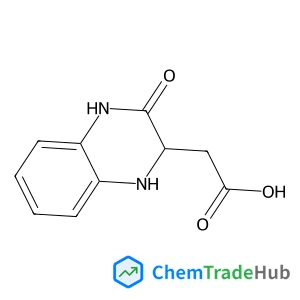
(3-Oxo-1,2,3,4-tetrahydro-2-quinoxalinyl)acetic acid
CAS Number:
136584-14-0
Molecular Formula:
C10H10N2O3
Recommended Suppliers




Disclaimer
This page provides academic journal information for reference and research purposes only. We are not affiliated with any journal publishers and do not handle publication submissions. For publication-related inquiries, please contact the respective journal publishers directly.
If you notice any inaccuracies in the information displayed, please contact us at support@chemtradehub.com. We will promptly review and address your concerns.