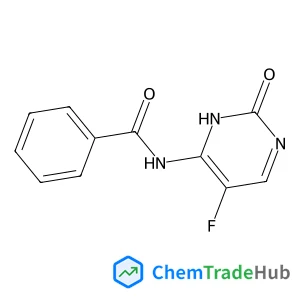
N-(5-Fluoro-2-oxo-2,3-dihydro-4-pyrimidinyl)benzamide
CAS Number:
10357-07-0
Molecular Formula:
C11H8FN3O2
Xiang-Hui Li, Xiao-Ling Zhang, Qiao-Hong Chen, Li Zhang, Jing-Hua Chen, Di Wu, Wei-Ming Sun, Zhi-Ru Li
The possibility of using coinage metal atoms as excess electron acceptors is examined for the first time by designing a new class of M+-1-M′− (M = Li, Na, and K; M′ = Cu, Ag, and Au) compounds termed “coinage metalides” on the basis of an intriguing Janus-type all-cis1,2,3,4,5,6-hexafluorocyclohexane (1) molecule. Under the large facial polarization of 1, the outermost ns1 electrons of alkali metal atoms can be transferred to coinage metal atoms, forming diffuse excess electrons around them. Consequently, the resulting M+-1-Cu− and M+-1-Ag− compounds exhibit significantly large nonlinear optical (NLO) responses. In particular, these novel M+-1-M′− compounds exhibit much higher stability (larger VIEs and Ec values) than that of the corresponding M+·1·M′− (M, M′ = Li, Na, and K) alkalides. We hope this work could open up new possibilities for NLO material design by using coinage metal atoms as excess electron acceptors and, on the other hand, attract more experimental interest and efforts to synthesize such stable compounds in the laboratory.
Rizcky Tamarany, Dong Yun Shin, Sukho Kang, Hyangsoo Jeong, Jun Kim, Dong-Hee Lim
DOI: 10.1039/D1CP00236H
Lilian K. Ellis-Gibbings, William G. Fortune, Bridgette Cooper, Jonathan Tennyson, Stephen D. Price
DOI: 10.1039/D1CP01328A
Matteo Busato, Valentina Migliorati, Alessandra Del Giudice, Valerio Di Lisio, Pierpaolo Tomai, Alessandra Gentili, Paola D'Angelo
DOI: 10.1039/D1CP01105G
Rohit Yadav, Prerna Joshi, Masanori Hara, Masamichi Yoshimura
DOI: 10.1039/D1CP00248A
Niladri Sekhar Mondal, Subhadip Nath, Debnarayan Jana, Nanda Kumar Ghosh
DOI: 10.1039/D1CP01466H
Giang T. Nguyen, Liviu Ungur
DOI: 10.1039/D1CP00452B
Jin Feng, Mengdi Cui, Huining Liu, Fengjie Zhou, Siwei Bi, Dapeng Zhang
DOI: 10.1039/D1CP00347J
Nikoleta Kotsina
DOI: 10.1039/D1CP00933H
Marie-Christine Record, Pascal Boulet
DOI: 10.1039/D1CP00270H
YongChao Wang, YinBo Zhu, HengAn Wu
DOI: 10.1039/D1CP00617G
Waste containing N-Methoxy-N-methyl-1,3-thiazole-5-carboxamide (CAS: 898825-89-3...
N-(4-Biphenylyl)dibenzo[b,d]furan-4-amine should be stored in a tightly sealed c...
The market for 3-Acetamido-5-amino-2,4,6-triiodobenzoic acid (CAS: 1713-07-1) is...
Benzyl 2-O-acetyl-3,4,6-tri-O-benzyl-beta-D-galactopyranoside (CAS: 61820-03-9) ...
2-Ethylpiperazine dihydrochloride (CAS: 438050-52-3) is regulated under the Glob...
1,1'-[1,3-Phenylenebis(methylene)]bis(3-methyl-1H-pyrrole-2,5-dione) (CAS: 11946...
Several alternatives can be used in the synthesis of 5-Fluoro-2-(1-pyrrolidinyl)...
Proper personal protective equipment (PPE) must be worn when handling this compo...
When handling 6-Bromoimidazo[1,2-a]pyridin-8-amine, it is important to wear appr...
Alternatives to (2S,4R)-4-(4-Nitrobenzyl)pyrrolidine-2-carboxylic acid hydrochlo...

Physical Chemistry Chemical Physics (PCCP) is an international journal co-owned by 19 physical chemistry and physics societies from around the world. This journal publishes original, cutting-edge research in physical chemistry, chemical physics and biophysical chemistry. To be suitable for publication in PCCP, articles must include significant innovation and/or insight into physical chemistry; this is the most important criterion that reviewers and Editors will judge against when evaluating submissions. The journal has a broad scope and welcomes contributions spanning experiment, theory, computation and data science. Topical coverage includes spectroscopy, dynamics, kinetics, statistical mechanics, thermodynamics, electrochemistry, catalysis, surface science, quantum mechanics, quantum computing and machine learning. Interdisciplinary research areas such as polymers and soft matter, materials, nanoscience, energy, surfaces/interfaces, and biophysical chemistry are welcomed if they demonstrate significant innovation and/or insight into physical chemistry. Joined experimental/theoretical studies are particularly appreciated when complementary and based on up-to-date approaches.