












In situ electrochemical Raman investigation of charge storage in rGO and N-doped rGO
Literature Information
Publication Date
2021-05-06
DOI
10.1039/D1CP00248A
Impact Factor
3.676
Authors
Rohit Yadav, Prerna Joshi, Masanori Hara, Masamichi Yoshimura
View Original
Abstract
In this study, in situ electrochemical Raman spectroscopy was applied to clarify the charge storage mechanism in three types of anodes, synthetic graphite, reduced graphene oxide (rGO), and nitrogen-doped reduced graphene oxide (N-rGO). The Li+ intercalation phenomenon was measured in LiPF6 electrolyte solution using a modified coin cell setup. The synthetic graphite anode showed the splitting of the G peak at the potential E < 0.2 V vs. Li/Li+, corresponding to the formation of a graphite intercalation compound (GIC) and its second-order 2D peak was found to be red-shifted due to charge transfer and induced strain in the potential region of 0.5 to 0.15 V vs. Li/Li+. In the case of rGO, the lattice defects assisted in large and early intercalation of electrolyte ions, which is confirmed by the red-shift in the G peak (∼36 cm−1) and its early disappearance below 0.3 V vs. Li/Li+, respectively. Unlike rGO, nitrogen vacancies in N-rGO provide active sites for Li+ intercalation, resulting in enhanced charge transfer, displayed by the large red-shift in the G peak (∼55 cm−1) and blue-shift in the D peak. In addition, a new Raman peak at 1850 cm−1 was observed in N-rGO for the first time, corresponding to the formation of a reversible intermediate species from the interaction between Li+ and nitrogen vacancies. This work demonstrates the use of a simple in situ technique to get insight into the nano-carbon electrodes during device operation and to reveal the role of doped nitrogen atoms for Li+ intercalation.
Related Literature
Non-linear photoelectron effect contributes to the formation of negative matrix ions in UV-MALDI
E. Alonso, R. Zenobi
2016-04-26
Paper
DOI: 10.1039/C6CP00649C
Liquid self-diffusion of H2O and DMF molecules in Co-MOF-74: molecular dynamics simulations and dielectric spectroscopy studies
J. M. Bermúdez-García, J. M. Vicent-Luna, S. Yáñez-Vilar, S. Hamad, M. Sánchez-Andújar, S. Castro-García, S. Calero, M. A. Señarís-Rodríguez
2016-06-08
Paper
DOI: 10.1039/C6CP02477G
Investigation of nitriding and reduction processes in a nanocrystalline iron–ammonia–hydrogen system at 350 °C
Wilk Bartłomiej, Walerian Arabczyk
2015-07-02
Paper
DOI: 10.1039/C5CP02376A
What is the thermal conductivity limit of silicon germanium alloys?
Yongjin Lee, Alexander J. Pak, Gyeong S. Hwang
2016-07-05
Communication
DOI: 10.1039/C6CP04388G
Growth of Cu particles on a Cu2O truncated octahedron: tuning of the Cu content for efficient glucose sensing
Gang Wang, Hong Sun, Lu Ding, Gang Zhou, Zhong-Sheng Wang
2015-08-24
Paper
DOI: 10.1039/C5CP03748D
Ab initio studies on the spin-forbidden cooling transitions of the LiRb molecule
Yang You, Chuan-Lu Yang, Qing-Qing Zhang, Mei-Shan Wang, Xiao-Guang Ma, Wen-Wang Liu
2016-05-26
Paper
DOI: 10.1039/C6CP01618A
Magnetoresistive polyaniline–silicon carbide metacomposites: plasma frequency determination and high magnetic field sensitivity
Hongbo Gu, Jiang Guo, Mojammel Alam Khan, David P. Young, T. D. Shen, Suying Wei, Zhanhu Guo
2016-06-24
Communication
DOI: 10.1039/C6CP02694J
Dynamics of a plasmon-activated p-mercaptobenzoic acid layer deposited over Au nanoparticles using time-resolved SERS
Gina Smith, Jean-Sébastien Girardon, Jean-François Paul, Elise Berrier
2016-04-26
Paper
DOI: 10.1039/C6CP02353C
The role of the dipolar neighborhood on the relaxation dynamics of multichromophoric merocyanines
Federico Koch, Andreas Steinbacher, André Zitzler-Kunkel
2016-07-08
Paper
DOI: 10.1039/C6CP02437H
Colorimetric and fluorimetric response of Schiff base molecules towards fluoride anion, solution test kit fabrication, logical interpretations and DFT-D3 study
Pritam Ghosh, Biswajit Gopal Roy, Saibal Jana, Subhra Kanti Mukhopadhyay
2015-07-02
Paper
DOI: 10.1039/C5CP02525G
You might also like
Compound Q&A
How should waste containing N-Methoxy-N-methyl-1,3-thiazole-5-carboxamide (CAS: 898825-89-3) be handled?
Waste containing N-Methoxy-N-methyl-1,3-thiazole-5-carboxamide (CAS: 898825-89-3...
898825-89-3N-Methoxy-N-methyl-1...
Compound Q&A
How should N-(4-Biphenylyl)dibenzo[b,d]furan-4-amine (CAS: 1318338-47-4) be stored?
N-(4-Biphenylyl)dibenzo[b,d]furan-4-amine should be stored in a tightly sealed c...
1318338-47-4N-(4-Biphenylyl)dibe...
Compound Q&A
What is the market or research trend for 3-Acetamido-5-amino-2,4,6-triiodobenzoic acid (CAS: 1713-07-1)?
The market for 3-Acetamido-5-amino-2,4,6-triiodobenzoic acid (CAS: 1713-07-1) is...
1713-07-13-Acetamido-5-amino-...
Compound Q&A
How should Benzyl 2-O-acetyl-3,4,6-tri-O-benzyl-beta-D-galactopyranoside (CAS: 61820-03-9) be stored?
Benzyl 2-O-acetyl-3,4,6-tri-O-benzyl-beta-D-galactopyranoside (CAS: 61820-03-9) ...
61820-03-9Benzyl 2-O-acetyl-3,...
Compound Q&A
What regulatory guidelines apply to 2-Ethylpiperazine dihydrochloride (CAS: 438050-52-3)?
2-Ethylpiperazine dihydrochloride (CAS: 438050-52-3) is regulated under the Glob...
438050-52-32-Ethylpiperazine di...
Compound Q&A
What regulatory guidelines apply to 1,1'-[1,3-Phenylenebis(methylene)]bis(3-methyl-1H-pyrrole-2,5-dione) (CAS: 119462-56-5)?
1,1'-[1,3-Phenylenebis(methylene)]bis(3-methyl-1H-pyrrole-2,5-dione) (CAS: 11946...
119462-56-51,1'-[1,3-Phenyleneb...
Compound Q&A
Are there alternatives to 5-Fluoro-2-(1-pyrrolidinyl)pyridine (CAS: 1287217-79-1) in synthesis?
Several alternatives can be used in the synthesis of 5-Fluoro-2-(1-pyrrolidinyl)...
1287217-79-15-Fluoro-2-(1-pyrrol...
Compound Q&A
What precautions should be taken when handling 1-((2R,3R,4R,5R)-5-((bis(4-methoxyphenyl)(phenyl)methoxy)methyl)-4-hydroxy-3-methoxytetrahydrofuran-2-yl)-5-methylpyrimidine-2,4(1H,3H)-dione (CAS: 153631-19-7)?
Proper personal protective equipment (PPE) must be worn when handling this compo...
153631-19-71-((2R,3R,4R,5R)-5-(...
Compound Q&A
What precautions should be taken when handling 6-Bromoimidazo[1,2-a]pyridin-8-amine (CAS: 676371-00-9)?
When handling 6-Bromoimidazo[1,2-a]pyridin-8-amine, it is important to wear appr...
676371-00-96-Bromoimidazo[1,2-a...
Compound Q&A
Are there alternatives to (2S,4R)-4-(4-Nitrobenzyl)pyrrolidine-2-carboxylic acid hydrochloride (CAS: 1049740-22-8) in synthesis?
Alternatives to (2S,4R)-4-(4-Nitrobenzyl)pyrrolidine-2-carboxylic acid hydrochlo...
1049740-22-8(2S,4R)-4-(4-Nitrobe...
Source Journal
Physical Chemistry Chemical Physics

CiteScore:
5.5
Self-citation Rate:
10.3%
Articles per Year:
3036
Physical Chemistry Chemical Physics (PCCP) is an international journal co-owned by 19 physical chemistry and physics societies from around the world. This journal publishes original, cutting-edge research in physical chemistry, chemical physics and biophysical chemistry. To be suitable for publication in PCCP, articles must include significant innovation and/or insight into physical chemistry; this is the most important criterion that reviewers and Editors will judge against when evaluating submissions. The journal has a broad scope and welcomes contributions spanning experiment, theory, computation and data science. Topical coverage includes spectroscopy, dynamics, kinetics, statistical mechanics, thermodynamics, electrochemistry, catalysis, surface science, quantum mechanics, quantum computing and machine learning. Interdisciplinary research areas such as polymers and soft matter, materials, nanoscience, energy, surfaces/interfaces, and biophysical chemistry are welcomed if they demonstrate significant innovation and/or insight into physical chemistry. Joined experimental/theoretical studies are particularly appreciated when complementary and based on up-to-date approaches.
Recommended Compounds
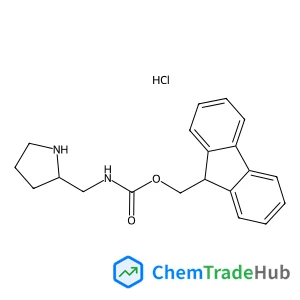
(S)-(9H-Fluoren-9-yl)methyl (pyrrolidin-2-ylmethyl)carbamate hydrochloride
CAS Number:
1217813-15-4
Molecular Formula:
C20H23ClN2O2
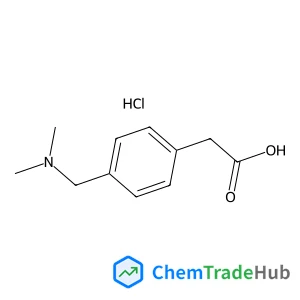
4-(Dimethylaminomethyl)phenylacetic acid hydrochloride
CAS Number:
99985-52-1
Molecular Formula:
C11H16ClNO2
![2-(7,7-Difluorobicyclo[4.1.0]hept-1-yl)ethanamine structure](https://static.chemtradehub.com/structs/209/2098065-08-6-ff24.webp "2-(7,7-Difluorobicyclo[4.1.0]hept-1-yl)ethanamine structure")
2-(7,7-Difluorobicyclo[4.1.0]hept-1-yl)ethanamine
CAS Number:
2098065-08-6
Molecular Formula:
C9H15F2N
Recommended Suppliers






Disclaimer
This page provides academic journal information for reference and research purposes only. We are not affiliated with any journal publishers and do not handle publication submissions. For publication-related inquiries, please contact the respective journal publishers directly.
If you notice any inaccuracies in the information displayed, please contact us at support@chemtradehub.com. We will promptly review and address your concerns.