












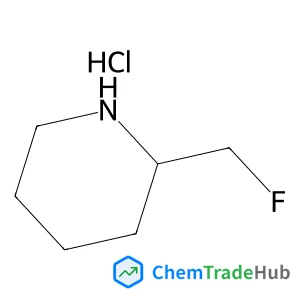
(2S)-2-(Fluoromethyl)piperidine hydrochloride (1:1)
CAS Number:
886216-73-5
Molecular Formula:
C6H13ClFN
Rizcky Tamarany, Dong Yun Shin, Sukho Kang, Hyangsoo Jeong, Jun Kim, Dong-Hee Lim
Bimetallic Pd1Nix alloys supported on nitrogen-doped carbon (Pd1Nix/N–C, x = 0.37, 1.3 and 3.6) exhibit higher activities than Pd/N–C towards dehydrogenation of formic acid (HCO2H, FA). Density functional theory (DFT) calculations provided electronic and atomic structures, energetics and reaction pathways on Pd(111) and Pd1Nix(111) surfaces of different Pd/Ni compositions. A density of states (DOS) analysis disclosed the electronic interactions between Pd and Ni revealing novel active sites for FA dehydrogenation. Theoretical analysis of FA dehydrogenation on Pd1Nix(111) (x = 0.33, 1 and 3) shows that the Pd1Ni1(111) surface provides optimum H2-release efficiency via a favorable ‘HCOO pathway’, in which a hydrogen atom and one of the two oxygen atoms of FA interact directly with surface Ni atoms producing adsorbed CO2 and H2. The enhanced efficiency is also attributed to the blocking of an unfavorable ‘COOH pathway’ through which a C–O bond is broken and side products of CO and H2O are generated.
W. Liu, M. Nachtegaal, A. I. Frenkel, B. Rutkowski, M. Werheid, A.-K. Herrmann, C. Laugier-Bonnaud, H.-C. Yilmaz, N. Gaponik, A. Czyrska-Filemonowicz, A. Eychmüller
DOI: 10.1039/C6CP03527B
Wenwen Cui, Alfonso San-Miguel
DOI: 10.1039/C6CP03263J
Chunshuang Yan, Gang Chen, Jingxue Sun, Xin Zhou, Chade Lv
DOI: 10.1039/C6CP02660E
Christoph J. Sahle, Christian Sternemann, Carlotta Giacobbe, Yigang Yan, Christopher Weis, Yury Forov, Metin Tolan, Michael Krisch
DOI: 10.1039/C6CP02495E
Carsten Hennig, Stefan Schmatz
DOI: 10.1039/C6CP02799G
Xiaoxiao Liu, Henghui Xu, Yunhui Huang, Xianluo Hu
DOI: 10.1039/C6CP01806H
Wenxuan Li, Konstantinos Kotsis, Sergei Manzhos
DOI: 10.1039/C6CP02671K
Oleg D. Feya, Qiang Zhu, Dongwei Ma
DOI: 10.1039/C6CP01203E
Pushpendra Kumar, Sunil Kumar, Subrata Ghosh, Suman Kalyan Pal
DOI: 10.1039/C6CP01721E
Richard J. Zamora, Arthur F. Voter, Danny Perez, Romain Perriot, Blas P. Uberuaga
DOI: 10.1039/C6CP03931F
Waste containing N-Methoxy-N-methyl-1,3-thiazole-5-carboxamide (CAS: 898825-89-3...
N-(4-Biphenylyl)dibenzo[b,d]furan-4-amine should be stored in a tightly sealed c...
The market for 3-Acetamido-5-amino-2,4,6-triiodobenzoic acid (CAS: 1713-07-1) is...
Benzyl 2-O-acetyl-3,4,6-tri-O-benzyl-beta-D-galactopyranoside (CAS: 61820-03-9) ...
2-Ethylpiperazine dihydrochloride (CAS: 438050-52-3) is regulated under the Glob...
1,1'-[1,3-Phenylenebis(methylene)]bis(3-methyl-1H-pyrrole-2,5-dione) (CAS: 11946...
Several alternatives can be used in the synthesis of 5-Fluoro-2-(1-pyrrolidinyl)...
Proper personal protective equipment (PPE) must be worn when handling this compo...
When handling 6-Bromoimidazo[1,2-a]pyridin-8-amine, it is important to wear appr...
Alternatives to (2S,4R)-4-(4-Nitrobenzyl)pyrrolidine-2-carboxylic acid hydrochlo...

Physical Chemistry Chemical Physics (PCCP) is an international journal co-owned by 19 physical chemistry and physics societies from around the world. This journal publishes original, cutting-edge research in physical chemistry, chemical physics and biophysical chemistry. To be suitable for publication in PCCP, articles must include significant innovation and/or insight into physical chemistry; this is the most important criterion that reviewers and Editors will judge against when evaluating submissions. The journal has a broad scope and welcomes contributions spanning experiment, theory, computation and data science. Topical coverage includes spectroscopy, dynamics, kinetics, statistical mechanics, thermodynamics, electrochemistry, catalysis, surface science, quantum mechanics, quantum computing and machine learning. Interdisciplinary research areas such as polymers and soft matter, materials, nanoscience, energy, surfaces/interfaces, and biophysical chemistry are welcomed if they demonstrate significant innovation and/or insight into physical chemistry. Joined experimental/theoretical studies are particularly appreciated when complementary and based on up-to-date approaches.
![tert-Butyl 6-chloro-4-oxospiro[chroman-2,4'-piperidine]-1'-carboxylate structure](https://static.chemtradehub.com/structs/101/1011482-37-3-88a5.webp "tert-Butyl 6-chloro-4-oxospiro[chroman-2,4'-piperidine]-1'-carboxylate structure")
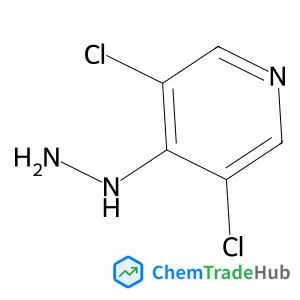
![[5-fluoro-2-(morpholine-4-carbonyl)phenyl]boronic acid structure](https://static.chemtradehub.com/structs/121/1217501-26-2-505c.webp "[5-fluoro-2-(morpholine-4-carbonyl)phenyl]boronic acid structure")
![[(5-Methyl-1,3,4-thiadiazol-2-yl)sulfanyl]acetic acid structure](https://static.chemtradehub.com/structs/509/50918-26-8-4ce8.webp "[(5-Methyl-1,3,4-thiadiazol-2-yl)sulfanyl]acetic acid structure")




