













Influence of Er3+ concentration and Ln3+ on the Judd–Ofelt parameters in LnOCl (Ln = Y, La, Gd) phosphors
Literature Information
Publication Date
2020-02-21
DOI
10.1039/C9CP06755H
Impact Factor
3.676
Authors
Chunfeng Yu, Baojiu Chen, Xizhen Zhang, Xiangping Li, Jinsu Zhang, Sai Xu, Hongquan Yu, Jiashi Sun, Yongze Cao, Haiping Xia
View Original
Abstract
The optical transition properties of trivalent rare earth (RE3+) doped luminescent materials have received extensive attention. The Judd–Ofelt theory is an effective tool for exploring the optical transition properties for the 4f–4f transitions of lanthanides. The aim of this work is to discover the effect of Er3+ concentration and different Ln3+ ions on the Judd–Ofelt parameters in LnOCl:Er3+ (Ln = Y, La, Gd) phosphors. Oxychloride LnOCl:Er3+ (Ln = Y, La, Gd) phosphors were produced via a single displacement reaction technique. The Judd–Ofelt calculation procedure for RE3+ doped powders was modified and then adopted to obtain the Judd–Ofelt parameters of Er3+ in the studied phosphors. Meanwhile, a new route for examining the Judd–Ofelt calculation quality was proposed and used. It was found that the Er3+ doping concentration slightly affects the optical transition properties of Er3+ in YOCl and LaOCl, but greatly affects the optical transition properties in GdOCl. Moreover, it was also found that the optical transition properties of Er3+ depend also on Ln3+ (Ln = Y, La, Gd) though the crystal structure of these compounds is similar. The Judd–Ofelt parameters of Er3+ are the smallest in LaOCl:Er3+, medium in YOCl:Er3+, but the biggest in GdOCl:Er3+ when the doping concentration is the same.
Related Literature
Monitoring photo-induced population dynamics in metastable linkage isomer crystals: a crystallographic kinetic study of [Pd(Bu4dien)NO2]BPh4
Lauren E. Hatcher, Jonathan M. Skelton, Mark R. Warren, Clare Stubbs, E. Lora da Silva, Paul R. Raithby
2018-01-31
Paper
DOI: 10.1039/C7CP05422J
A DFT+U study of the catalytic degradation of 1,2-dichloroethane over CeO2
Guanzhong Lu
2018-01-22
Paper
DOI: 10.1039/C7CP08322J
Energy dispersive spectrometry and first principles studies on the oxidation of pentlandite
Xiaolu Xiong, Guangshi Li, Hongwei Cheng, Qian Xu
2018-04-03
Paper
DOI: 10.1039/C8CP00873F
Nonequilibrium self-assembly induced Liesegang rings in a non-isothermal system
Andrés Arango-Restrepo, Daniel Barragán, J. Miguel Rubi
2018-01-25
Paper
DOI: 10.1039/C7CP08469B
Radiation chemistry of solid acetone in the interstellar medium – a new dimension to an old problem
2017-11-07
Paper
DOI: 10.1039/C7CP06431D
Fine-structure transitions of interstellar atomic sulfur and silicon induced by collisions with helium
J. Kłos, S. D. Le Picard
2017-09-26
Paper
DOI: 10.1039/C7CP05092E
An organoferroelasticity driven by molecular conformational change
Sajjad Husain Mir, Satoshi Takamizawa
2017-12-04
Communication
DOI: 10.1039/C7CP07206F
You might also like
Compound Q&A
What are the main uses of 1-(3-Aminophenyl)-3-[(3R)-1-(3,3-dimethyl-2-oxobutyl)-2-oxo-5-(2-pyridinyl)-2,3-dihydro-1H-1,4-benzodiazepin-3-yl]urea (CAS: 155412-88-7)?
This compound is mainly used as an intermediate in the synthesis of antipsychoti...
155412-88-71-(3-Aminophenyl)-3-...
Compound Q&A
How should waste containing 1-(D-Ribofuranosyl)-1,4-dihydro-3-pyridinecarboxamide (CAS: 19132-12-8) be handled?
Waste containing 1-(D-Ribofuranosyl)-1,4-dihydro-3-pyridinecarboxamide (CAS: 191...
19132-12-81-(D-Ribofuranosyl)-...
Compound Q&A
What regulatory guidelines apply to 2-Methyl-2-propanyl 3-bromo-3-(hydroxymethyl)-1-azetidinecarboxylate (CAS: 2007919-81-3)?
2-Methyl-2-propanyl 3-bromo-3-(hydroxymethyl)-1-azetidinecarboxylate (CAS: 20079...
2007919-81-32-Methyl-2-propanyl ...
Compound Q&A
What is N-(4-Chloro-2-pyridinyl)acetamide (CAS: 245056-66-0)?
N-(4-Chloro-2-pyridinyl)acetamide (CAS: 245056-66-0) is a chemical compound with...
245056-66-0N-(4-Chloro-2-pyridi...
Compound Q&A
What is 5-Chloro-2-hydroxybenzoic acid (CAS: 321-14-2)?
5-Chloro-2-hydroxybenzoic acid, also known as 5-chlorosalicylic acid, is an arom...
321-14-25-Chloro-2-hydroxybe...
Compound Q&A
What precautions should be taken when handling 1,1-Dichloro-1-fluoroethane (CAS: 1717-00-6)?
When handling 1,1-Dichloro-1-fluoroethane (CAS: 1717-00-6), it is important to u...
1717-00-61,1-Dichloro-1-fluor...
Compound Q&A
What are the physical and chemical properties of Fmoc-(2S,3R)-3-phenylpyrrolidine-2-carboxylic acid (CAS: 281655-32-1)?
Fmoc-(2S,3R)-3-phenylpyrrolidine-2-carboxylic acid is a white crystalline solid ...
281655-32-1Fmoc-(2S,3R)-3-pheny...
Compound Q&A
What are the main uses of 4-Amino-5-bromo-2-pyridinecarboxylic acid (CAS: 1363381-01-4)?
4-Amino-5-bromo-2-pyridinecarboxylic acid is primarily used as a precursor in th...
1363381-01-44-Amino-5-bromo-2-py...
Compound Q&A
What precautions should be taken when handling (S)-tert-butyl 2-((2-(4-bromophenyl)-2-oxoethyl)carbamoyl)pyrrolidine-1-carboxylate (CAS: 1007881-98-2)?
Handling this compound should be done with personal protective equipment (PPE) i...
1007881-98-2(S)-tert-butyl 2-((2...
Compound Q&A
What precautions should be taken when handling 8-bromo-2,2-dimethyl-3,4-dihydro-2H-1,4-benzoxazin-3-one (CAS: 688363-73-7)?
When handling 8-bromo-2,2-dimethyl-3,4-dihydro-2H-1,4-benzoxazin-3-one, use prop...
688363-73-78-bromo-2,2-dimethyl...
Source Journal
Physical Chemistry Chemical Physics

CiteScore:
5.5
Self-citation Rate:
10.3%
Articles per Year:
3036
Physical Chemistry Chemical Physics (PCCP) is an international journal co-owned by 19 physical chemistry and physics societies from around the world. This journal publishes original, cutting-edge research in physical chemistry, chemical physics and biophysical chemistry. To be suitable for publication in PCCP, articles must include significant innovation and/or insight into physical chemistry; this is the most important criterion that reviewers and Editors will judge against when evaluating submissions. The journal has a broad scope and welcomes contributions spanning experiment, theory, computation and data science. Topical coverage includes spectroscopy, dynamics, kinetics, statistical mechanics, thermodynamics, electrochemistry, catalysis, surface science, quantum mechanics, quantum computing and machine learning. Interdisciplinary research areas such as polymers and soft matter, materials, nanoscience, energy, surfaces/interfaces, and biophysical chemistry are welcomed if they demonstrate significant innovation and/or insight into physical chemistry. Joined experimental/theoretical studies are particularly appreciated when complementary and based on up-to-date approaches.
Recommended Compounds
![1-[3-(4-Morpholinylsulfonyl)phenyl]methanamine structure](https://static.chemtradehub.com/structs/933/933989-32-3-51af.webp "1-[3-(4-Morpholinylsulfonyl)phenyl]methanamine structure")

![Methyl 4-({[(2-methyl-2-propanyl)oxy]carbonyl}amino)bicyclo[2.2.2]octane-1-carboxylate structure](https://static.chemtradehub.com/structs/943/943845-74-7-b7e5.webp "Methyl 4-({[(2-methyl-2-propanyl)oxy]carbonyl}amino)bicyclo[2.2.2]octane-1-carboxylate structure")
Methyl 4-({[(2-methyl-2-propanyl)oxy]carbonyl}amino)bicyclo[2.2.2]octane-1-carboxylate
CAS Number:
943845-74-7
Molecular Formula:
C15H25NO4
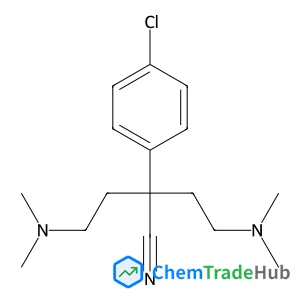
2-(4-Chlorophenyl)-4-(dimethylamino)-2-(2-(dimethylamino)ethyl)butanenitrile
CAS Number:
1246816-57-8
Molecular Formula:
C16H24ClN3
Recommended Suppliers




Disclaimer
This page provides academic journal information for reference and research purposes only. We are not affiliated with any journal publishers and do not handle publication submissions. For publication-related inquiries, please contact the respective journal publishers directly.
If you notice any inaccuracies in the information displayed, please contact us at support@chemtradehub.com. We will promptly review and address your concerns.