












Radiation chemistry of solid acetone in the interstellar medium – a new dimension to an old problem
Literature Information
Publication Date
2017-11-07
DOI
10.1039/C7CP06431D
Impact Factor
3.676
Authors
View Original
Abstract
A laboratory investigation of acetone, an interstellar and cometary molecule, has produced new results concerning its decomposition in a radiation environment. Mid-infrared spectroscopy has been used to follow amorphous acetone's destruction by ionizing radiation (1 MeV protons) at 20 K. Radiation products identified are the CH4, CO, and CO2 usually made in such experiments, along with ketene, allene, and the acetonyl radical, all identified here for the first time in irradiated solid acetone. Evidence for the reduction product 2-propanol was suggestive, but a firm identification could not be made either for it or for the C2 hydrocarbons (i.e., C2H6, C2H4, C2H2). The acetyl radical was not observed as a radiation product. Isotopically labeled reagents were used to demonstrate ketene formation and to emphasize that multiple approaches are needed for robust assignments of infrared spectral features of irradiated icy solids. Results from a supporting radiation experiment with isotopically labeled acetic acid are described. Comparisons are made to a previous study of acetone's stability in extraterrestrial radiation environments, and caution is urged in measuring and interpreting CO abundances in irradiated icy solids.
Related Literature
Visible light catalyzed reaction of α-bromochalcones with chalcones: direct access to the urundeuvine scaffold
Ruchir Kant
2018-09-24
Paper
DOI: 10.1039/C8OB01881B
Reduction of aromatic nitriles into aldehydes using calcium hypophosphite and a nickel precursor
Ali Hachem, Ali Alaaeddine, Estelle Métay, Marc Lemaire
2018-08-22
Paper
DOI: 10.1039/C8OB01751D
In situ generation of nitrile oxides from copper carbene and tert-butyl nitrite: synthesis of fully substituted isoxazoles
Rongxiang Chen, Abosede Adejoke Ogunlana, Shangwen Fang, Wenhao Long, Hongmei Sun, Xiaoguang Bao, Xiaobing Wan
2018-06-04
Paper
DOI: 10.1039/C8OB01067F
Tsavoenones A–C: unprecedented polyketides with a 1,7-dioxadispiro[4.0.4.4]tetradecane core from the lichen Parmotrema tsavoense
Mehdi A. Beniddir, Grégory Genta-Jouve, Thammarat Aree, Marylène Chollet-Krugler, Joël Boustie, Solenn Ferron, Aurélie Sauvager, Huu-Hung Nguyen, Kim-Phi-Phung Nguyen, Warinthorn Chavasiri, Pierre Le Pogam
2018-07-31
Paper
DOI: 10.1039/C8OB01280F
The catalytic Mitsunobu reaction: a critical analysis of the current state-of-the-art
Rhydian H. Beddoe, Helen F. Sneddon, Ross M. Denton
2018-10-01
Review Article
DOI: 10.1039/C8OB01929K
Four novel sesquiterpenoids with their anti-Alzheimer's disease activity from Nardostachys chinensis
Pei-Qian Wu, Yi-Fan Yu, Ye Zhao, Chun-Xue Yu, De-Juan Zhi, Feng-Ming Qi
2018-11-07
Paper
DOI: 10.1039/C8OB02319K
A red-emitting fluorescent probe for the detection of Hg2+ in aqueous medium, living cells and organisms with a large Stokes shift
Lei Yang, Yuanan Su, Yani Geng, Haiqing Xiong, Jinliang Han, Qian Fang, Xiangzhi Song
2018-06-20
Paper
DOI: 10.1039/C8OB00831K
Transition metal-free coupling of terminal alkynes and hypervalent iodine-based alkyne-transfer reagents to access unsymmetrical 1,3-diynes
J. Schörgenhumer, M. Waser
2018-10-02
Communication
DOI: 10.1039/C8OB02375A
Regioselectivity of aryl radical attack onto isocyanates and isothiocyanates
Geethika K. Weragoda, Rowan L. Pilkington, Richard A. J. O'Hair
2018-11-14
Paper
DOI: 10.1039/C8OB02209G
You might also like
Compound Q&A
What are the main uses of 1-(3-Aminophenyl)-3-[(3R)-1-(3,3-dimethyl-2-oxobutyl)-2-oxo-5-(2-pyridinyl)-2,3-dihydro-1H-1,4-benzodiazepin-3-yl]urea (CAS: 155412-88-7)?
This compound is mainly used as an intermediate in the synthesis of antipsychoti...
155412-88-71-(3-Aminophenyl)-3-...
Compound Q&A
How should waste containing 1-(D-Ribofuranosyl)-1,4-dihydro-3-pyridinecarboxamide (CAS: 19132-12-8) be handled?
Waste containing 1-(D-Ribofuranosyl)-1,4-dihydro-3-pyridinecarboxamide (CAS: 191...
19132-12-81-(D-Ribofuranosyl)-...
Compound Q&A
What regulatory guidelines apply to 2-Methyl-2-propanyl 3-bromo-3-(hydroxymethyl)-1-azetidinecarboxylate (CAS: 2007919-81-3)?
2-Methyl-2-propanyl 3-bromo-3-(hydroxymethyl)-1-azetidinecarboxylate (CAS: 20079...
2007919-81-32-Methyl-2-propanyl ...
Compound Q&A
What is N-(4-Chloro-2-pyridinyl)acetamide (CAS: 245056-66-0)?
N-(4-Chloro-2-pyridinyl)acetamide (CAS: 245056-66-0) is a chemical compound with...
245056-66-0N-(4-Chloro-2-pyridi...
Compound Q&A
What is 5-Chloro-2-hydroxybenzoic acid (CAS: 321-14-2)?
5-Chloro-2-hydroxybenzoic acid, also known as 5-chlorosalicylic acid, is an arom...
321-14-25-Chloro-2-hydroxybe...
Compound Q&A
What precautions should be taken when handling 1,1-Dichloro-1-fluoroethane (CAS: 1717-00-6)?
When handling 1,1-Dichloro-1-fluoroethane (CAS: 1717-00-6), it is important to u...
1717-00-61,1-Dichloro-1-fluor...
Compound Q&A
What are the physical and chemical properties of Fmoc-(2S,3R)-3-phenylpyrrolidine-2-carboxylic acid (CAS: 281655-32-1)?
Fmoc-(2S,3R)-3-phenylpyrrolidine-2-carboxylic acid is a white crystalline solid ...
281655-32-1Fmoc-(2S,3R)-3-pheny...
Compound Q&A
What are the main uses of 4-Amino-5-bromo-2-pyridinecarboxylic acid (CAS: 1363381-01-4)?
4-Amino-5-bromo-2-pyridinecarboxylic acid is primarily used as a precursor in th...
1363381-01-44-Amino-5-bromo-2-py...
Compound Q&A
What precautions should be taken when handling (S)-tert-butyl 2-((2-(4-bromophenyl)-2-oxoethyl)carbamoyl)pyrrolidine-1-carboxylate (CAS: 1007881-98-2)?
Handling this compound should be done with personal protective equipment (PPE) i...
1007881-98-2(S)-tert-butyl 2-((2...
Compound Q&A
What precautions should be taken when handling 8-bromo-2,2-dimethyl-3,4-dihydro-2H-1,4-benzoxazin-3-one (CAS: 688363-73-7)?
When handling 8-bromo-2,2-dimethyl-3,4-dihydro-2H-1,4-benzoxazin-3-one, use prop...
688363-73-78-bromo-2,2-dimethyl...
Source Journal
Physical Chemistry Chemical Physics

CiteScore:
5.5
Self-citation Rate:
10.3%
Articles per Year:
3036
Physical Chemistry Chemical Physics (PCCP) is an international journal co-owned by 19 physical chemistry and physics societies from around the world. This journal publishes original, cutting-edge research in physical chemistry, chemical physics and biophysical chemistry. To be suitable for publication in PCCP, articles must include significant innovation and/or insight into physical chemistry; this is the most important criterion that reviewers and Editors will judge against when evaluating submissions. The journal has a broad scope and welcomes contributions spanning experiment, theory, computation and data science. Topical coverage includes spectroscopy, dynamics, kinetics, statistical mechanics, thermodynamics, electrochemistry, catalysis, surface science, quantum mechanics, quantum computing and machine learning. Interdisciplinary research areas such as polymers and soft matter, materials, nanoscience, energy, surfaces/interfaces, and biophysical chemistry are welcomed if they demonstrate significant innovation and/or insight into physical chemistry. Joined experimental/theoretical studies are particularly appreciated when complementary and based on up-to-date approaches.
Recommended Compounds
![2,6-Di(thiophen-2-yl)dithieno[3,2-b:2',3'-d]thiophene structure](https://static.chemtradehub.com/structs/910/910788-24-8-5b70.webp "2,6-Di(thiophen-2-yl)dithieno[3,2-b:2',3'-d]thiophene structure")
2,6-Di(thiophen-2-yl)dithieno[3,2-b:2',3'-d]thiophene
CAS Number:
910788-24-8
Molecular Formula:
C16H8S5
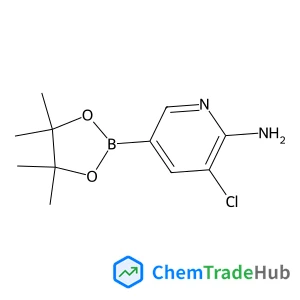
3-Chloro-5-(4,4,5,5-tetramethyl-1,3,2-dioxaborolan-2-yl)-2-pyridinamine
CAS Number:
1032758-99-8
Molecular Formula:
C11H16BClN2O2
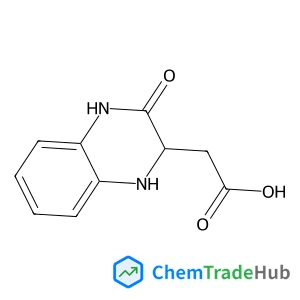
(3-Oxo-1,2,3,4-tetrahydro-2-quinoxalinyl)acetic acid
CAS Number:
136584-14-0
Molecular Formula:
C10H10N2O3
Recommended Suppliers





Disclaimer
This page provides academic journal information for reference and research purposes only. We are not affiliated with any journal publishers and do not handle publication submissions. For publication-related inquiries, please contact the respective journal publishers directly.
If you notice any inaccuracies in the information displayed, please contact us at support@chemtradehub.com. We will promptly review and address your concerns.