












Gate voltage impact on charge mobility in end-on stacked conjugated oligomers
Literature Information
Publication Date
2020-03-25
DOI
10.1039/C9CP06477J
Impact Factor
3.676
Authors
Miroslav Menšík, Petr Toman, Cheng-Han Chung, Chimed Ganzorig, Jiří Pfleger
View Original
Abstract
We present a model of the charge transport in thin film organic field-effect transistors with the active channel made of linear conjugated chains stacked on the substrate with end-on-orientation. The transport was simulated in a box consisting of 25 polymer chains, in which the delocalized quantum orbital eigenstates of the on-chain hole distribution were calculated. The inter-chain charge transfer was solved semi-classically. The full self-consistent distribution of charge density and electric field was determined for various applied gate and source–drain voltages. We found that the dependence of charge mobility on gate voltage is not monotonic: it first increases with increasing gate voltage for a limited interval of the latter, otherwise it decreases with the gate voltage. Next, we found formation of the second resonant peak for higher gate voltages. The mobility dependence on the gate voltage confirmed that the current flowing through the active semiconductor layer should be described not only as the hole transfer between adjacent repeat units of the neighbouring chains, but also as the transfer of coherences among on-chain repeat units. The presented model can also give a new insight into the charge transport in organic field-effect transistors with a novel vertical architecture.
Related Literature
A non-tight chemomechanical coupling model for force-dependence of movement dynamics of molecular motors
Hong Chen
2018-01-17
Paper
DOI: 10.1039/C7CP05557A
In situ follow-up of hybrid alginate–silicate microbeads formation by linear rheology
F. B. Haffner, N. Canilho, B. Medronho, C. Gardiennet, A. Gansmüller, A. Pasc
2018-04-09
Paper
DOI: 10.1039/C8CP00073E
Identifying the effective phosphorous species over modified P-ZSM-5 zeolite: a theoretical study
Yueying Chu, Xiuzhi Gao, Xin Zhang, Guangtong Xu
2018-04-04
Paper
DOI: 10.1039/C8CP00946E
Phase behaviours of a cationic surfactant in deep eutectic solvents: from micelles to lyotropic liquid crystals
Qintang Li, Jiao Wang, Nana Lei, Minhao Yan, Xiao Chen
2018-04-11
Paper
DOI: 10.1039/C8CP00001H
Coexistence of distinct intramolecular electron transfer pathways in polyoxometalate based molecular triads
Maria Wächtler
2018-03-26
Paper
DOI: 10.1039/C8CP01007B
Dynamical modes of two almost identical chemical oscillators connected via both pulsatile and diffusive coupling
2018-04-03
Paper
DOI: 10.1039/C7CP08032H
Excimer formation and evolution of excited state properties in discrete dimeric stacking of an anthracene derivative: a computational investigation
Yu Gao, Haichao Liu, Shitong Zhang, Qiang Gu, Yue Shen, Yunpeng Ge, Bing Yang
2018-04-06
Paper
DOI: 10.1039/C8CP00834E
Effects of graphene/BN encapsulation, surface functionalization and molecular adsorption on the electronic properties of layered InSe: a first-principles study
Andrey A. Kistanov, Yongqing Cai, Kun Zhou, Yong-Wei Zhang
2018-04-14
Paper
DOI: 10.1039/C8CP01146J
You might also like
Compound Q&A
What are the main uses of 1-(3-Aminophenyl)-3-[(3R)-1-(3,3-dimethyl-2-oxobutyl)-2-oxo-5-(2-pyridinyl)-2,3-dihydro-1H-1,4-benzodiazepin-3-yl]urea (CAS: 155412-88-7)?
This compound is mainly used as an intermediate in the synthesis of antipsychoti...
155412-88-71-(3-Aminophenyl)-3-...
Compound Q&A
How should waste containing 1-(D-Ribofuranosyl)-1,4-dihydro-3-pyridinecarboxamide (CAS: 19132-12-8) be handled?
Waste containing 1-(D-Ribofuranosyl)-1,4-dihydro-3-pyridinecarboxamide (CAS: 191...
19132-12-81-(D-Ribofuranosyl)-...
Compound Q&A
What regulatory guidelines apply to 2-Methyl-2-propanyl 3-bromo-3-(hydroxymethyl)-1-azetidinecarboxylate (CAS: 2007919-81-3)?
2-Methyl-2-propanyl 3-bromo-3-(hydroxymethyl)-1-azetidinecarboxylate (CAS: 20079...
2007919-81-32-Methyl-2-propanyl ...
Compound Q&A
What is N-(4-Chloro-2-pyridinyl)acetamide (CAS: 245056-66-0)?
N-(4-Chloro-2-pyridinyl)acetamide (CAS: 245056-66-0) is a chemical compound with...
245056-66-0N-(4-Chloro-2-pyridi...
Compound Q&A
What is 5-Chloro-2-hydroxybenzoic acid (CAS: 321-14-2)?
5-Chloro-2-hydroxybenzoic acid, also known as 5-chlorosalicylic acid, is an arom...
321-14-25-Chloro-2-hydroxybe...
Compound Q&A
What precautions should be taken when handling 1,1-Dichloro-1-fluoroethane (CAS: 1717-00-6)?
When handling 1,1-Dichloro-1-fluoroethane (CAS: 1717-00-6), it is important to u...
1717-00-61,1-Dichloro-1-fluor...
Compound Q&A
What are the physical and chemical properties of Fmoc-(2S,3R)-3-phenylpyrrolidine-2-carboxylic acid (CAS: 281655-32-1)?
Fmoc-(2S,3R)-3-phenylpyrrolidine-2-carboxylic acid is a white crystalline solid ...
281655-32-1Fmoc-(2S,3R)-3-pheny...
Compound Q&A
What are the main uses of 4-Amino-5-bromo-2-pyridinecarboxylic acid (CAS: 1363381-01-4)?
4-Amino-5-bromo-2-pyridinecarboxylic acid is primarily used as a precursor in th...
1363381-01-44-Amino-5-bromo-2-py...
Compound Q&A
What precautions should be taken when handling (S)-tert-butyl 2-((2-(4-bromophenyl)-2-oxoethyl)carbamoyl)pyrrolidine-1-carboxylate (CAS: 1007881-98-2)?
Handling this compound should be done with personal protective equipment (PPE) i...
1007881-98-2(S)-tert-butyl 2-((2...
Compound Q&A
What precautions should be taken when handling 8-bromo-2,2-dimethyl-3,4-dihydro-2H-1,4-benzoxazin-3-one (CAS: 688363-73-7)?
When handling 8-bromo-2,2-dimethyl-3,4-dihydro-2H-1,4-benzoxazin-3-one, use prop...
688363-73-78-bromo-2,2-dimethyl...
Source Journal
Physical Chemistry Chemical Physics

CiteScore:
5.5
Self-citation Rate:
10.3%
Articles per Year:
3036
Physical Chemistry Chemical Physics (PCCP) is an international journal co-owned by 19 physical chemistry and physics societies from around the world. This journal publishes original, cutting-edge research in physical chemistry, chemical physics and biophysical chemistry. To be suitable for publication in PCCP, articles must include significant innovation and/or insight into physical chemistry; this is the most important criterion that reviewers and Editors will judge against when evaluating submissions. The journal has a broad scope and welcomes contributions spanning experiment, theory, computation and data science. Topical coverage includes spectroscopy, dynamics, kinetics, statistical mechanics, thermodynamics, electrochemistry, catalysis, surface science, quantum mechanics, quantum computing and machine learning. Interdisciplinary research areas such as polymers and soft matter, materials, nanoscience, energy, surfaces/interfaces, and biophysical chemistry are welcomed if they demonstrate significant innovation and/or insight into physical chemistry. Joined experimental/theoretical studies are particularly appreciated when complementary and based on up-to-date approaches.
Recommended Compounds
![5-Methyl-4,5,6,7-tetrahydropyrazolo[1,5-a]pyrazin-2-amine structure](https://static.chemtradehub.com/structs/122/1227210-33-4-8d64.webp "5-Methyl-4,5,6,7-tetrahydropyrazolo[1,5-a]pyrazin-2-amine structure")
5-Methyl-4,5,6,7-tetrahydropyrazolo[1,5-a]pyrazin-2-amine
CAS Number:
1227210-33-4
Molecular Formula:
C7H12N4
![4-Chloro-3-(trifluoromethyl)-1H-pyrrolo[2,3-b]pyridine structure](https://static.chemtradehub.com/structs/869/869335-75-1-a9d0.webp "4-Chloro-3-(trifluoromethyl)-1H-pyrrolo[2,3-b]pyridine structure")
4-Chloro-3-(trifluoromethyl)-1H-pyrrolo[2,3-b]pyridine
CAS Number:
869335-75-1
Molecular Formula:
C8H4ClF3N2
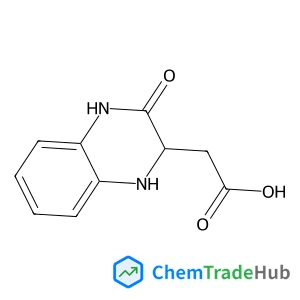
(3-Oxo-1,2,3,4-tetrahydro-2-quinoxalinyl)acetic acid
CAS Number:
136584-14-0
Molecular Formula:
C10H10N2O3
Recommended Suppliers





Disclaimer
This page provides academic journal information for reference and research purposes only. We are not affiliated with any journal publishers and do not handle publication submissions. For publication-related inquiries, please contact the respective journal publishers directly.
If you notice any inaccuracies in the information displayed, please contact us at support@chemtradehub.com. We will promptly review and address your concerns.