













Eliminating the need for independent counterions in the construction of metal–organic rotaxane frameworks (MORFs)
Literature Information
Publication Date
2009-08-27
DOI
10.1039/B911889F
Impact Factor
6.222
Authors
Lisa K. Knight, V. Nicholas Vukotic, Elizabeth Viljoen, Christopher B. Caputo, Stephen J. Loeb
View Original
Abstract
The combination of a disulfonated-dibenzo-24crown-8 ether wheel and a dicationic 1,2-bis(pyridinium)ethane axle yields a neutral [2]pseudorotaxane which in combination with neutral metallic units such as a Cu(II)benzoate paddlewheel or Cu(I)Br unit yields one-dimensional coordination polymers (linear and bent) which are the first examples of charge neutral, metal–organic rotaxane frameworks.
Recommended Journals
Related Literature
ATRP mediated encapsulation of Gibbsite: fixation of the morphology by using a cross-linker
Olessya P. Loiko, Anne B. Spoelstra, Jan Meuldijk, Johan P. A. Heuts
2017-04-24
Communication
DOI: 10.1039/C7PY00226B
A thioglycerol route to bio-based bis-cyclic carbonates: poly(hydroxyurethane) preparation and post-functionalization
2017-05-01
Paper
DOI: 10.1039/C7PY00556C
Pillar[5]arene-based amphiphilic supramolecular brush copolymers: fabrication, controllable self-assembly and application in self-imaging targeted drug delivery
Run Zhao, Dan Wu, Fuwu Zhang, Li Shao, Jiong Zhou, Jie Yang, Guping Tang, Xiaoyuan Chen, Feihe Huang
2016-09-01
Paper
DOI: 10.1039/C6PY01402J
Stress-sensing thermoset polymer networks via grafted cinnamoyl/cyclobutane mechanophore units in epoxy
Elizabeth M. Nofen, Nicholas Zimmer, Avi Dasgupta, Ryan Gunckel, Bonsung Koo, Aditi Chattopadhyay, Lenore L. Dai
2016-11-04
Paper
DOI: 10.1039/C6PY01463A
Control of cross-linking and reactions in one-step dispersion polymerization toward particles with combined anisotropies
Yanan Liu, Kun Jiang, Yuhong Ma, Lianying Liu, Wantai Yang
2016-03-24
Paper
DOI: 10.1039/C6PY00218H
A cellulose-based chiral fluorescent sensor for aromatic nitro compounds with central, axial and planar chirality
Tomoyuki Ikai, Daisuke Suzuki, Ken-ichi Shinohara, Katsuhiro Maeda, Shigeyoshi Kanoh
2017-03-20
Paper
DOI: 10.1039/C7PY00285H
RAFT polymerization to form stimuli-responsive polymers
2016-11-22
Review Article
DOI: 10.1039/C6PY01849A
You might also like
Compound Q&A
What precautions should be taken when handling lithium chloride hydrate (1:1:1) (CAS: 16712-20-2)?
When handling lithium chloride hydrate (1:1:1) (CAS: 16712-20-2), it is importan...
16712-20-2Lithium chloride hyd...
Compound Q&A
Is 4-(4H-1,2,4-Triazol-4-yl)piperidine (CAS: 690261-92-8) safe?
4-(4H-1,2,4-Triazol-4-yl)piperidine is generally considered safe for use in phar...
690261-92-84-(4H-1,2,4-Triazol-...
Compound Q&A
How should waste containing 1,3-Thiazole-2-carboxamide (CAS: 16733-85-0) be handled?
Waste containing 1,3-Thiazole-2-carboxamide (CAS: 16733-85-0) should be collecte...
16733-85-01,3-Thiazole-2-carbo...
Compound Q&A
What regulatory guidelines apply to 5-(Difluoromethyl)-2-fluorobenzonitrile (CAS: 934175-58-3)?
5-(Difluoromethyl)-2-fluorobenzonitrile (CAS: 934175-58-3) is subject to regulat...
934175-58-35-(Difluoromethyl)-2...
Compound Q&A
How is Methyl 3-acetamido-2-thiophenecarboxylate (CAS: 22288-79-5) typically synthesized?
Methyl 3-acetamido-2-thiophenecarboxylate can be synthesized by the reaction of ...
22288-79-5Methyl 3-acetamido-2...
Compound Q&A
What is 4-Isoquinolinecarbonitrile (CAS: 34846-65-6)?
4-Isoquinolinecarbonitrile is a chemical compound with the CAS number 34846-65-6...
34846-65-64-Isoquinolinecarbon...
Compound Q&A
How should Methyl 1H-1,2,3-triazole-4-carboxylate (CAS: 877309-59-6) be stored?
Store Methyl 1H-1,2,3-triazole-4-carboxylate (CAS: 877309-59-6) in a cool, dry p...
877309-59-6Methyl 1H-1,2,3-tria...
Compound Q&A
What regulatory guidelines apply to 6-Bromo[1,3]thiazolo[5,4-b]pyridin-2-amine (CAS: 1160791-13-8)?
6-Bromo[1,3]thiazolo[5,4-b]pyridin-2-amine (CAS: 1160791-13-8) is subject to the...
1160791-13-86-Bromo[1,3]thiazolo...
Compound Q&A
Is (2S,3S)-2-Ammonio-3-(3,4-dihydroxyphenyl)-3-hydroxypropanoate (CAS: 23651-95-8) safe?
(2S,3S)-2-Ammonio-3-(3,4-dihydroxyphenyl)-3-hydroxypropanoate (CAS: 23651-95-8) ...
23651-95-8(2S,3S)-2-Ammonio-3-...
Compound Q&A
What are the physical and chemical properties of 7-bromo-3-methyl-3,4-dihydroquinazolin-4-one (CAS: 1293987-84-4)?
7-Bromo-3-methyl-3,4-dihydroquinazolin-4-one is a solid with a crystalline form....
1293987-84-47-bromo-3-methyl-3,4...
Source Journal
Chemical Communications

CiteScore:
8.6
Self-citation Rate:
4.7%
Articles per Year:
2458
ChemComm publishes urgent research which is of outstanding significance and interest to experts in the field, while also appealing to the journal’s broad chemistry readership. Our communication format is ideally suited to short, urgent studies that are of such importance that they require accelerated publication. Our scope covers all topics in chemistry, and research at the interface of chemistry and other disciplines (such as materials science, nanoscience, physics, engineering and biology) where there is a significant novelty in the chemistry aspects. Major topic areas covered include: Analytical Chemistry Catalysis Chemical Biology and medicinal chemistry Computational Chemistry and Machine Learning Energy and sustainable chemistry Environmental Chemistry Green Chemistry Inorganic Chemistry Materials Chemistry Nanoscience Organic Chemistry Physical Chemistry Polymer Chemistry Supramolecular Chemistry
Recommended Compounds
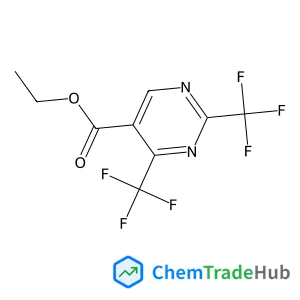
Ethyl 2,4-bis(trifluoromethyl)-5-pyrimidinecarboxylate
CAS Number:
188781-15-9
Molecular Formula:
C9H6F6N2O2


Recommended Suppliers







Disclaimer
This page provides academic journal information for reference and research purposes only. We are not affiliated with any journal publishers and do not handle publication submissions. For publication-related inquiries, please contact the respective journal publishers directly.
If you notice any inaccuracies in the information displayed, please contact us at support@chemtradehub.com. We will promptly review and address your concerns.