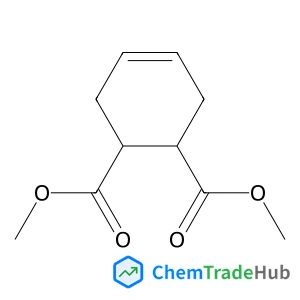
4-Cyclohexene-1,2-dicarboxylic acid, 1,2-dimethyl ester, (1R,2R)-rel-
CAS Number:
17673-68-6
Molecular Formula:
C10H14O4
Jun Zhong, Linan Huang, Weidong Sheng
Excitonic states of a many-electron system in phosphorene quantum dots (PQDs) are investigated theoretically by using a configuration interaction approach. For a triangular PQD in various dielectric environments, its exciton is found to obey two distinct scaling rules. When there is a strong screening effect present in the nanodot, the exciton binding energy (Δex) is shown to be around −150 meV as the long-range Coulomb interactions are totally suppressed and it increases to about 100 meV when the effective dielectric constant (εr) decreases to 12.5. Over this range of εr, Δex is found to be well fitted into a quadratic form of εr−1, which scales neither linearly with εr−2 like the case of bulk three-dimensional semiconductors nor linearly with εr−1 like the case previously reported for graphene nanostructures. When εr is reduced below 10.0, however, Δex is shown to exhibit a perfect linear relationship with εr−1, which behaves just like that of a two-dimensional graphene sheet. On the other hand, with the reduced εr, the quasiparticle gap is found to decrease instead of increasing like in most of the semiconductor nanostructures. As a result, it is revealed that the relationship of Δex with the quasi-particle gap deviates largely from the linear one previously reported for graphene and many other two-dimensional materials.

Russian Journal of Organic Chemistry

Russian Chemical Bulletin

New Journal of Chemistry

Russian Journal of General Chemistry

Journal of Natural Medicines

Crystallography Reports

Journal of Saudi Chemical Society

Russian Journal of Bioorganic Chemistry

Chemical Communications

Current Opinion in Solid State & Materials Science
DOI: 10.1039/C5CP05636E
O. Deparis, S. R. Mouchet, B.-L. Su
DOI: 10.1039/C5CP04983K
G. Saleh
DOI: 10.1039/C5CP06026E
C. Colleoni, S. Esposito, R. Grasso, D. Romeli, G. Rosace
DOI: 10.1039/C5CP03420E
Luyan Liu, Chen Chen, Siyu Yang, Hua Xie, MaoGang Gong, Xiaoliang Xu
DOI: 10.1039/C5CP06305A
Debabrata Maiti, Arindam Saha, Parukuttyamma Sujatha Devi
DOI: 10.1039/C5CP05840F
P. Antoniou, Z. Ma, P. Zhang
DOI: 10.1039/C5CP00610D
Silvia Carlotto, Mauro Sambi, Andrea Vittadini
DOI: 10.1039/C5CP06844D
F. M. Schunk, D. Rand, C. Rose-Petruck
DOI: 10.1039/C5CP04508H
6-(3-Fluorophenyl)picolinic acid is generally considered safe for laboratory use...
(3R)-3-Pyrrolidinol is used in the pharmaceutical industry as a precursor for dr...
When handling (4R,5R)-4,5-Diethoxycarbonyl-2,2-dimethyldioxolane (CAS: 59779-75-...
1-(6-Chloroimidazo[1,2-b]pyridazin-3-yl)ethanone is often synthesized via a mult...
The market for N-Ethyl-3,4-dimethylbenzylamine (CAS: 39180-83-1) remains steady,...
Tert-butyl 3-(pyrrolidin-1-yl)azetidine-1-carboxylate is a chemical compound wit...
1-Bromo-3-chloro-2,4-dimethoxybenzene (CAS: 1228956-93-1) falls under the classi...
The safety of 8-Bromo-2-methyl-3,4-dihydroisoquinolin-1(2H)-one (CAS: 1368622-07...
Benzyl [(3S)-2,6-dioxo-3-piperidinyl]carbamate is generally safe when handled wi...
1-{[4-(4,4,5,5-Tetramethyl-1,3,2-dioxaborolan-2-yl)phenyl]sulfonyl}pyrrolidine s...

Physical Chemistry Chemical Physics (PCCP) is an international journal co-owned by 19 physical chemistry and physics societies from around the world. This journal publishes original, cutting-edge research in physical chemistry, chemical physics and biophysical chemistry. To be suitable for publication in PCCP, articles must include significant innovation and/or insight into physical chemistry; this is the most important criterion that reviewers and Editors will judge against when evaluating submissions. The journal has a broad scope and welcomes contributions spanning experiment, theory, computation and data science. Topical coverage includes spectroscopy, dynamics, kinetics, statistical mechanics, thermodynamics, electrochemistry, catalysis, surface science, quantum mechanics, quantum computing and machine learning. Interdisciplinary research areas such as polymers and soft matter, materials, nanoscience, energy, surfaces/interfaces, and biophysical chemistry are welcomed if they demonstrate significant innovation and/or insight into physical chemistry. Joined experimental/theoretical studies are particularly appreciated when complementary and based on up-to-date approaches.
![2-Methyl-2-propanyl [(2S)-1-hydroxy-3-(4-hydroxyphenyl)-2-propanyl]carbamate structure](https://static.chemtradehub.com/structs/833/83345-46-4-eec2.webp "2-Methyl-2-propanyl [(2S)-1-hydroxy-3-(4-hydroxyphenyl)-2-propanyl]carbamate structure")