



Re-evaluating the role of phosphinic acid (DINHOP) adsorption at the photoanode surface in the performance of dye-sensitized solar cells
Literature Information
Publication Date
2019-12-09
DOI
10.1039/C9CP05063A
Impact Factor
3.676
Authors
Manuel Rodríguez-Perez, Felipe Noh-Pat, Alfredo Romero-Contreras, Emigdio J. Reyes-Ramírez, Siva Kumar Krishnan, Jose L. Ortíz-Quiñonez, Joaquín Alvarado, Umapada Pal, Paul Olalde-Velasco, Julio Villanueva-Cab
View Original
Abstract
Dineohexyl phosphinic acid (DINHOP) is a popular amphiphilic molecular insulator considered as the most efficient co-adsorbent (co-grafter) for the improvement of the photovoltaic performance of TiO2 based hybrid solar cells. Although the effect of its incorporation on the improvement of cell performance has been well demonstrated, the mechanisms through which it affects the photovoltaic and electrodynamic parameters of the cells are not yet clear. Here we re-examine the mechanism through which the DINHOP co-adsorbent affects the photovoltaic and electrodynamic parameters of dye-sensitized solar cells. Although DINHOP is widely believed to inhibit (passivate) recombination across the TiO2/electrolyte interface, we demonstrate that this is sublte, noticeable only for a very high concentration (e.g. 750 μM) of DINHOP, co-sensitized with a dye. For the most frequently used DINHOP concentrations (e.g. 75 μM and 375 μM), an observed increase of the diffusion coefficient and recombination rate could be directly associated with a decrease of total intra-gap states in TiO2. For a DINHOP concentration as low as 75 μM, the conduction band edge of TiO2 moves upward due to the combined effect of charge accumulation and a decrease in the total number of intra-gap states leading to an effective enhancement of the DCCS VOC, where the decrease in total intra-gap states does not contribute positively. The decrease of total intra-gap states enhances both the transport and recombination rates of charge carriers by the same fraction due to a transport-limited recombination process. On the other hand, adsorption of DINHOP molecules at higher concentrations such as 375 μM and 750 μM additionally modifies the distribution of intra-gap states, affecting the nonlinear recombination parameter of charge carriers at the anode–electrolyte interface, leading to an overall enhancement of the DSSC VOC. In all cases, incorporation of DINHOP results in an overall improvement of the solar cell efficiency (∼14% compared with the reference one), with a maximum for a concentration of 375 μM, where no inhibition of recombination was observed. Interestingly, for this DINHOP concentration, we estimate that 1 DINHOP molecule per every 12 molecules of dye occupies the intra-gap states of the TiO2 surface. The results presented in this work elucidate the physical phenomena involved in the interaction of co-adsorbents, pre-treatments or additives with the electrolyte at the surface of the TiO2 photoanode of dye-sensitized solar cells and can be easily adapted to study other electrochemical systems.
Recommended Journals

Israel Journal of Chemistry

Science Progress

Proceedings of the National Academy of Sciences of the United States of America

Science

Planta Medica

Journal of Organometallic Chemistry

Organic Preparations and Procedures International

Fibre Chemistry

Journal of Physics and Chemistry of Solids

Journal of Heterocyclic Chemistry
Related Literature
Probing the size of Pluronic® P84 block copolymer micelles in aqueous solution by means of positron annihilation lifetime spectroscopy
Frédéric Bockstahl, Gilles Duplâtre, Maria da Graça Miguel, Hugh D. Burrows
2000-09-28
Paper
DOI: 10.1039/B002969F
Spin–orbit branching in Cl(2P) atoms produced by ultraviolet photodissociation of HCl
Paper
DOI: 10.1039/A903331I
Reaction mechanism in the photoreduction of CO2 with CH4 over ZrO2
2000-10-26
Paper
DOI: 10.1039/B005315P
Inhibition by gaseous impurities of hydrogen absorption by Pd and by internally oxidized Pd–Al alloys
Kurt L. Shanahan
2000-10-06
Paper
DOI: 10.1039/B004353M
Solid-state NMR study of mesoporous phosphoro-vanado-aluminas
Régis D. Gougeon, Philippe R. Bodart, Robin K. Harris, Dina M. Kolonia, Dimitris E. Petrakis, Philippos J. Pomonis
2000-10-30
Paper
DOI: 10.1039/B005598K
Gas phase multicollisional reactions of metal cluster cations with water molecules
Paper
DOI: 10.1039/A903044A
Trapped hydrogen atoms radiolytically formed in natural and synthetic kaolinites: an electron paramagnetic resonance study
Kazumi Toriyama, Anders Lund, Masaharu Okazaki
2000-09-20
Paper
DOI: 10.1039/B005413P
Potentiometric and chromatographic evaluation of ion uptake by zwitterionic micelles
Paper
DOI: 10.1039/A903531A
You might also like
Compound Q&A
What precautions should be taken when handling 4-(2-Furylmethyl)thiomorpholine 1,1-dioxide (CAS: 79206-94-3)?
When handling 4-(2-Furylmethyl)thiomorpholine 1,1-dioxide (CAS: 79206-94-3), it ...
79206-94-34-(2-Furylmethyl)thi...
Compound Q&A
What precautions should be taken when handling 4-Chloro-N-[2-(4-morpholinyl)ethyl]benzamide (CAS: 71320-77-9)?
When handling 4-Chloro-N-[2-(4-morpholinyl)ethyl]benzamide (CAS: 71320-77-9), it...
71320-77-94-Chloro-N-[2-(4-mor...
Compound Q&A
How should waste containing 2-[2-(2-Methoxyethoxy)ethoxy]ethyl 4-methylbenzenesulfonate (CAS: 62921-74-8) be handled?
Waste containing this compound (CAS: 62921-74-8) should be handled according to ...
62921-74-82-[2-(2-Methoxyethox...
Compound Q&A
How should waste containing (S)-Methyl 2-amino-3-cyclohexylpropanoate be handled?
Waste containing (S)-Methyl 2-amino-3-cyclohexylpropanoate should be collected i...
40056-18-6(S)-Methyl 2-amino-3...
Compound Q&A
How is 5-({4-[(2S,4R)-4-Hydroxy-2-methyltetrahydro-2H-pyran-4-yl]-2-thienyl}sulfanyl)-1-methyl-1,3-dihydro-2H-indol-2-one (CAS: 166882-70-8) typically synthesized?
This compound can be synthesized using a multi-step process involving the conjug...
166882-70-85-({4-[(2S,4R)-4-Hyd...
Compound Q&A
Are there alternatives to (2E)-3-(3,4-Dichlorophenyl)acrylic acid (CAS: 7312-27-8) in synthesis?
There are several alternatives to (2E)-3-(3,4-Dichlorophenyl)acrylic acid in syn...
7312-27-8(2E)-3-(3,4-Dichloro...
Compound Q&A
How should Ethyl 6-(2-nitrophenyl)imidazo[2,1-b][1,3]thiazole-3-carboxylate (CAS: 925437-84-9) be stored?
Ethyl 6-(2-nitrophenyl)imidazo[2,1-b][1,3]thiazole-3-carboxylate (CAS: 925437-84...
925437-84-9Ethyl 6-(2-nitrophen...
Compound Q&A
How should waste containing 2-(1,3-Thiazol-2-yl)ethanamine (CAS: 18453-07-1) be handled?
Waste containing 2-(1,3-Thiazol-2-yl)ethanamine (CAS: 18453-07-1) should be coll...
18453-07-12-(1,3-Thiazol-2-yl)...
Compound Q&A
How is Methyl 5-iodo-2-methylbenzoate (CAS: 103440-54-6) typically synthesized?
Methyl 5-iodo-2-methylbenzoate can be synthesized through the iodination of meth...
103440-54-6Methyl 5-iodo-2-meth...
Compound Q&A
How is 5-Chloro[1,2,4]triazolo[1,5-a]pyridine (CAS: 1427399-34-5) typically synthesized?
5-Chloro[1,2,4]triazolo[1,5-a]pyridine is commonly synthesized via the condensat...
1427399-34-55-Chloro[1,2,4]triaz...
Source Journal
Physical Chemistry Chemical Physics

CiteScore:
5.5
Self-citation Rate:
10.3%
Articles per Year:
3036
Physical Chemistry Chemical Physics (PCCP) is an international journal co-owned by 19 physical chemistry and physics societies from around the world. This journal publishes original, cutting-edge research in physical chemistry, chemical physics and biophysical chemistry. To be suitable for publication in PCCP, articles must include significant innovation and/or insight into physical chemistry; this is the most important criterion that reviewers and Editors will judge against when evaluating submissions. The journal has a broad scope and welcomes contributions spanning experiment, theory, computation and data science. Topical coverage includes spectroscopy, dynamics, kinetics, statistical mechanics, thermodynamics, electrochemistry, catalysis, surface science, quantum mechanics, quantum computing and machine learning. Interdisciplinary research areas such as polymers and soft matter, materials, nanoscience, energy, surfaces/interfaces, and biophysical chemistry are welcomed if they demonstrate significant innovation and/or insight into physical chemistry. Joined experimental/theoretical studies are particularly appreciated when complementary and based on up-to-date approaches.
Recommended Compounds
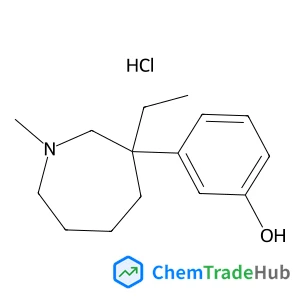
3-(3-Ethyl-1-methyl-3-azepanyl)phenol hydrochloride (1:1)
CAS Number:
59263-76-2
Molecular Formula:
C15H24ClNO
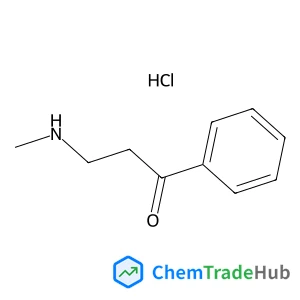
3-(Methylamino)-1-phenyl-1-propanone hydrochloride (1:1)
CAS Number:
2538-50-3
Molecular Formula:
C10H14ClNO
![[4-Amino-2-(methylsulfanyl)-5-pyrimidinyl]methanol structure](https://static.chemtradehub.com/structs/588/588-36-3-fc73.webp "[4-Amino-2-(methylsulfanyl)-5-pyrimidinyl]methanol structure")
![[4-(Heptyloxy)phenyl]boronic acid structure](https://static.chemtradehub.com/structs/136/136370-19-9-ad33.webp "[4-(Heptyloxy)phenyl]boronic acid structure")
Recommended Suppliers






Disclaimer
This page provides academic journal information for reference and research purposes only. We are not affiliated with any journal publishers and do not handle publication submissions. For publication-related inquiries, please contact the respective journal publishers directly.
If you notice any inaccuracies in the information displayed, please contact us at support@chemtradehub.com. We will promptly review and address your concerns.