












Inhibition by gaseous impurities of hydrogen absorption by Pd and by internally oxidized Pd–Al alloys
Literature Information
Publication Date
2000-10-06
DOI
10.1039/B004353M
Impact Factor
3.676
Authors
Kurt L. Shanahan
View Original
Abstract
Absorption of H2 is a sensitive technique for the study of the effects of impurity gases on H2 chemisorption by Pd because chemisorbed is an intermediate for absorption. Since large amounts of hydrogen are absorbed by Pd, the absorption can be readily followed experimentally. The rates of H2 absorption by Pd foil in the presence of He, CO2 and CO gases are, in the order of increasing inhibition: He:CO2:CO. Surprisingly CO, which is strongly chemisorbed on Pd, was not as strong a poison for H2 chemisorption as anticipated. The effect of CO pre-adsorption followed by evacuation at 323 K did not affect the subsequent rates of H2 absorption nearly as much as absorption from (CO + H2) mixtures. For Pd foil, the simultaneous presence of H2 and CO led to inconveniently slow rates, but for high surface area Pd such as Pd-on-kieselguhr or Pd powder, the rates from (H2 + CO) mixtures were reasonably fast. After internal oxidation, Pd–Al alloys are converted into composites of alumina precipitates within Pd matrices. The rates of H2 absorption have been shown to be faster for these composites than for Pd foil. In the presence of gaseous impurities the rates of H2 absorption by internally oxidized Pd–Al alloys are faster than for pure Pd foil. The rates of H2 absorption from (H2 + CO) mixtures increase with % Al in the internally oxidized alloys and for alloys with Al greater than about 3%, the rates are quite fast.
Related Literature
The first NH aldimineorganometallic compound. Isolation and crystal structure
Joan Albert, J. Magali Cadena, Asensio González, Jaume Granell, Xavier Solans, Mercè Font-Bardia
2003-01-20
Communication
DOI: 10.1039/B211808D
Construction of extended networks with a trimeric pyrazole synthon
Ishtvan Boldog, Eduard B. Rusanov, Joachim Sieler, Steffen Blaurock, Konstantin V. Domasevitch
2003-02-25
Communication
DOI: 10.1039/B212540D
A quasi-covalent metal–metal bond in an early–late heterobimetallic Ti–Pt complex stabilized by phosphinoenolate ligands‡
Pierre Braunstein, Xavier Morise, Marc Bénard, Marie-Madeleine Rohmer, Richard Welter
2003-02-03
Communication
DOI: 10.1039/B211289M
Novel and efficient chiral sulfideoxathiane ligands for palladium-catalyzed asymmetric allylic alkylation
Yuko Okuyama, Hiroto Nakano, Kouichi Takahashi, Hiroshi Hongo, Chizuko Kabuto
2003-01-17
Communication
DOI: 10.1039/B211031H
Transfer hydrogenation using recyclable polyurea-encapsulated palladium: efficient and chemoselective reduction of aryl ketones
Jin-Quan Yu, Hai-Chen Wu, Chandrashekar Ramarao, Jonathan B. Spencer, Steven V. Ley
2003-02-12
Communication
DOI: 10.1039/B300074P
Opal gel templated synthesis of oblate titania opal materials
Lijun Ji, Jianhua Rong, Zhenzhong Yang
2003-04-02
Communication
DOI: 10.1039/B300825H
Fraction of the CoMoS phases accessible to NO in Co–Mo hydrodesulfurization catalysts
Yasuaki Okamoto, Masatoshi Kawano, Takeshi Kubota
2003-04-07
Communication
DOI: 10.1039/B301487H
Non-aggregating octasubstituted dendritic phthalocyanines
Casey A. Kernag, Dominic V. McGrath
2003-04-03
Communication
DOI: 10.1039/B301157G
Thiation of 2′-deoxy-5,6-dihydropyrimidine nucleosides with Lawesson’s reagent: Characterisation of oxathiaphosphepane intermediates
Frédéric Peyrane, Jean-Louis Fourrey, Pascale Clivio
2003-02-21
Communication
DOI: 10.1039/B211405D
May GSH and l-His contribute to intracellular binding of zinc? Thermodynamic and solution structural study of a ternary complex
Artur Krężel, Jacek Wójcik, Maciej Maciejczyk, Wojciech Bal
2003-02-21
Communication
DOI: 10.1039/B300632H
You might also like
Compound Q&A
What precautions should be taken when handling 4-(2-Furylmethyl)thiomorpholine 1,1-dioxide (CAS: 79206-94-3)?
When handling 4-(2-Furylmethyl)thiomorpholine 1,1-dioxide (CAS: 79206-94-3), it ...
79206-94-34-(2-Furylmethyl)thi...
Compound Q&A
What precautions should be taken when handling 4-Chloro-N-[2-(4-morpholinyl)ethyl]benzamide (CAS: 71320-77-9)?
When handling 4-Chloro-N-[2-(4-morpholinyl)ethyl]benzamide (CAS: 71320-77-9), it...
71320-77-94-Chloro-N-[2-(4-mor...
Compound Q&A
How should waste containing 2-[2-(2-Methoxyethoxy)ethoxy]ethyl 4-methylbenzenesulfonate (CAS: 62921-74-8) be handled?
Waste containing this compound (CAS: 62921-74-8) should be handled according to ...
62921-74-82-[2-(2-Methoxyethox...
Compound Q&A
How should waste containing (S)-Methyl 2-amino-3-cyclohexylpropanoate be handled?
Waste containing (S)-Methyl 2-amino-3-cyclohexylpropanoate should be collected i...
40056-18-6(S)-Methyl 2-amino-3...
Compound Q&A
How is 5-({4-[(2S,4R)-4-Hydroxy-2-methyltetrahydro-2H-pyran-4-yl]-2-thienyl}sulfanyl)-1-methyl-1,3-dihydro-2H-indol-2-one (CAS: 166882-70-8) typically synthesized?
This compound can be synthesized using a multi-step process involving the conjug...
166882-70-85-({4-[(2S,4R)-4-Hyd...
Compound Q&A
Are there alternatives to (2E)-3-(3,4-Dichlorophenyl)acrylic acid (CAS: 7312-27-8) in synthesis?
There are several alternatives to (2E)-3-(3,4-Dichlorophenyl)acrylic acid in syn...
7312-27-8(2E)-3-(3,4-Dichloro...
Compound Q&A
How should Ethyl 6-(2-nitrophenyl)imidazo[2,1-b][1,3]thiazole-3-carboxylate (CAS: 925437-84-9) be stored?
Ethyl 6-(2-nitrophenyl)imidazo[2,1-b][1,3]thiazole-3-carboxylate (CAS: 925437-84...
925437-84-9Ethyl 6-(2-nitrophen...
Compound Q&A
How should waste containing 2-(1,3-Thiazol-2-yl)ethanamine (CAS: 18453-07-1) be handled?
Waste containing 2-(1,3-Thiazol-2-yl)ethanamine (CAS: 18453-07-1) should be coll...
18453-07-12-(1,3-Thiazol-2-yl)...
Compound Q&A
How is Methyl 5-iodo-2-methylbenzoate (CAS: 103440-54-6) typically synthesized?
Methyl 5-iodo-2-methylbenzoate can be synthesized through the iodination of meth...
103440-54-6Methyl 5-iodo-2-meth...
Compound Q&A
How is 5-Chloro[1,2,4]triazolo[1,5-a]pyridine (CAS: 1427399-34-5) typically synthesized?
5-Chloro[1,2,4]triazolo[1,5-a]pyridine is commonly synthesized via the condensat...
1427399-34-55-Chloro[1,2,4]triaz...
Source Journal
Physical Chemistry Chemical Physics

CiteScore:
5.5
Self-citation Rate:
10.3%
Articles per Year:
3036
Physical Chemistry Chemical Physics (PCCP) is an international journal co-owned by 19 physical chemistry and physics societies from around the world. This journal publishes original, cutting-edge research in physical chemistry, chemical physics and biophysical chemistry. To be suitable for publication in PCCP, articles must include significant innovation and/or insight into physical chemistry; this is the most important criterion that reviewers and Editors will judge against when evaluating submissions. The journal has a broad scope and welcomes contributions spanning experiment, theory, computation and data science. Topical coverage includes spectroscopy, dynamics, kinetics, statistical mechanics, thermodynamics, electrochemistry, catalysis, surface science, quantum mechanics, quantum computing and machine learning. Interdisciplinary research areas such as polymers and soft matter, materials, nanoscience, energy, surfaces/interfaces, and biophysical chemistry are welcomed if they demonstrate significant innovation and/or insight into physical chemistry. Joined experimental/theoretical studies are particularly appreciated when complementary and based on up-to-date approaches.
Recommended Compounds
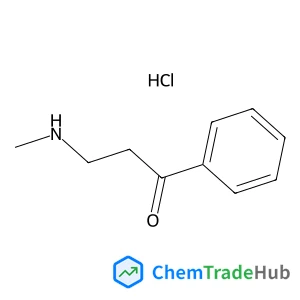
3-(Methylamino)-1-phenyl-1-propanone hydrochloride (1:1)
CAS Number:
2538-50-3
Molecular Formula:
C10H14ClNO
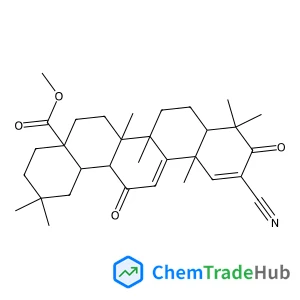
Methyl 2-cyano-3,12-dioxooleana-1,9(11)-dien-28-oate
CAS Number:
218600-53-4
Molecular Formula:
C32H43NO4
Recommended Suppliers






Disclaimer
This page provides academic journal information for reference and research purposes only. We are not affiliated with any journal publishers and do not handle publication submissions. For publication-related inquiries, please contact the respective journal publishers directly.
If you notice any inaccuracies in the information displayed, please contact us at support@chemtradehub.com. We will promptly review and address your concerns.