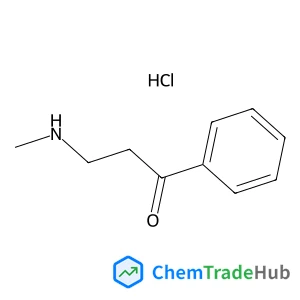
3-(Methylamino)-1-phenyl-1-propanone hydrochloride (1:1)
CAS Number:
2538-50-3
Molecular Formula:
C10H14ClNO
Plasmonic metal nanostructures support intense nanoscale electromagnetic hotspots that can be modulated in an active plasmonic device. Electrical manipulation is a reversible route to manipulate plasmon resonances in sub-nanoscale distances because a bias voltage can modify the electron tunneling barrier. In this manuscript, we use time-dependent density functional theory (TDDFT) to examine the impact of quantum effects on an asymmetric nanoparticle dimer composed of an aluminum (Al) nanoparticle on a much larger Al rectangular cuboid. This asymmetric system is intended to model some of the effects of a metal nanoparticle coupling to a metal film which is a prototypical plasmonic antenna structure. As the distance between the asymmetric dimer shrinks, the dipolar gap plasmon (DGP) redshifts and a charge transfer plasmon (CTP) appears that is influenced by optically-induced conductance in the nanoscale junction. The relatively high optical conductivity of Al enables a smooth transition from capacitive to conductive coupling, allowing us to find the DGP–CTP crossover distance (d ∼ 6 Å). Surprisingly, a closer evaluation of crossover plasmon resonance revealed two separate peaks with near-field distributions that match the CTP and anti-bonding mode of the gap plasmon. Applying an electrical bias to this crossover system modifies the effective conductance of the tunneling barrier, making it possible to reversibly tune the wavelength of the plasmon modes. This work demonstrates how asymmetry becomes a key feature in active plasmonic devices using electrical bias, because asymmetry enables the use of positive and negative biases to tune the system over a broader range of wavelengths.
Feng Wang, Charles E. Diesendruck
DOI: 10.1039/C7PY00712D
Jianhua Han, Zhihuan Weng, Zuoqiang Wu, Jingwen Cai, Jinyan Wang, Xigao Jian
DOI: 10.1039/C7PY00802C
Chiao-Wen Lin, Chao-Tsen Chen, Jan Golder
DOI: 10.1039/C7PY00338B
Xinwen Yan, Shaowen Zhang, Deqian Peng, Pengfei Zhang, Junge Zhi, Xiaolu Wu, Lin Wang, Yuping Dong, Xiaofang Li
DOI: 10.1039/C8PY00007G
D. Pintori
DOI: 10.1039/C7PY00788D
J. I. Park, A. Choe, M. P. Kim, H. Ko, T. H. Lee, S. M. Noh, J. C. Kim, I. W. Cheong
DOI: 10.1039/C7PY01655G
P. Reinold, K. Bruchlos, S. Ludwigs
DOI: 10.1039/C7PY01688C
Hiroaki Shimomoto, Junya Kawamata, Hirokazu Murakami, Kazuki Yamashita, Tomomichi Itoh, Eiji Ihara
DOI: 10.1039/C7PY00816C
Maxime Colpaert, Sanjib Banerjee, Vincent Ladmiral, Taizo Ono, Bruno Améduri
DOI: 10.1039/C7PY02018J
G. Tripodo, G. Marrubini, M. Corti, G. Brusotti, C. Milanese, M. Sorrenti, L. Catenacci, G. Massolini, E. Calleri
DOI: 10.1039/C7PY01626C
When handling 4-(2-Furylmethyl)thiomorpholine 1,1-dioxide (CAS: 79206-94-3), it ...
When handling 4-Chloro-N-[2-(4-morpholinyl)ethyl]benzamide (CAS: 71320-77-9), it...
Waste containing this compound (CAS: 62921-74-8) should be handled according to ...
Waste containing (S)-Methyl 2-amino-3-cyclohexylpropanoate should be collected i...
This compound can be synthesized using a multi-step process involving the conjug...
There are several alternatives to (2E)-3-(3,4-Dichlorophenyl)acrylic acid in syn...
Ethyl 6-(2-nitrophenyl)imidazo[2,1-b][1,3]thiazole-3-carboxylate (CAS: 925437-84...
Waste containing 2-(1,3-Thiazol-2-yl)ethanamine (CAS: 18453-07-1) should be coll...
Methyl 5-iodo-2-methylbenzoate can be synthesized through the iodination of meth...
5-Chloro[1,2,4]triazolo[1,5-a]pyridine is commonly synthesized via the condensat...

Physical Chemistry Chemical Physics (PCCP) is an international journal co-owned by 19 physical chemistry and physics societies from around the world. This journal publishes original, cutting-edge research in physical chemistry, chemical physics and biophysical chemistry. To be suitable for publication in PCCP, articles must include significant innovation and/or insight into physical chemistry; this is the most important criterion that reviewers and Editors will judge against when evaluating submissions. The journal has a broad scope and welcomes contributions spanning experiment, theory, computation and data science. Topical coverage includes spectroscopy, dynamics, kinetics, statistical mechanics, thermodynamics, electrochemistry, catalysis, surface science, quantum mechanics, quantum computing and machine learning. Interdisciplinary research areas such as polymers and soft matter, materials, nanoscience, energy, surfaces/interfaces, and biophysical chemistry are welcomed if they demonstrate significant innovation and/or insight into physical chemistry. Joined experimental/theoretical studies are particularly appreciated when complementary and based on up-to-date approaches.

![N-[(Benzyloxy)carbonyl]serine structure](https://static.chemtradehub.com/structs/276/2768-56-1-77f7.webp "N-[(Benzyloxy)carbonyl]serine structure")