



Ground and excited state properties of furanoflavylium derivatives
Literature Information
Publication Date
2019-09-13
DOI
10.1039/C9CP04917G
Impact Factor
3.676
Authors
Alfonso Alejo-Armijo, Nuno Basílio, Adilson A. Freitas, António L. Maçanita, João C. Lima, A. Jorge Parola, Fernando Pina
View Original
Abstract
The comparison of the ground-state reactivity of anthocyanins and aurone model compounds (i.e. with and without the furano bridge) has shown that the kinetic paradigm does not depend on the bridge but only on the hydroxyl substituent pattern, independently of the presence of the bridge: (i) bell shaped kinetics for those with two hydroxyl substituents in position 4′ and 7, and (ii) four distinct kinetic steps for the mono substituted compounds with a hydroxyl in position 4′. The excited state proton transfer (ESPT) properties of these compounds were also investigated using steady-state and time-resolved spectroscopic techniques. It was found that the ESPT efficiency is significantly higher for the bridged compounds. Interestingly, pH-dependent steady-state fluorescence emission experiments show that in 4′,7-dihydroxyfuranoflavylium the hydroxyl group in position 7 is the more acidic one in the excited state, while 1H NMR titration curves indicate a higher acidity constant in the ground state for the proton at the hydroxyl group in position 4′. Differently, the fluorescence emission spectrum of the quinoidal base deprotonated at position 7 is only observed upon excitation of the flavylium cation while the one from the base deprotonated at 4′ is observed upon direct excitation.
Recommended Journals

Current Opinion in Solid State & Materials Science

Crystallography Reports

Russian Journal of Bioorganic Chemistry

Current Opinion in Colloid & Interface Science

Russian Journal of General Chemistry

Drug Discovery Today

Russian Journal of Coordination Chemistry

Journal of Saudi Chemical Society

New Journal of Chemistry

Organic Process Research & Development
Related Literature
Effective rate constant for nanostructured heterogeneous catalysts
Leila Rajabi, S. C. Hendy
2015-10-07
Paper
DOI: 10.1039/C5CP04448K
Spectral lineshapes in nonlinear electronic spectroscopy
Artur Nenov, Angelo Giussani, Benjamin P. Fingerhut, Ivan Rivalta, Elise Dumont, Shaul Mukamel
2015-06-02
Paper
DOI: 10.1039/C5CP01167A
Adsorption of O2 on anionic silver clusters: spins and electron binding energies dominate in the range up to nano sizes
Jun Ma, Xizi Cao, Xiaopeng Xing, Xuefeng Wang, Joel H. Parks
2015-11-12
Paper
DOI: 10.1039/C5CP06116D
Coupled phase field, heat conduction, and elastodynamic simulations of kinetic superheating and nanoscale melting of aluminum nanolayer irradiated by picosecond laser
Yong Seok Hwang, Valery I. Levitas
2015-11-02
Paper
DOI: 10.1039/C5CP04443J
Vibrational control of electron-transfer reactions: a feasibility study for the fast coherent transfer regime
P. Antoniou, Z. Ma, P. Zhang
2015-04-02
Paper
DOI: 10.1039/C5CP00610D
Order and disorder in quaternary atomic laminates from first-principles calculations
Martin Dahlqvist, Johanna Rosen
2015-11-03
Paper
DOI: 10.1039/C5CP06021D
TD-DFT study of the light-induced spin crossover of Fe(iii) complexes
Sergi Saureu
2015-12-02
Paper
DOI: 10.1039/C5CP06620D
Photoinduced charge separation in an oligophenylenevinylene-based Hamilton-type receptor supramolecularly associating two C60-barbiturate guests
G. Pagona, A. Stergiou, H. B. Gobeze, G. Rotas, F. D'Souza, N. Tagmatarchis
2015-11-17
Paper
DOI: 10.1039/C5CP05657H
How exciton-vibrational coherences control charge separation in the photosystem II reaction center
Vladimir I. Novoderezhkin, Elisabet Romero, Rienk van Grondelle
2015-03-31
Paper
DOI: 10.1039/C5CP00582E
Periodic Hartree–Fock and hybrid density functional calculations on the metallic and the insulating phase of (EDO-TTF)2PF6
Gerrit-Jan Linker, Paul H. M. van Loosdrecht, Piet Th. van Duijnen, Ria Broer
2015-10-21
Paper
DOI: 10.1039/C5CP05187H
You might also like
Compound Q&A
Is 6-(3-Fluorophenyl)picolinic acid (CAS: 887982-40-3) safe?
6-(3-Fluorophenyl)picolinic acid is generally considered safe for laboratory use...
887982-40-36-(3-Fluorophenyl)pi...
Compound Q&A
What industries use (3R)-3-Pyrrolidinol (CAS: 2799-21-5)?
(3R)-3-Pyrrolidinol is used in the pharmaceutical industry as a precursor for dr...
2799-21-5(3R)-3-Pyrrolidinol
Compound Q&A
What precautions should be taken when handling (4R,5R)-4,5-Diethoxycarbonyl-2,2-dimethyldioxolane (CAS: 59779-75-8)?
When handling (4R,5R)-4,5-Diethoxycarbonyl-2,2-dimethyldioxolane (CAS: 59779-75-...
59779-75-8(4R,5R)-4,5-Diethoxy...
Compound Q&A
How is 1-(6-Chloroimidazo[1,2-b]pyridazin-3-yl)ethanone (CAS: 90734-71-7) typically synthesized?
1-(6-Chloroimidazo[1,2-b]pyridazin-3-yl)ethanone is often synthesized via a mult...
90734-71-71-(6-Chloroimidazo[1...
Compound Q&A
What is the market or research trend for N-Ethyl-3,4-dimethylbenzylamine (CAS: 39180-83-1)?
The market for N-Ethyl-3,4-dimethylbenzylamine (CAS: 39180-83-1) remains steady,...
39180-83-1N-Ethyl-3,4-dimethyl...
Compound Q&A
What is Tert-butyl 3-(pyrrolidin-1-yl)azetidine-1-carboxylate (CAS: 1019008-21-9)?
Tert-butyl 3-(pyrrolidin-1-yl)azetidine-1-carboxylate is a chemical compound wit...
1019008-21-9Tert-butyl 3-(pyrrol...
Compound Q&A
What regulatory guidelines apply to 1-Bromo-3-chloro-2,4-dimethoxybenzene (CAS: 1228956-93-1)?
1-Bromo-3-chloro-2,4-dimethoxybenzene (CAS: 1228956-93-1) falls under the classi...
1228956-93-11-Bromo-3-chloro-2,4...
Compound Q&A
Is 8-Bromo-2-methyl-3,4-dihydroisoquinolin-1(2H)-one (CAS: 1368622-07-4) safe?
The safety of 8-Bromo-2-methyl-3,4-dihydroisoquinolin-1(2H)-one (CAS: 1368622-07...
1368622-07-48-Bromo-2-methyl-3,4...
Compound Q&A
Is Benzyl [(3S)-2,6-dioxo-3-piperidinyl]carbamate (CAS: 22785-43-9) safe?
Benzyl [(3S)-2,6-dioxo-3-piperidinyl]carbamate is generally safe when handled wi...
22785-43-9Benzyl [(3S)-2,6-dio...
Compound Q&A
How should 1-{[4-(4,4,5,5-Tetramethyl-1,3,2-dioxaborolan-2-yl)phenyl]sulfonyl}pyrrolidine (CAS: 928657-21-0) be stored?
1-{[4-(4,4,5,5-Tetramethyl-1,3,2-dioxaborolan-2-yl)phenyl]sulfonyl}pyrrolidine s...
928657-21-01-{[4-(4,4,5,5-Tetra...
Source Journal
Physical Chemistry Chemical Physics

CiteScore:
5.5
Self-citation Rate:
10.3%
Articles per Year:
3036
Physical Chemistry Chemical Physics (PCCP) is an international journal co-owned by 19 physical chemistry and physics societies from around the world. This journal publishes original, cutting-edge research in physical chemistry, chemical physics and biophysical chemistry. To be suitable for publication in PCCP, articles must include significant innovation and/or insight into physical chemistry; this is the most important criterion that reviewers and Editors will judge against when evaluating submissions. The journal has a broad scope and welcomes contributions spanning experiment, theory, computation and data science. Topical coverage includes spectroscopy, dynamics, kinetics, statistical mechanics, thermodynamics, electrochemistry, catalysis, surface science, quantum mechanics, quantum computing and machine learning. Interdisciplinary research areas such as polymers and soft matter, materials, nanoscience, energy, surfaces/interfaces, and biophysical chemistry are welcomed if they demonstrate significant innovation and/or insight into physical chemistry. Joined experimental/theoretical studies are particularly appreciated when complementary and based on up-to-date approaches.
Recommended Compounds

![2-[({[(2-Methyl-2-propanyl)oxy]carbonyl}amino)methyl]isonicotinic acid structure](https://static.chemtradehub.com/structs/473/473924-63-9-973b.webp "2-[({[(2-Methyl-2-propanyl)oxy]carbonyl}amino)methyl]isonicotinic acid structure")
2-[({[(2-Methyl-2-propanyl)oxy]carbonyl}amino)methyl]isonicotinic acid
CAS Number:
473924-63-9
Molecular Formula:
C12H16N2O4
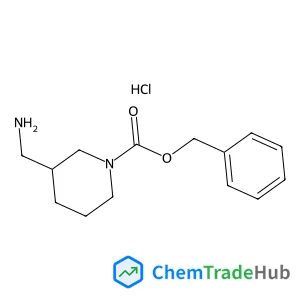
Benzyl 3-(aminomethyl)piperidine-1-carboxylate hydrochloride
CAS Number:
1186663-23-9
Molecular Formula:
C14H21ClN2O2
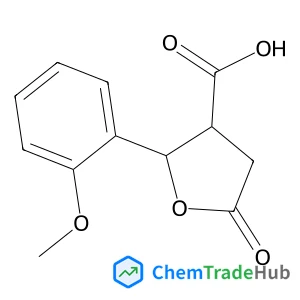
trans-2-(2-Methoxyphenyl)-5-oxotetrahydrofuran-3-carboxylic acid
CAS Number:
99226-02-5
Molecular Formula:
C12H12O5
Recommended Suppliers





Disclaimer
This page provides academic journal information for reference and research purposes only. We are not affiliated with any journal publishers and do not handle publication submissions. For publication-related inquiries, please contact the respective journal publishers directly.
If you notice any inaccuracies in the information displayed, please contact us at support@chemtradehub.com. We will promptly review and address your concerns.