



Vibronic spectroscopy of methyl anthranilate and its water complex: hydrogen atom dislocation in the excited state
Literature Information
Publication Date
2019-09-11
DOI
10.1039/C9CP04556B
Impact Factor
3.676
Authors
Karl N. Blodgett, Dewei Sun, Joshua L. Fischer, Edwin L. Sibert, III, Timothy S. Zwier
View Original
Abstract
Laser-induced fluorescence (LIF) excitation, dispersed fluorescence (DFL), UV–UV-hole burning, and UV-depletion spectra have been collected on methyl anthranilate (MA, methyl 2-aminobenzoate) and its water-containing complex (MA–H2O), under jet-cooled conditions in the gas phase. As a close structural analog of a sunscreen agent, MA has a strong absorption due to the S0–S1 transition that begins in the UV-A region, with the electronic origin at 28 852 cm−1 (346.6 nm). Unlike most sunscreens that have fast non-radiative pathways back to the ground state, MA fluoresces efficiently, with an excited state lifetime of 27 ns. Relative to methyl benzoate, inter-system crossing to the triplet manifold is shut off in MA by the strong intramolecular NH⋯OC H-bond, which shifts the 3nπ* state well above the 1ππ* S1 state. Single vibronic level DFL spectra are used to obtain a near-complete assignment of the vibronic structure in the excited state. Much of the vibrational structure in the excitation spectrum is Franck–Condon activity due to three in-plane vibrations that modulate the distance between the NH2 and CO2Me groups, ν33 (421 cm−1), ν34 (366 cm−1), and ν36 (179 cm−1). Based on the close correspondence between experiment and theory at the TD-DFT B3LYP-D3BJ/def2TZVP level of theory, the major structural changes associated with electronic excitation are evaluated, leading to the conclusion that the major motion is a reorientation and constriction of the 6-membered H-bonded ring closed by the intramolecular NH⋯OC H-bond. This leads to a shortening of the NH⋯OC H-bond distance from 1.926 Å to 1.723 Å, equivalent to about a 25% reduction in the H⋯O distance compared to full H-atom transfer. As a result, the excited state process near the S1 origin is a hydrogen atom dislocation that is brought about primarily by heavy atom motion, since the shortened H-bond distance results from extensive heavy-atom motion, with only a 0.03 Å increase in the NH bond length relative to its ground state value.
Recommended Journals

Journal of Saudi Chemical Society

Saudi Pharmaceutical Journal

Russian Journal of Bioorganic Chemistry

Chemistry Education Research and Practice

Chemical Communications

Acta Materialia

Nature Medicine

Organic Process Research & Development

Current Opinion in Colloid & Interface Science

Current Opinion in Solid State & Materials Science
Related Literature
DFT-based Green's function pathways model for prediction of bridge-mediated electronic coupling
Laura Berstis, Kim K. Baldridge
2015-04-20
Paper
DOI: 10.1039/C5CP01861G
Photoelectron spectroscopy and density functional calculations of CnSm− (n = 2–7; m = 1, 2) clusters
Xi-Ling Xu, Xiao-Jiao Deng, Hong-Guang Xu, Wei-Jun Zheng
2015-10-27
Paper
DOI: 10.1039/C5CP04482K
Methane partial oxidation using FeOx@La0.8Sr0.2FeO3−δ core–shell catalyst – transient pulse studies
Arya Shafiefarhood, Joseph Clay Hamill, Luke Michael Neal, Fanxing Li
2015-11-02
Paper
DOI: 10.1039/C5CP05583K
Understanding the fundamentals of redox mediators in Li–O2 batteries: a case study on nitroxides
Benjamin J. Bergner, Christine Hofmann, Adrian Schürmann, Daniel Schröder, Klaus Peppler, Peter R. Schreiner, Jürgen Janek
2015-10-26
Paper
DOI: 10.1039/C5CP04505C
A fast but accurate excitonic simulation of the electronic circular dichroism of nucleic acids: how can it be achieved?
Daniele Loco, Sandro Jurinovich, Lorenzo Di Bari, Benedetta Mennucci
2015-11-23
Paper
DOI: 10.1039/C5CP06341H
Spectral lineshapes in nonlinear electronic spectroscopy
Artur Nenov, Angelo Giussani, Benjamin P. Fingerhut, Ivan Rivalta, Elise Dumont, Shaul Mukamel
2015-06-02
Paper
DOI: 10.1039/C5CP01167A
Long term puzzles of the CH and CD energetics and related phenomena revisited; solutions sought through REMPI-photofragmentations of bromomethanes
Arnar Hafliðason, Huasheng Wang, Ágúst Kvaran
2015-12-09
Paper
DOI: 10.1039/C5CP06097D
S-doped mesoporous nanocomposite of HTiNbO5 nanosheets and TiO2 nanoparticles with enhanced visible light photocatalytic activity
Ruirui Han, Hongmei Ji, Tao Sun, Jin Zhao, Ningna Chen, Jing Chen, Xuefeng Guo, Wenhua Hou, Weiping Ding
2015-11-23
Paper
DOI: 10.1039/C5CP06555K
A new perspective: imaging the stereochemistry of molecular collisions
F. J. Aoiz, M. Brouard, S. D. S. Gordon, B. Nichols, V. Walpole
2015-08-17
Perspective
DOI: 10.1039/C5CP03273C
Why solid oxide cells can be reversibly operated in solid oxide electrolysis cell and fuel cell modes?
Kongfa Chen, Na Ai, San Ping Jiang
2015-10-28
Paper
DOI: 10.1039/C5CP05065K
You might also like
Compound Q&A
Is 6-(3-Fluorophenyl)picolinic acid (CAS: 887982-40-3) safe?
6-(3-Fluorophenyl)picolinic acid is generally considered safe for laboratory use...
887982-40-36-(3-Fluorophenyl)pi...
Compound Q&A
What industries use (3R)-3-Pyrrolidinol (CAS: 2799-21-5)?
(3R)-3-Pyrrolidinol is used in the pharmaceutical industry as a precursor for dr...
2799-21-5(3R)-3-Pyrrolidinol
Compound Q&A
What precautions should be taken when handling (4R,5R)-4,5-Diethoxycarbonyl-2,2-dimethyldioxolane (CAS: 59779-75-8)?
When handling (4R,5R)-4,5-Diethoxycarbonyl-2,2-dimethyldioxolane (CAS: 59779-75-...
59779-75-8(4R,5R)-4,5-Diethoxy...
Compound Q&A
How is 1-(6-Chloroimidazo[1,2-b]pyridazin-3-yl)ethanone (CAS: 90734-71-7) typically synthesized?
1-(6-Chloroimidazo[1,2-b]pyridazin-3-yl)ethanone is often synthesized via a mult...
90734-71-71-(6-Chloroimidazo[1...
Compound Q&A
What is the market or research trend for N-Ethyl-3,4-dimethylbenzylamine (CAS: 39180-83-1)?
The market for N-Ethyl-3,4-dimethylbenzylamine (CAS: 39180-83-1) remains steady,...
39180-83-1N-Ethyl-3,4-dimethyl...
Compound Q&A
What is Tert-butyl 3-(pyrrolidin-1-yl)azetidine-1-carboxylate (CAS: 1019008-21-9)?
Tert-butyl 3-(pyrrolidin-1-yl)azetidine-1-carboxylate is a chemical compound wit...
1019008-21-9Tert-butyl 3-(pyrrol...
Compound Q&A
What regulatory guidelines apply to 1-Bromo-3-chloro-2,4-dimethoxybenzene (CAS: 1228956-93-1)?
1-Bromo-3-chloro-2,4-dimethoxybenzene (CAS: 1228956-93-1) falls under the classi...
1228956-93-11-Bromo-3-chloro-2,4...
Compound Q&A
Is 8-Bromo-2-methyl-3,4-dihydroisoquinolin-1(2H)-one (CAS: 1368622-07-4) safe?
The safety of 8-Bromo-2-methyl-3,4-dihydroisoquinolin-1(2H)-one (CAS: 1368622-07...
1368622-07-48-Bromo-2-methyl-3,4...
Compound Q&A
Is Benzyl [(3S)-2,6-dioxo-3-piperidinyl]carbamate (CAS: 22785-43-9) safe?
Benzyl [(3S)-2,6-dioxo-3-piperidinyl]carbamate is generally safe when handled wi...
22785-43-9Benzyl [(3S)-2,6-dio...
Compound Q&A
How should 1-{[4-(4,4,5,5-Tetramethyl-1,3,2-dioxaborolan-2-yl)phenyl]sulfonyl}pyrrolidine (CAS: 928657-21-0) be stored?
1-{[4-(4,4,5,5-Tetramethyl-1,3,2-dioxaborolan-2-yl)phenyl]sulfonyl}pyrrolidine s...
928657-21-01-{[4-(4,4,5,5-Tetra...
Source Journal
Physical Chemistry Chemical Physics

CiteScore:
5.5
Self-citation Rate:
10.3%
Articles per Year:
3036
Physical Chemistry Chemical Physics (PCCP) is an international journal co-owned by 19 physical chemistry and physics societies from around the world. This journal publishes original, cutting-edge research in physical chemistry, chemical physics and biophysical chemistry. To be suitable for publication in PCCP, articles must include significant innovation and/or insight into physical chemistry; this is the most important criterion that reviewers and Editors will judge against when evaluating submissions. The journal has a broad scope and welcomes contributions spanning experiment, theory, computation and data science. Topical coverage includes spectroscopy, dynamics, kinetics, statistical mechanics, thermodynamics, electrochemistry, catalysis, surface science, quantum mechanics, quantum computing and machine learning. Interdisciplinary research areas such as polymers and soft matter, materials, nanoscience, energy, surfaces/interfaces, and biophysical chemistry are welcomed if they demonstrate significant innovation and/or insight into physical chemistry. Joined experimental/theoretical studies are particularly appreciated when complementary and based on up-to-date approaches.
Recommended Compounds

4-Cyclohexene-1,2-dicarboxylic acid, 1,2-dimethyl ester, (1R,2R)-rel-
CAS Number:
17673-68-6
Molecular Formula:
C10H14O4
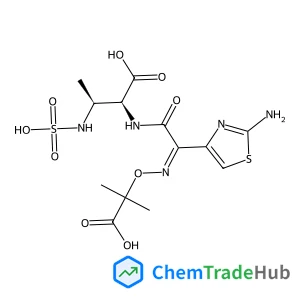
Aztreonam USP Related Compound A (Open-ring Aztreonam)
CAS Number:
87500-74-1
Molecular Formula:
C13H19N5O9S2
![2-[({[(2-Methyl-2-propanyl)oxy]carbonyl}amino)methyl]isonicotinic acid structure](https://static.chemtradehub.com/structs/473/473924-63-9-973b.webp "2-[({[(2-Methyl-2-propanyl)oxy]carbonyl}amino)methyl]isonicotinic acid structure")
2-[({[(2-Methyl-2-propanyl)oxy]carbonyl}amino)methyl]isonicotinic acid
CAS Number:
473924-63-9
Molecular Formula:
C12H16N2O4
Recommended Suppliers





Disclaimer
This page provides academic journal information for reference and research purposes only. We are not affiliated with any journal publishers and do not handle publication submissions. For publication-related inquiries, please contact the respective journal publishers directly.
If you notice any inaccuracies in the information displayed, please contact us at support@chemtradehub.com. We will promptly review and address your concerns.