












Structural properties and influence of solvent on the stability of telomeric four-stranded i-motif DNA
Literature Information
Publication Date
2019-09-19
DOI
10.1039/C9CP03253C
Impact Factor
3.676
Authors
Dhananjay Bhattacharyya
View Original
Abstract
Repetitive cytosine rich i-motif forming sequences are abundant in the telomere, centromere and promoters of several oncogenes and in some instances are known to regulate transcription and gene expression. The in vivo existence of i-motif structures demands further insight into the factors affecting their formation and stability and development of better understanding of their gene regulatory functions. Most prior studies characterizing the conformational dynamics of i-motifs are based on i-motif forming synthetic constructs. Here, we present a systematic study on the stability and structural properties of biologically relevant i-motifs of telomeric and centromeric repeat fragments. Our results based on molecular dynamics simulations and quantum chemical calculations indicate that along with base pairing interactions within the i-motif core the overall folded conformation is associated with the stable C–H⋯O sugar “zippers” in the narrow grooves and structured water molecules along the wide grooves. The stacked geometry of the hemi-protonated cytosine pairs within the i-motif core is mainly governed by the repulsive base stacking interaction. The loop sequence can affect the structural dynamics of the i-motif by altering the loop motion and backbone conformation. Overall this study provides microscopic insight into the i-motif structure that will be helpful to understand the structural aspect of mechanisms of gene regulation by i-motif DNA.
Recommended Journals
Related Literature
Rotational dynamics of organic cations in the CH3NH3PbI3 perovskite
Tianran Chen, Benjamin J. Foley, Madhusudan Tyagi, John R. D. Copley, Joshua J. Choi, Seung-Hun Lee
2015-10-28
Paper
DOI: 10.1039/C5CP05348J
Nanostring-cluster hierarchical structured Bi2O3: synthesis, evolution and application in biosensing
Ya-Nan Yu, Shi-Yu Lu, Shu-Juan Bao, Qiang-Qiang Sun, Sheng-Hui Liao
2015-12-03
Paper
DOI: 10.1039/C5CP05790F
Low field photo-CIDNP in the intramolecular electron transfer of naproxen–pyrrolidine dyads
I. M. Magin, N. E. Polyakov, A. I. Kruppa, T. V. Leshina, M. A. Miranda, E. Nuin, M. L. Marin
2015-11-19
Paper
DOI: 10.1039/C5CP04233J
Measurement and modelling of reactive transport in geological barriers for nuclear waste containment
Qingrong Xiong, Claudia Joseph, Katja Schmeide, Andrey P. Jivkov
2015-10-26
Paper
DOI: 10.1039/C5CP05243B
A fast but accurate excitonic simulation of the electronic circular dichroism of nucleic acids: how can it be achieved?
Daniele Loco, Sandro Jurinovich, Lorenzo Di Bari, Benedetta Mennucci
2015-11-23
Paper
DOI: 10.1039/C5CP06341H
Size-dependent strain and surface energies of gold nanoclusters
S. Ali, V. S. Myasnichenko, E. C. Neyts
2015-11-18
Paper
DOI: 10.1039/C5CP06153A
Alkali subhalides: high-pressure stability and interplay between metallic and ionic bonds
G. Saleh
2015-12-02
Paper
DOI: 10.1039/C5CP06026E
Thermal phase behavior and ion hopping in a 1,2,4-triazolium perfluorobutanesulfonate protic organic ionic plastic crystal
Anirban Mondal, Anurag Prakash Sunda, Sundaram Balasubramanian
2015-12-09
Paper
DOI: 10.1039/C5CP05701A
Electron transfer within a reaction path model calibrated by constrained DFT calculations: application to mixed-valence organic compounds
A. de la Lande, C. Meier
2015-05-18
Paper
DOI: 10.1039/C5CP01194A
You might also like
Compound Q&A
Is 6-(3-Fluorophenyl)picolinic acid (CAS: 887982-40-3) safe?
6-(3-Fluorophenyl)picolinic acid is generally considered safe for laboratory use...
887982-40-36-(3-Fluorophenyl)pi...
Compound Q&A
What industries use (3R)-3-Pyrrolidinol (CAS: 2799-21-5)?
(3R)-3-Pyrrolidinol is used in the pharmaceutical industry as a precursor for dr...
2799-21-5(3R)-3-Pyrrolidinol
Compound Q&A
What precautions should be taken when handling (4R,5R)-4,5-Diethoxycarbonyl-2,2-dimethyldioxolane (CAS: 59779-75-8)?
When handling (4R,5R)-4,5-Diethoxycarbonyl-2,2-dimethyldioxolane (CAS: 59779-75-...
59779-75-8(4R,5R)-4,5-Diethoxy...
Compound Q&A
How is 1-(6-Chloroimidazo[1,2-b]pyridazin-3-yl)ethanone (CAS: 90734-71-7) typically synthesized?
1-(6-Chloroimidazo[1,2-b]pyridazin-3-yl)ethanone is often synthesized via a mult...
90734-71-71-(6-Chloroimidazo[1...
Compound Q&A
What is the market or research trend for N-Ethyl-3,4-dimethylbenzylamine (CAS: 39180-83-1)?
The market for N-Ethyl-3,4-dimethylbenzylamine (CAS: 39180-83-1) remains steady,...
39180-83-1N-Ethyl-3,4-dimethyl...
Compound Q&A
What is Tert-butyl 3-(pyrrolidin-1-yl)azetidine-1-carboxylate (CAS: 1019008-21-9)?
Tert-butyl 3-(pyrrolidin-1-yl)azetidine-1-carboxylate is a chemical compound wit...
1019008-21-9Tert-butyl 3-(pyrrol...
Compound Q&A
What regulatory guidelines apply to 1-Bromo-3-chloro-2,4-dimethoxybenzene (CAS: 1228956-93-1)?
1-Bromo-3-chloro-2,4-dimethoxybenzene (CAS: 1228956-93-1) falls under the classi...
1228956-93-11-Bromo-3-chloro-2,4...
Compound Q&A
Is 8-Bromo-2-methyl-3,4-dihydroisoquinolin-1(2H)-one (CAS: 1368622-07-4) safe?
The safety of 8-Bromo-2-methyl-3,4-dihydroisoquinolin-1(2H)-one (CAS: 1368622-07...
1368622-07-48-Bromo-2-methyl-3,4...
Compound Q&A
Is Benzyl [(3S)-2,6-dioxo-3-piperidinyl]carbamate (CAS: 22785-43-9) safe?
Benzyl [(3S)-2,6-dioxo-3-piperidinyl]carbamate is generally safe when handled wi...
22785-43-9Benzyl [(3S)-2,6-dio...
Compound Q&A
How should 1-{[4-(4,4,5,5-Tetramethyl-1,3,2-dioxaborolan-2-yl)phenyl]sulfonyl}pyrrolidine (CAS: 928657-21-0) be stored?
1-{[4-(4,4,5,5-Tetramethyl-1,3,2-dioxaborolan-2-yl)phenyl]sulfonyl}pyrrolidine s...
928657-21-01-{[4-(4,4,5,5-Tetra...
Source Journal
Physical Chemistry Chemical Physics

CiteScore:
5.5
Self-citation Rate:
10.3%
Articles per Year:
3036
Physical Chemistry Chemical Physics (PCCP) is an international journal co-owned by 19 physical chemistry and physics societies from around the world. This journal publishes original, cutting-edge research in physical chemistry, chemical physics and biophysical chemistry. To be suitable for publication in PCCP, articles must include significant innovation and/or insight into physical chemistry; this is the most important criterion that reviewers and Editors will judge against when evaluating submissions. The journal has a broad scope and welcomes contributions spanning experiment, theory, computation and data science. Topical coverage includes spectroscopy, dynamics, kinetics, statistical mechanics, thermodynamics, electrochemistry, catalysis, surface science, quantum mechanics, quantum computing and machine learning. Interdisciplinary research areas such as polymers and soft matter, materials, nanoscience, energy, surfaces/interfaces, and biophysical chemistry are welcomed if they demonstrate significant innovation and/or insight into physical chemistry. Joined experimental/theoretical studies are particularly appreciated when complementary and based on up-to-date approaches.
Recommended Compounds
![4-[(2,4-Dihydroxyphenyl)diazenyl]-5-hydroxy-2,7-naphthalenedisulfonic acid structure](https://static.chemtradehub.com/structs/362/3627-01-8-79ac.webp "4-[(2,4-Dihydroxyphenyl)diazenyl]-5-hydroxy-2,7-naphthalenedisulfonic acid structure")
4-[(2,4-Dihydroxyphenyl)diazenyl]-5-hydroxy-2,7-naphthalenedisulfonic acid
CAS Number:
3627-01-8
Molecular Formula:
C16H12N2O9S2
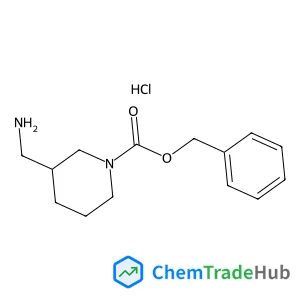
Benzyl 3-(aminomethyl)piperidine-1-carboxylate hydrochloride
CAS Number:
1186663-23-9
Molecular Formula:
C14H21ClN2O2
Recommended Suppliers





Disclaimer
This page provides academic journal information for reference and research purposes only. We are not affiliated with any journal publishers and do not handle publication submissions. For publication-related inquiries, please contact the respective journal publishers directly.
If you notice any inaccuracies in the information displayed, please contact us at support@chemtradehub.com. We will promptly review and address your concerns.