












Dynamics of TMAO and urea in the hydration shell of the protein SNase
Literature Information
Publication Date
2019-08-20
DOI
10.1039/C9CP03184G
Impact Factor
3.676
Authors
Vladimir Voloshin, Nikolai Smolin, Alfons Geiger, Roland Winter
View Original
Abstract
Using all-atom molecular dynamics simulations of aqueous solutions of the globular protein SNase, the dynamic behavior of water molecules and cosolvents (trimethylamine-N-oxide (TMAO) and urea) in the hydration shell of the protein was studied for different solvent compositions. TMAO is a potent protein-stabilizing osmolyte, whereas urea is known to destabilize proteins. For molecules that are initially located in successive narrow layers at a given distance from the protein, the mean displacements and the distribution of displacements for short time intervals are calculated. For molecules that are initially located in solvation shells of a given thickness around the protein, the characteristic residence times in these shells are determined to characterize the dynamic behavior of the solvent molecules as a function of the distance to the protein. A combined consideration of these characteristics allows to reveal additional features of the dynamics of the cosolvents. It is shown that TMAO molecules leave the nearest vicinity of the protein faster than urea molecules, despite the fact that the mobility of TMAO molecules, measured by their mean displacements, is lower than that of urea. Moreover, we show that the rate of release of TMAO molecules from the hydration shell is lower in ternary (TMAO + urea + H2O) solvent mixtures than in the binary ones. This is consistent with a recent observation that the fraction of TMAO near the protein decreases in the presence of urea. From the analysis of the decay of the number of particles initially located in the region of the first peak of the distribution function of solvent molecules around the protein, we estimated that about 20 water molecules and 6–7 urea molecules stay near the protein for more than 1000 ps.
Related Literature
Thermoresponsive nanogels with film-forming ability
Ana S. Sonzogni, Stefanie Wedepohl, Marcelo Calderón
2018-01-18
Paper
DOI: 10.1039/C7PY01798G
Electron beam lithography of poly(glycidol) nanogels for immobilization of a three-enzyme cascade
Jacob N. Lockhart, Anthony B. Hmelo, Eva Harth
2018-01-17
Paper
DOI: 10.1039/C7PY01904A
Preparation of graphene/poly(2-acryloxyethyl ferrocenecarboxylate) nanocomposite via a “grafting-onto” strategy
Yan Deng, Wenbin Liu, Yongjun Li, Xiaoyu Huang
2017-12-04
Paper
DOI: 10.1039/C7PY01932G
Monomer stoichiometry imbalance-promoted formation of multisubstituted polynaphthalenes by palladium-catalyzed polycouplings of aryl iodides and internal diynes
2018-01-24
Paper
DOI: 10.1039/C7PY01926B
Selective oxidation of cellulose, mediated by N-hydroxyphthalimide, under a metal-free environment
Sergiu Coseri, Gabriela Biliuta
2017-11-06
Paper
DOI: 10.1039/C7PY01710C
New fluorescent through-space conjugated polymers: synthesis, optical properties and explosive detection
Yingying Zhang, Pingchuan Shen, Bairong He, Wenwen Luo, Zujin Zhao
2017-12-04
Paper
DOI: 10.1039/C7PY01700F
Polymerization of alkyl diazoacetates initiated by the amidinate/Pd system: efficient synthesis of high molecular weight poly(alkoxycarbonylmethylene)s with moderate stereoregularity
Hiroaki Shimomoto, Junya Kawamata, Hirokazu Murakami, Kazuki Yamashita, Tomomichi Itoh, Eiji Ihara
2017-06-19
Paper
DOI: 10.1039/C7PY00816C
Elaboration of bio-epoxy/benzoxazine interpenetrating polymer networks: a composition-to-morphology mapping
P. Verge, S. Peralta, Y. Habibi, C. Vancaeyzeele, F. Vidal
2017-12-19
Paper
DOI: 10.1039/C7PY01755C
Retinol initiated poly(lactide)s: stability upon polymerization and nanoparticle preparation
Diana Kalden, Matthias Westerhausen
2017-06-26
Paper
DOI: 10.1039/C7PY00881C
From mono- to tetraacylgermanes: extending the scope of visible light photoinitiators
Anna Eibel, Judith Radebner, Michael Haas, David E. Fast, Hilde Freißmuth, Eduard Stadler, Paul Faschauner, Ana Torvisco, Iris Lamparth, Norbert Moszner, Harald Stueger, Georg Gescheidt
2017-11-20
Paper
DOI: 10.1039/C7PY01590A
You might also like
Compound Q&A
What precautions should be taken when handling 4-(2-Furylmethyl)thiomorpholine 1,1-dioxide (CAS: 79206-94-3)?
When handling 4-(2-Furylmethyl)thiomorpholine 1,1-dioxide (CAS: 79206-94-3), it ...
79206-94-34-(2-Furylmethyl)thi...
Compound Q&A
What precautions should be taken when handling 4-Chloro-N-[2-(4-morpholinyl)ethyl]benzamide (CAS: 71320-77-9)?
When handling 4-Chloro-N-[2-(4-morpholinyl)ethyl]benzamide (CAS: 71320-77-9), it...
71320-77-94-Chloro-N-[2-(4-mor...
Compound Q&A
How should waste containing 2-[2-(2-Methoxyethoxy)ethoxy]ethyl 4-methylbenzenesulfonate (CAS: 62921-74-8) be handled?
Waste containing this compound (CAS: 62921-74-8) should be handled according to ...
62921-74-82-[2-(2-Methoxyethox...
Compound Q&A
How should waste containing (S)-Methyl 2-amino-3-cyclohexylpropanoate be handled?
Waste containing (S)-Methyl 2-amino-3-cyclohexylpropanoate should be collected i...
40056-18-6(S)-Methyl 2-amino-3...
Compound Q&A
How is 5-({4-[(2S,4R)-4-Hydroxy-2-methyltetrahydro-2H-pyran-4-yl]-2-thienyl}sulfanyl)-1-methyl-1,3-dihydro-2H-indol-2-one (CAS: 166882-70-8) typically synthesized?
This compound can be synthesized using a multi-step process involving the conjug...
166882-70-85-({4-[(2S,4R)-4-Hyd...
Compound Q&A
Are there alternatives to (2E)-3-(3,4-Dichlorophenyl)acrylic acid (CAS: 7312-27-8) in synthesis?
There are several alternatives to (2E)-3-(3,4-Dichlorophenyl)acrylic acid in syn...
7312-27-8(2E)-3-(3,4-Dichloro...
Compound Q&A
How should Ethyl 6-(2-nitrophenyl)imidazo[2,1-b][1,3]thiazole-3-carboxylate (CAS: 925437-84-9) be stored?
Ethyl 6-(2-nitrophenyl)imidazo[2,1-b][1,3]thiazole-3-carboxylate (CAS: 925437-84...
925437-84-9Ethyl 6-(2-nitrophen...
Compound Q&A
How should waste containing 2-(1,3-Thiazol-2-yl)ethanamine (CAS: 18453-07-1) be handled?
Waste containing 2-(1,3-Thiazol-2-yl)ethanamine (CAS: 18453-07-1) should be coll...
18453-07-12-(1,3-Thiazol-2-yl)...
Compound Q&A
How is Methyl 5-iodo-2-methylbenzoate (CAS: 103440-54-6) typically synthesized?
Methyl 5-iodo-2-methylbenzoate can be synthesized through the iodination of meth...
103440-54-6Methyl 5-iodo-2-meth...
Compound Q&A
How is 5-Chloro[1,2,4]triazolo[1,5-a]pyridine (CAS: 1427399-34-5) typically synthesized?
5-Chloro[1,2,4]triazolo[1,5-a]pyridine is commonly synthesized via the condensat...
1427399-34-55-Chloro[1,2,4]triaz...
Source Journal
Physical Chemistry Chemical Physics

CiteScore:
5.5
Self-citation Rate:
10.3%
Articles per Year:
3036
Physical Chemistry Chemical Physics (PCCP) is an international journal co-owned by 19 physical chemistry and physics societies from around the world. This journal publishes original, cutting-edge research in physical chemistry, chemical physics and biophysical chemistry. To be suitable for publication in PCCP, articles must include significant innovation and/or insight into physical chemistry; this is the most important criterion that reviewers and Editors will judge against when evaluating submissions. The journal has a broad scope and welcomes contributions spanning experiment, theory, computation and data science. Topical coverage includes spectroscopy, dynamics, kinetics, statistical mechanics, thermodynamics, electrochemistry, catalysis, surface science, quantum mechanics, quantum computing and machine learning. Interdisciplinary research areas such as polymers and soft matter, materials, nanoscience, energy, surfaces/interfaces, and biophysical chemistry are welcomed if they demonstrate significant innovation and/or insight into physical chemistry. Joined experimental/theoretical studies are particularly appreciated when complementary and based on up-to-date approaches.
Recommended Compounds
![N-[(Benzyloxy)carbonyl]serine structure](https://static.chemtradehub.com/structs/276/2768-56-1-77f7.webp "N-[(Benzyloxy)carbonyl]serine structure")
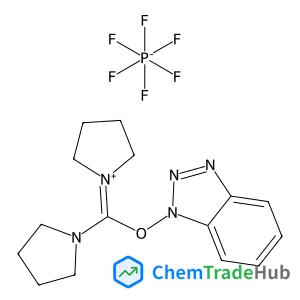
(1H-Benzotriazol-1-yloxy)(di-1-pyrrolidinyl)methylium hexafluorophosphate
CAS Number:
105379-24-6
Molecular Formula:
C15H21F6N5OP
Recommended Suppliers







Disclaimer
This page provides academic journal information for reference and research purposes only. We are not affiliated with any journal publishers and do not handle publication submissions. For publication-related inquiries, please contact the respective journal publishers directly.
If you notice any inaccuracies in the information displayed, please contact us at support@chemtradehub.com. We will promptly review and address your concerns.