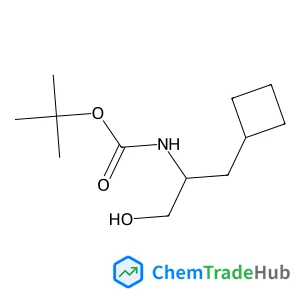
2-Methyl-2-propanyl (1-cyclobutyl-3-hydroxy-2-propanyl)carbamate
CAS Number:
816429-99-9
Molecular Formula:
C12H23NO3
Kwang-Hyon Kim
Metasurfaces composed of plasmonic nanoantennas generate a highly enhanced local field when supported by reflective substrates, enabling efficient harmonic generation with a pump of ultralow peak intensity. Second-harmonic generation efficiency from the metasurfaces of bowtie silver nanoantennas embedded with lithium niobate reaches up to about 0.4% for pumping with peak intensity of 100 MW cm−2 at 1050 nm. The above conversion efficiency is orders-of-magnitude higher compared with the preceding results and the required pump intensity is an order-of-magnitude lower than the previous results, originating from the strong intensity enhancements both at fundamental and second-harmonic frequencies. Numerical results also show that the silver nanoantenna array surrounded by a noble gas and supported by a reflective substrate can generate high-order harmonics with dramatically low pump threshold reaching down to a few GW cm−2. For a peak intensity 10 GW cm−2 of the pump, the broadband spectrum with harmonic orders up to about 90 can be generated from the metasurface. The nanostructures that we proposed can find broad applications for biosensing and nonlinear surface spectroscopy based on second/third-harmonic generation. They also enable us to use compact femtosecond pump sources for obtaining coherent extreme ultraviolet and soft-X rays by high-harmonic generation.
Markus Döbbelin, Irantzu Llarena, Luis J. Claros Marfil, Germán Cabañero, Javier Rodriguez, David Mecerreyes
DOI: 10.1039/C1PY00044F
Mathurin Grogna, Rudi Cloots, André Luxen, Christine Jérôme, Catherine Passirani, Nolwenn Lautram, Jean-F. Desreux, Mike Collodoro, Marie-Claire De Pauw-Gillet, Christophe Detrembleur
DOI: 10.1039/C1PY00198A
Natanya M. L. Hansen, David Plackett
DOI: 10.1039/C1PY00086A
Maxime Ayer, Justyna Kowal, Frederik R. Wurm, Harm-Anton Klok
DOI: 10.1039/C0PY00422G
Kayleigh. A. McEwan, David. M. Haddleton
DOI: 10.1039/C1PY00221J
Tao Cai, Rong Wang, K. G. Neoh, E. T. Kang
DOI: 10.1039/C1PY00106J
Johan P. A. Heuts, Niels M. B. Smeets
DOI: 10.1039/C1PY00224D
Sophie M. Guillaume, Pierre Brignou, Nicolas Susperregui, Laurent Maron, Magdalena Kuzdrowska, Peter W. Roesky
DOI: 10.1039/C1PY00133G
Jared F. Mike, Jeremy J. Intemann, Min Cai, Teng Xiao, Ruth Shinar, Joseph Shinar, Malika Jeffries-EL
DOI: 10.1039/C1PY00218J
When handling 2-Methyl-2-propanyl 5-amino-2-thiophenecarboxylate (CAS: 1498311-5...
5-Bromo-1,2-dichloro-3-fluorobenzene (CAS: 1000572-93-9) is a crystalline solid ...
(2R)-2-Amino-2-(4-bromophenyl)ethanol (CAS: 354153-64-3) should be stored in a c...
Methyl 4-(aminomethyl)tetrahydro-2H-pyran-4-carboxylate hydrochloride (CAS: 3627...
1,4-Dimethyl-1H-pyrazole-5-sulfonyl chloride is primarily used as an intermediat...
Dinaphtho[1,2-b:2',1'-d]furan is generally safe when handled with appropriate pe...
The market for 7-Methyl-7,9-dihydro-1H-purine-2,6,8(3H)-trione (CAS: 612-37-3) i...
2-(4-Chlorophenyl)malonaldehyde (CAS: 205676-17-1) is a colorless or light yello...
2-Methylchrysene (CAS: 3351-32-4) is typically synthesized via the reaction of c...
N-(6-aminopyrimidin-4-yl)acetamide (CAS: 89533-23-3) is generally considered saf...

Physical Chemistry Chemical Physics (PCCP) is an international journal co-owned by 19 physical chemistry and physics societies from around the world. This journal publishes original, cutting-edge research in physical chemistry, chemical physics and biophysical chemistry. To be suitable for publication in PCCP, articles must include significant innovation and/or insight into physical chemistry; this is the most important criterion that reviewers and Editors will judge against when evaluating submissions. The journal has a broad scope and welcomes contributions spanning experiment, theory, computation and data science. Topical coverage includes spectroscopy, dynamics, kinetics, statistical mechanics, thermodynamics, electrochemistry, catalysis, surface science, quantum mechanics, quantum computing and machine learning. Interdisciplinary research areas such as polymers and soft matter, materials, nanoscience, energy, surfaces/interfaces, and biophysical chemistry are welcomed if they demonstrate significant innovation and/or insight into physical chemistry. Joined experimental/theoretical studies are particularly appreciated when complementary and based on up-to-date approaches.
![N-[(1-Ethyl-2-pyrrolidinyl)methyl]-2-hydroxy-5-sulfamoylbenzamide structure](https://static.chemtradehub.com/structs/673/67381-52-6-877f.webp "N-[(1-Ethyl-2-pyrrolidinyl)methyl]-2-hydroxy-5-sulfamoylbenzamide structure")
![1-{[5-(4,4,5,5-Tetramethyl-1,3,2-dioxaborolan-2-yl)-2-thienyl]methyl}piperidine structure](https://static.chemtradehub.com/structs/121/1218790-44-3-baef.webp "1-{[5-(4,4,5,5-Tetramethyl-1,3,2-dioxaborolan-2-yl)-2-thienyl]methyl}piperidine structure")