


Catalytic chain transfer and its derived macromonomers
Literature Information
Publication Date
2011-07-26
DOI
10.1039/C1PY00224D
Impact Factor
5.582
Authors
Johan P. A. Heuts, Niels M. B. Smeets
View Original
Abstract
An overview is given of cobalt-catalyzed chain transfer in free-radical polymerization and the chemistry and applications of its derived macromonomers. Catalytic chain transfer polymerization is a very efficient and versatile technique for the synthesis of functional macromonomers. Firstly the mechanism and kinetic aspects of the process are briefly discussed in solution/bulk and in emulsion polymerization, followed by a description of its application to produce functional macromonomers. The second part of this review briefly describes the behavior of the macromonomers as chain transfer agents and/or comonomers in second-stage radical polymerizations yielding polymers of more complex architectures. The review ends with a brief overview of post-polymerization modifications of the vinyl endfunctionality of the macromonomers yielding functional polymers with applications ranging from initiators in anionic polymerization to end-functional lectin-binding glycopolymers.
Recommended Journals

Russian Chemical Bulletin

Russian Journal of Applied Chemistry

Current Opinion in Solid State & Materials Science

Acta Materialia

Russian Journal of General Chemistry

Chemistry Education Research and Practice

Journal of Natural Medicines

Saudi Pharmaceutical Journal

New Journal of Chemistry

Journal of Saudi Chemical Society
Related Literature
Tunable geometry and wettability of organosilane nanostructured surfaces by water content
Meihua Jin, Jing Wang, Yan Hao, Mingyi Liao, Yong Zhao
2011-06-22
Communication
DOI: 10.1039/C1PY00246E
Synthesis and photovoltaic properties of narrow band gap copolymers of dithieno[3,2-b:2′,3′-d]thiophene and diketopyrrolopyrrole
Abasaheb V. Patil, Woo-Hyung Lee, Kyuri Kim, Hanok Park, In Nam Kang, Soo-Hyoung Lee
2011-10-14
Paper
DOI: 10.1039/C1PY00274K
Nanofluid acrylate composite resins—initial preparation and characterization
2011-05-03
Paper
DOI: 10.1039/C1PY00065A
Menthol-based chiral copolymers for polymer optical fibres (POF)
Eun Hee Min, Kok Hou Wong, Eki Setijadi, François Ladouceur, Mark Straton, Alexander Argyros
2011-07-05
Paper
DOI: 10.1039/C1PY00056J
Facile synthesis of agarose-l-phenylalanine ester hydrogels
Gaurav K. Mehta, Stalin Kondaveeti, A. K. Siddhanta
2011-07-29
Paper
DOI: 10.1039/C1PY00250C
Recent progress on photochromic diarylethene polymers
Qianfu Luo, Hui Cheng, He Tian
2011-06-24
Review Article
DOI: 10.1039/C1PY00167A
Synthesis and characterization of biodegradable polyester/polyether resins via Michael-type addition
Stefan Theiler, Stefanos E. Diamantouros, Stefan Jockenhoevel, Helmut Keul, Martin Moeller
2011-08-17
Paper
DOI: 10.1039/C1PY00262G
Sequential click synthesis of hyperbranched polymersvia the A2 + CB2 approach
Jin Han, Bo Zhao, Yanqin Gao, Aijin Tang, Chao Gao
2011-07-29
Communication
DOI: 10.1039/C1PY00235J
You might also like
Compound Q&A
What is 3-Fluoro-2-methylbenzylamine (CAS: 771573-36-5)?
3-Fluoro-2-methylbenzylamine is an organic compound with the CAS number 771573-3...
771573-36-53-Fluoro-2-methylben...
Compound Q&A
Is Tert-butyl 2-(oxetan-3-ylidene)acetate (CAS: 1207175-03-8) safe?
Tert-butyl 2-(oxetan-3-ylidene)acetate is considered safe for its intended uses ...
1207175-03-8Tert-butyl 2-(oxetan...
Compound Q&A
What precautions should be taken when handling 4-Acetyl-2-fluorobenzonitrile (CAS: 214760-18-6)?
Proper personal protective equipment (PPE) such as gloves, goggles, and a lab co...
214760-18-64-Acetyl-2-fluoroben...
Compound Q&A
How is 2-Ethyl-4-methyl-1,3-thiazole (CAS: 15679-12-6) typically synthesized?
2-Ethyl-4-methyl-1,3-thiazole is commonly synthesized via the reaction of thiour...
15679-12-62-Ethyl-4-methyl-1,3...
Compound Q&A
How should 5',5''-([2,2'-Bithiophene]-5,5'-diyl)bis(([1,1':3',1''-terphenyl]-4,4''-dicarboxylic acid)) (CAS: 1227780-71-3) be stored?
This compound should be stored in a cool, dry place away from direct sunlight an...
1227780-71-35',5''''-([2,2'-Bith...
Compound Q&A
What regulatory guidelines apply to L-Lysine Acetate Salt (CAS: 52315-92-1)?
L-Lysine Acetate Salt (CAS: 52315-92-1) is subject to various regulatory guideli...
52315-92-1L-LYSINE ACETATE SAL...
Compound Q&A
Is 6-Fluoro-3-hydroxy-2-pyrazinecarboxamide (CAS: 259793-96-9) safe?
6-Fluoro-3-hydroxy-2-pyrazinecarboxamide (CAS: 259793-96-9) is generally conside...
259793-96-96-Fluoro-3-hydroxy-2...
Compound Q&A
What are the physical and chemical properties of 1,1'-Sulfonylbis(1H-imidazole) (CAS: 7189-69-7)?
1,1'-Sulfonylbis(1H-imidazole) is a crystalline solid with a molecular weight of...
7189-69-71,1'-Sulfonylbis(1H-...
Compound Q&A
What industries use 4-methyl-7-nitro-1H-indole-3-carbonitrile (CAS: 289483-82-5)?
4-Methyl-7-nitro-1H-indole-3-carbonitrile (CAS: 289483-82-5) is primarily used i...
289483-82-54-methyl-7-nitro-1H-...
Compound Q&A
How should waste containing 5-Bromo-3-indolyl-beta-galactoside (CAS: 97753-82-7) be handled?
Waste containing 5-Bromo-3-indolyl-beta-galactoside (CAS: 97753-82-7) should be ...
97753-82-75-Bromo-3-indolyl-be...
Source Journal
Polymer Chemistry

CiteScore:
8.6
Self-citation Rate:
7.3%
Articles per Year:
457
Polymer Chemistry welcomes submissions in all areas of polymer science that have a strong focus on macromolecular chemistry. Manuscripts may cover a broad range of fields, yet no direct application focus is required.
Recommended Compounds
![2-[({[(2-Methyl-2-propanyl)oxy]carbonyl}amino)methyl]isonicotinic acid structure](https://static.chemtradehub.com/structs/473/473924-63-9-973b.webp "2-[({[(2-Methyl-2-propanyl)oxy]carbonyl}amino)methyl]isonicotinic acid structure")
2-[({[(2-Methyl-2-propanyl)oxy]carbonyl}amino)methyl]isonicotinic acid
CAS Number:
473924-63-9
Molecular Formula:
C12H16N2O4
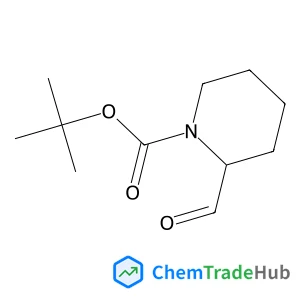
2-Methyl-2-propanyl (2R)-2-formyl-1-piperidinecarboxylate
CAS Number:
134526-69-5
Molecular Formula:
C11H19NO3
Recommended Suppliers



Disclaimer
This page provides academic journal information for reference and research purposes only. We are not affiliated with any journal publishers and do not handle publication submissions. For publication-related inquiries, please contact the respective journal publishers directly.
If you notice any inaccuracies in the information displayed, please contact us at support@chemtradehub.com. We will promptly review and address your concerns.