



Pyridyl disulfide-based thiol–disulfide exchange reaction: shaping the design of redox-responsive polymeric materials
Literature Information
Publication Date
2020-11-25
DOI
10.1039/D0PY01215G
Impact Factor
5.582
Authors
Ismail Altinbasak, Mehmet Arslan
View Original
Abstract
Recent years have witnessed an increase in the utilization of stimuli-responsive polymers in various areas of materials and biological sciences. In particular, disulfide linkage containing redox-responsive polymers have attracted interest in various biomedical applications ranging from fabrication of drug delivery vehicles to diagnostic interfaces. Cleavage of the disulfide linkage in the presence of an endogenous reducing agent, namely, glutathione, also found in increased amounts in diseased tissues has led to the incorporation of this particular linkage into several therapeutic platforms. Among the various methods available for introducing the redox-sensitive disulfide unit, the pyridyl disulfide (PDS) moiety has been one of the most widely employed building blocks. The rapid thiol–disulfide exchange reaction of the PDS group with thiol functional groups has been exploited from the reversible conjugation of therapeutic agents to the fabrication of redox-responsive crosslinked materials such as hydrogels and nanogels. This review provides an overview of various synthetic approaches utilized to incorporate this particular thiol-reactive motif into different types of polymeric materials and briefly highlights its utilization to obtain functional materials.
Recommended Journals

Atomization and Sprays

Journal of Chemical Sciences

Biocatalysis and Biotransformation

Colloid Journal

Heteroatom Chemistry

Journal of Asian Natural Products Research

Critical Reviews in Solid State and Materials Sciences

NDT & E International

Herald of the Russian Academy of Sciences

Bioorganic & Medicinal Chemistry Letters
Related Literature
The impact of intramolecular polydispersity on the self-assembly of ABn miktoarm star copolymers
Jiahao Shi, Xianbo Huang, Weihua Li
2023-07-06
Paper
DOI: 10.1039/D3CP00994G
Direct injection analysis of bisphenol A in serum by combination of isotope imprinting with liquid chromatography-mass spectrometry
Kaori Hoshina, Ken Hosoya, Jun Haginaka
2004-12-01
Communication
DOI: 10.1039/B412641F
A sensitive method for the detection of proteins by high-efficiency fluorescence quenching
Ying Ma, Haixin Bai, Cheng Yang, Xiurong Yang
2005-01-19
Communication
DOI: 10.1039/B414239J
Correction: Structure and bonding of molecular stirrers with formula B7M2− and B8M2 (M = Zn, Cd, Hg)
Rui Yu, Jorge Barroso, Meng-hui Wang, Wei-yan Liang, Chen Chen, Ximena Zarate, Mesías Orozco-Ic, Gabriel Merino
2023-07-25
Correction
DOI: 10.1039/D3CP90156D
Arrays of horizontally-oriented mini-reservoirs generate steady microfluidic flows for continuous perfusion cell culture and gradient generation
Xiaoyue Zhu, Leonard Yi Chu, Bor-han Chueh, Mingwu Shen, Bhaskar Hazarika, Nandita Phadke
2004-08-11
Paper
DOI: 10.1039/B407623K
Strategy for streamlined release identity testing of chromatography media
Nataliya Afonina, Lokesh Bhattacharyya, John P. Hennessey, Jr.
2004-10-04
Paper
DOI: 10.1039/B404899G
Fragment-based approach for the efficient calculation of the refractive index of metal–organic frameworks‡
2023-06-30
Paper
DOI: 10.1039/D3CP02356G
Flexible MA2Z4 (M = Mo, W; A = Si, Ge and Z = N, P, As) monolayers with outstanding mechanical, dynamical, electronic, and piezoelectric properties and anomalous dynamic polarization
Xinxin Wang, Weiwei Ju, Dandan Wang, Xiaohong Li, Jianguo Wan
2023-06-21
Paper
DOI: 10.1039/D3CP01452E
Analytical chemistry of synthetic routes to psychoactive tryptamines Part I. Characterisation of the Speeter and Anthony synthetic route to 5-methoxy-N,N-diisopropyltryptamine using ESI-MS-MS and ESI-TOF-MS
Simon D. Brandt, Sally Freeman, Ian A. Fleet, Peter McGagh, John F. Alder
2004-10-01
Paper
DOI: 10.1039/B407239C
You might also like
Compound Q&A
What are the main uses of 1H-Indazole-6-carbonitrile (CAS: 141290-59-7)?
1H-Indazole-6-carbonitrile finds applications in pharmaceuticals, where it serve...
141290-59-71H-Indazole-6-carbon...
Compound Q&A
How should waste containing Dioctyl (2E)-2-butenedioate (CAS: 2997-85-5) be handled?
Waste containing Dioctyl (2E)-2-butenedioate (CAS: 2997-85-5) should be collecte...
2997-85-5Dioctyl (2E)-2-buten...
Compound Q&A
What industries use Sodium [(1,2-benzoxazol-3-ylmethyl)sulfonyl]azanide (CAS: 68291-98-5)?
Sodium [(1,2-benzoxazol-3-ylmethyl)sulfonyl]azanide is primarily used in pharmac...
68291-98-5Sodium [(1,2-benzoxa...
Compound Q&A
Are there alternatives to Dimethyl 4-(4,4,5,5-tetramethyl-1,3,2-dioxaborolan-2-yl)-2,6-pyridinedicarboxylate (CAS: 741709-66-0) in synthesis?
Dimethyl 4-(4,4,5,5-tetramethyl-1,3,2-dioxaborolan-2-yl)-2,6-pyridinedicarboxyla...
741709-66-0Dimethyl 4-(4,4,5,5-...
Compound Q&A
How should waste containing 2-Fluoro-6-hydrazinopyridine (CAS: 80714-39-2) be handled?
Waste containing 2-Fluoro-6-hydrazinopyridine (CAS: 80714-39-2) should be manage...
80714-39-22-Fluoro-6-hydrazino...
Compound Q&A
What is 6-Formyl-2-pyridinecarboxylic acid (CAS: 499214-11-8)?
6-Formyl-2-pyridinecarboxylic acid is an organic compound with the molecular for...
499214-11-86-Formyl-2-pyridinec...
Compound Q&A
What is the market or research trend for 3-(3,4-dimethoxyphenyl)-2,5-dimethyl-N-(2-morpholin-4-ylethyl)pyrazolo[1,5-a]pyrimidin-7-amine (CAS: 900874-91-1)?
Research trends for this compound indicate a focus on its potential applications...
900874-91-13-(3,4-dimethoxyphen...
Compound Q&A
How is 9H-Tribenzo[b,d,f]azepine (CAS: 29875-73-8) typically synthesized?
9H-Tribenzo[b,d,f]azepine is typically synthesized via a multi-step process invo...
29875-73-89H-Tribenzo[b,d,f]az...
Compound Q&A
How is 1-Cyclopropyl-7-ethoxy-6-fluoro-8-methoxy-4-oxo-1,4-dihydro-3-quinolinecarboxylic acid (CAS: 1797982-51-4) typically synthesized?
1-Cyclopropyl-7-ethoxy-6-fluoro-8-methoxy-4-oxo-1,4-dihydro-3-quinolinecarboxyli...
1797982-51-41-Cyclopropyl-7-etho...
Compound Q&A
How should waste containing Methyl 3-oxo-1,2,3,4-tetrahydro-6-quinoxalinecarboxylate (CAS: 671820-52-3) be handled?
Waste containing Methyl 3-oxo-1,2,3,4-tetrahydro-6-quinoxalinecarboxylate (CAS: ...
671820-52-3Methyl 3-oxo-1,2,3,4...
Source Journal
Polymer Chemistry

CiteScore:
8.6
Self-citation Rate:
7.3%
Articles per Year:
457
Polymer Chemistry welcomes submissions in all areas of polymer science that have a strong focus on macromolecular chemistry. Manuscripts may cover a broad range of fields, yet no direct application focus is required.
Recommended Compounds

Trichloro(3,3,4,4,5,5,6,6,7,7,8,8,8-tridecafluorooctyl)silane
CAS Number:
78560-45-9
Molecular Formula:
C8H4Cl3F13Si

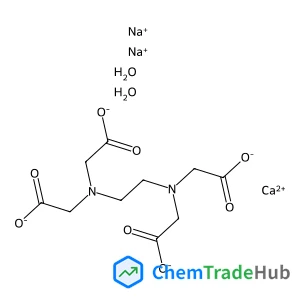
EthylenediaminetetraaceticacidcalciumDisodiumsalthydrate
CAS Number:
23411-34-9
Molecular Formula:
C10H16CaN2Na2O10
![(1S)-1,5-Anhydro-1-[3-(1-benzothiophen-2-ylmethyl)-4-fluorophenyl]-D-glucitol structure](https://static.chemtradehub.com/structs/761/761423-87-4-dbeb.webp "(1S)-1,5-Anhydro-1-[3-(1-benzothiophen-2-ylmethyl)-4-fluorophenyl]-D-glucitol structure")
(1S)-1,5-Anhydro-1-[3-(1-benzothiophen-2-ylmethyl)-4-fluorophenyl]-D-glucitol
CAS Number:
761423-87-4
Molecular Formula:
C21H21FO5S
Recommended Suppliers



Disclaimer
This page provides academic journal information for reference and research purposes only. We are not affiliated with any journal publishers and do not handle publication submissions. For publication-related inquiries, please contact the respective journal publishers directly.
If you notice any inaccuracies in the information displayed, please contact us at support@chemtradehub.com. We will promptly review and address your concerns.