


High-performance non-volatile resistive switching memory based on a polyimide/graphene oxide nanocomposite
Literature Information
Publication Date
2020-11-12
DOI
10.1039/D0PY01281E
Impact Factor
5.582
Authors
Ju-Young Choi, Jeongjun Lee, Jihyun Jeon, Jaehyuk Im, Junhwan Jang, Seung-Won Jin, Hyeyoung Joung, Hwan-Chul Yu, Kyeong-Nam Nam, Hyeong-Joo Park, Dong-Min Kim, In-Ho Song, Jaesung Yang, Soohaeng Cho, Chan-Moon Chung
View Original
Abstract
Graphene oxide (GO) modified with 2,6-diaminoanthracene (AnDA) (GO-AnDA) is prepared and characterized. Poly(amic acid)-GO (PAA-GO) is prepared by the reaction of 4,4′-(hexafluoroisopropylidene)diphthalic anhydride (6FDA) with AnDA in the presence of GO-AnDA. Polyimide-GO (PI-GO) nanocomposites with different GO contents are prepared by chemical imidization of the PAA-GO, and characterized by Fourier transform infrared (FT-IR) spectroscopy, thermogravimetric analysis (TGA), differential scanning calorimetry (DSC), high resolution X-ray diffraction (HR-XRD), atomic force microscopy (AFM) and UV-visible spectroscopy. PI-GOs show high thermal decomposition temperatures around 500 °C and glass transition temperatures (Tgs) around 400 °C. Al/PI-GO/ITO memory devices are fabricated using PI-GO films as a resistive active layer. The memory device fabricated with PI-GO film containing 1.5 wt% GO exhibits write-once-read-many-times (WORM) memory behavior with an excellent ON/OFF ratio (∼108), long retention time (∼104 s), good endurance (104th cycle), and an outstanding yield (92%). Post-annealing of the memory device improves the performance of the memory device. The mechanisms associated with the memory effect are explained from electron density difference map (EDDM) calculations. This study demonstrates that the PI-GO nanocomposite is a suitable active material for low-cost solution processing of next-generation nonvolatile memories.
Recommended Journals

Pure and Applied Chemistry

Planta Medica

Organic Preparations and Procedures International

Fibre Chemistry

Science

Journal of Organometallic Chemistry

Journal of Heterocyclic Chemistry

Journal of Physics and Chemistry of Solids

Proceedings of the National Academy of Sciences of the United States of America

Kinetics and Catalysis
Related Literature
Excited-state dynamics of guanosine in aqueous solution revealed by time-resolved photoelectron spectroscopy: experiment and theory
Franziska Buchner, Berit Heggen, Hans-Hermann Ritze, Walter Thiel, Andrea Lübcke
2015-11-09
Paper
DOI: 10.1039/C5CP04394H
Synergistic effect of novel redox additives of p-nitroaniline and dimethylglyoxime for highly improving the supercapacitor performances
Yong Fu Nie, Qian Wang, Xiang Ying Chen, Zhong Jie Zhang
2015-12-21
Paper
DOI: 10.1039/C5CP06147D
An auxilliary grid method for the calculation of electrostatic terms in density functional theory on a real-space grid
Michael Zuzovski, Amir Boag, Amir Natan
2015-06-30
Paper
DOI: 10.1039/C5CP01090J
Zigzag-edge related ferromagnetism in MoSe2 nanoflakes
Baorui Xia, Daqiang Gao, Peitao Liu, Yonggang Liu, Shoupeng Shi, Kun Tao
2015-11-11
Paper
DOI: 10.1039/C5CP05640C
Variable electronic properties of lateral phosphorene–graphene heterostructures
Xiaoqing Tian, Lin Liu, Yu Du, Juan Gu, Jian-bin Xu, Boris I. Yakobson
2015-11-06
Paper
DOI: 10.1039/C5CP05443E
Reducing the V2O3(0001) surface through electron bombardment – a quantitative structure determination with I/V-LEED
Felix E. Feiten, Helmut Kuhlenbeck, Hans-Joachim Freund
2015-12-22
Paper
DOI: 10.1039/C5CP07390A
Quantitative monitoring of the removal of non-encapsulated material external to filled carbon nanotube samples
Markus Martincic, Elzbieta Pach, Belén Ballesteros, Gerard Tobias
2015-10-30
Paper
DOI: 10.1039/C5CP04664E
Deviation of polarity from linearity in liquid mixtures containing an ionic liquid
Vijay Beniwal, Shashi K. Shukla, Anil Kumar
2015-11-04
Communication
DOI: 10.1039/C5CP05921F
You might also like
Compound Q&A
What are the main uses of 1H-Indazole-6-carbonitrile (CAS: 141290-59-7)?
1H-Indazole-6-carbonitrile finds applications in pharmaceuticals, where it serve...
141290-59-71H-Indazole-6-carbon...
Compound Q&A
How should waste containing Dioctyl (2E)-2-butenedioate (CAS: 2997-85-5) be handled?
Waste containing Dioctyl (2E)-2-butenedioate (CAS: 2997-85-5) should be collecte...
2997-85-5Dioctyl (2E)-2-buten...
Compound Q&A
What industries use Sodium [(1,2-benzoxazol-3-ylmethyl)sulfonyl]azanide (CAS: 68291-98-5)?
Sodium [(1,2-benzoxazol-3-ylmethyl)sulfonyl]azanide is primarily used in pharmac...
68291-98-5Sodium [(1,2-benzoxa...
Compound Q&A
Are there alternatives to Dimethyl 4-(4,4,5,5-tetramethyl-1,3,2-dioxaborolan-2-yl)-2,6-pyridinedicarboxylate (CAS: 741709-66-0) in synthesis?
Dimethyl 4-(4,4,5,5-tetramethyl-1,3,2-dioxaborolan-2-yl)-2,6-pyridinedicarboxyla...
741709-66-0Dimethyl 4-(4,4,5,5-...
Compound Q&A
How should waste containing 2-Fluoro-6-hydrazinopyridine (CAS: 80714-39-2) be handled?
Waste containing 2-Fluoro-6-hydrazinopyridine (CAS: 80714-39-2) should be manage...
80714-39-22-Fluoro-6-hydrazino...
Compound Q&A
What is 6-Formyl-2-pyridinecarboxylic acid (CAS: 499214-11-8)?
6-Formyl-2-pyridinecarboxylic acid is an organic compound with the molecular for...
499214-11-86-Formyl-2-pyridinec...
Compound Q&A
What is the market or research trend for 3-(3,4-dimethoxyphenyl)-2,5-dimethyl-N-(2-morpholin-4-ylethyl)pyrazolo[1,5-a]pyrimidin-7-amine (CAS: 900874-91-1)?
Research trends for this compound indicate a focus on its potential applications...
900874-91-13-(3,4-dimethoxyphen...
Compound Q&A
How is 9H-Tribenzo[b,d,f]azepine (CAS: 29875-73-8) typically synthesized?
9H-Tribenzo[b,d,f]azepine is typically synthesized via a multi-step process invo...
29875-73-89H-Tribenzo[b,d,f]az...
Compound Q&A
How is 1-Cyclopropyl-7-ethoxy-6-fluoro-8-methoxy-4-oxo-1,4-dihydro-3-quinolinecarboxylic acid (CAS: 1797982-51-4) typically synthesized?
1-Cyclopropyl-7-ethoxy-6-fluoro-8-methoxy-4-oxo-1,4-dihydro-3-quinolinecarboxyli...
1797982-51-41-Cyclopropyl-7-etho...
Compound Q&A
How should waste containing Methyl 3-oxo-1,2,3,4-tetrahydro-6-quinoxalinecarboxylate (CAS: 671820-52-3) be handled?
Waste containing Methyl 3-oxo-1,2,3,4-tetrahydro-6-quinoxalinecarboxylate (CAS: ...
671820-52-3Methyl 3-oxo-1,2,3,4...
Source Journal
Polymer Chemistry

CiteScore:
8.6
Self-citation Rate:
7.3%
Articles per Year:
457
Polymer Chemistry welcomes submissions in all areas of polymer science that have a strong focus on macromolecular chemistry. Manuscripts may cover a broad range of fields, yet no direct application focus is required.
Recommended Compounds
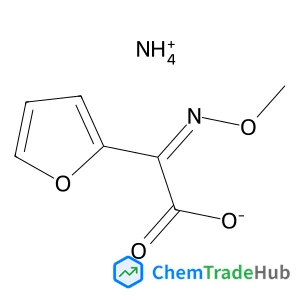
Ammonium (Z)-2-(furan-2-yl)-2-(methoxyimino)acetate
CAS Number:
97148-39-5
Molecular Formula:
C7H10N2O4
Recommended Suppliers







Disclaimer
This page provides academic journal information for reference and research purposes only. We are not affiliated with any journal publishers and do not handle publication submissions. For publication-related inquiries, please contact the respective journal publishers directly.
If you notice any inaccuracies in the information displayed, please contact us at support@chemtradehub.com. We will promptly review and address your concerns.