












Does aromaticity account for an enhanced thermodynamic stability? The case of monosubstituted azaborines and the stereoelectronic chameleonism of the NH2 group
Literature Information
Publication Date
2019-04-15
DOI
10.1039/C9CP01011D
Impact Factor
3.676
Authors
Marija Baranac-Stojanović, Milovan Stojanović
View Original
Abstract
This work was initiated by the increasing interest in BN/CC isosterism and by the long-lasting interest in the concepts of aromaticity and substituent effects. We have theoretically examined the aromaticity and stability of monosubstituted BN isosters of benzene, the three isomeric azaborines. The results provide insight into the effect of substitution on two basic molecular properties, which are influenced, here, by the substituent effects and by the B/N relationship in the ring. The results, along with other examples in the literature, also warn chemists that the general belief that aromaticity accounts for enhanced thermodynamic stability is not always true. The stability of cyclic, conjugated compounds depends on several effects, and only one of them is aromaticity. In addition, our calculations predict a switching of electronic properties of the NH2 group from the usual p-electron donor to a π-electron acceptor when it is moved from the B/C atoms to the nitrogen atom in all isomers, or C6 in 1,3-azaborine. This is the result of the conformational change that places the NLP in the plane of the ring and the NH bonds in a favourable spatial position to act as acceptors of π-electron density.
Related Literature
Polymerizable aggregation-induced emission dye-based fluorescent nanoparticles for cell imaging applications
Xiqi Zhang, Bin Yang, Meiying Liu, Wanyun Liu, Yiwang Chen, Yen Wei
2013-10-01
Communication
DOI: 10.1039/C3PY01226C
Synthesis of antimicrobial silsesquioxane–silica hybrids by hydrolytic co-condensation of alkoxysilanes
Shi-qiang Gong, D. Jeevanie Epasinghe, Wei Zhang, Bin Zhou, Li-na Niu, Heonjune Ryou, Ashraf A. Eid, Andrea Frassetto, Cynthia K. Y. Yiu, Dwayne D. Arola, Jing Mao, David H. Pashley, Franklin R. Tay
2013-08-14
Paper
DOI: 10.1039/C3PY00635B
Silver-decorated biodegradable polymer vesicles with excellent antibacterial efficacy
Kaidian Zou, Qiuming Liu, Jing Chen, Jianzhong Du
2013-08-19
Paper
DOI: 10.1039/C3PY00966A
RAFT/MADIX (co)polymerization of vinyl trifluoroacetate: a means to many ends
Jean-Daniel Marty, Mathias Destarac
2013-10-01
Paper
DOI: 10.1039/C3PY01109G
Synthesis of functionalized cyclic carbonate monomers using a versatile pentafluorophenyl carbonate intermediate
Daniel P. Sanders, Daniel J. Coady, Manabu Yasumoto, Masaki Fujiwara, Haritz Sardon, James L. Hedrick
2013-09-23
Communication
DOI: 10.1039/C3PY01128C
Salt-induced reentrant hydrogel of poly(ethylene glycol)–poly(lactide-co-glycolide) block copolymers
Ting Li, Tianyuan Ci, Liang Chen, Lin Yu, Jiandong Ding
2013-09-26
Paper
DOI: 10.1039/C3PY01107K
Reversibly crosslinked thermo- and redox-responsive nanogels for controlled drug release
Christophe Detrembleur, Marie Hurtgen, Antoine Debuigne, Marie-Claire De Pauw-Gillet, Stéphane Mornet, Etienne Duguet, Christine Jérôme
2013-07-31
Paper
DOI: 10.1039/C3PY00839H
Fabrication of aggregation induced emission dye-based fluorescent organic nanoparticles via emulsion polymerization and their cell imaging applications
Xiqi Zhang, Bin Yang, Meiying Liu, Wanyun Liu, Yiwang Chen, Yen Wei
2013-08-20
Paper
DOI: 10.1039/C3PY00984J
Polymerization-Induced Self-Assembly (PISA) – control over the morphology of nanoparticles for drug delivery applications
Bunyamin Karagoz, Hien T. Duong, Johan S. Basuki, Cyrille Boyer
2013-10-22
Communication
DOI: 10.1039/C3PY01306E
One-pot synthesis of responsive sulfobetaine nanoparticles by RAFT polymerisation: the effect of branching on the UCST cloud point
Helen Willcock, Annhelen Lu, Claire F. Hansell, Emma Chapman, Ian R. Collins, Rachel K. O'Reilly
2013-10-25
Paper
DOI: 10.1039/C3PY00998J
You might also like
Compound Q&A
What are the main uses of 1H-Indazole-6-carbonitrile (CAS: 141290-59-7)?
1H-Indazole-6-carbonitrile finds applications in pharmaceuticals, where it serve...
141290-59-71H-Indazole-6-carbon...
Compound Q&A
How should waste containing Dioctyl (2E)-2-butenedioate (CAS: 2997-85-5) be handled?
Waste containing Dioctyl (2E)-2-butenedioate (CAS: 2997-85-5) should be collecte...
2997-85-5Dioctyl (2E)-2-buten...
Compound Q&A
What industries use Sodium [(1,2-benzoxazol-3-ylmethyl)sulfonyl]azanide (CAS: 68291-98-5)?
Sodium [(1,2-benzoxazol-3-ylmethyl)sulfonyl]azanide is primarily used in pharmac...
68291-98-5Sodium [(1,2-benzoxa...
Compound Q&A
Are there alternatives to Dimethyl 4-(4,4,5,5-tetramethyl-1,3,2-dioxaborolan-2-yl)-2,6-pyridinedicarboxylate (CAS: 741709-66-0) in synthesis?
Dimethyl 4-(4,4,5,5-tetramethyl-1,3,2-dioxaborolan-2-yl)-2,6-pyridinedicarboxyla...
741709-66-0Dimethyl 4-(4,4,5,5-...
Compound Q&A
How should waste containing 2-Fluoro-6-hydrazinopyridine (CAS: 80714-39-2) be handled?
Waste containing 2-Fluoro-6-hydrazinopyridine (CAS: 80714-39-2) should be manage...
80714-39-22-Fluoro-6-hydrazino...
Compound Q&A
What is 6-Formyl-2-pyridinecarboxylic acid (CAS: 499214-11-8)?
6-Formyl-2-pyridinecarboxylic acid is an organic compound with the molecular for...
499214-11-86-Formyl-2-pyridinec...
Compound Q&A
What is the market or research trend for 3-(3,4-dimethoxyphenyl)-2,5-dimethyl-N-(2-morpholin-4-ylethyl)pyrazolo[1,5-a]pyrimidin-7-amine (CAS: 900874-91-1)?
Research trends for this compound indicate a focus on its potential applications...
900874-91-13-(3,4-dimethoxyphen...
Compound Q&A
How is 9H-Tribenzo[b,d,f]azepine (CAS: 29875-73-8) typically synthesized?
9H-Tribenzo[b,d,f]azepine is typically synthesized via a multi-step process invo...
29875-73-89H-Tribenzo[b,d,f]az...
Compound Q&A
How is 1-Cyclopropyl-7-ethoxy-6-fluoro-8-methoxy-4-oxo-1,4-dihydro-3-quinolinecarboxylic acid (CAS: 1797982-51-4) typically synthesized?
1-Cyclopropyl-7-ethoxy-6-fluoro-8-methoxy-4-oxo-1,4-dihydro-3-quinolinecarboxyli...
1797982-51-41-Cyclopropyl-7-etho...
Compound Q&A
How should waste containing Methyl 3-oxo-1,2,3,4-tetrahydro-6-quinoxalinecarboxylate (CAS: 671820-52-3) be handled?
Waste containing Methyl 3-oxo-1,2,3,4-tetrahydro-6-quinoxalinecarboxylate (CAS: ...
671820-52-3Methyl 3-oxo-1,2,3,4...
Source Journal
Physical Chemistry Chemical Physics

CiteScore:
5.5
Self-citation Rate:
10.3%
Articles per Year:
3036
Physical Chemistry Chemical Physics (PCCP) is an international journal co-owned by 19 physical chemistry and physics societies from around the world. This journal publishes original, cutting-edge research in physical chemistry, chemical physics and biophysical chemistry. To be suitable for publication in PCCP, articles must include significant innovation and/or insight into physical chemistry; this is the most important criterion that reviewers and Editors will judge against when evaluating submissions. The journal has a broad scope and welcomes contributions spanning experiment, theory, computation and data science. Topical coverage includes spectroscopy, dynamics, kinetics, statistical mechanics, thermodynamics, electrochemistry, catalysis, surface science, quantum mechanics, quantum computing and machine learning. Interdisciplinary research areas such as polymers and soft matter, materials, nanoscience, energy, surfaces/interfaces, and biophysical chemistry are welcomed if they demonstrate significant innovation and/or insight into physical chemistry. Joined experimental/theoretical studies are particularly appreciated when complementary and based on up-to-date approaches.
Recommended Compounds
![Benzeneacetic acid, 2-[(2,6-dichlorophenyl)amino]-, compd. with 1-pyrrolidineethanol (1:1) structure](https://static.chemtradehub.com/structs/119/119623-66-4-5301.webp "Benzeneacetic acid, 2-[(2,6-dichlorophenyl)amino]-, compd. with 1-pyrrolidineethanol (1:1) structure")
Benzeneacetic acid, 2-[(2,6-dichlorophenyl)amino]-, compd. with 1-pyrrolidineethanol (1:1)
CAS Number:
119623-66-4
Molecular Formula:
C20H24Cl2N2O3

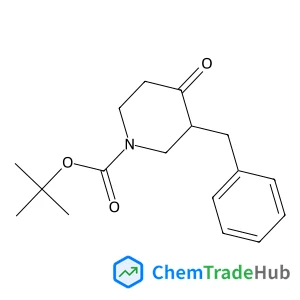
2-Methyl-2-propanyl 3-benzyl-4-oxo-1-piperidinecarboxylate
CAS Number:
193274-82-7
Molecular Formula:
C17H23NO3
Recommended Suppliers






Disclaimer
This page provides academic journal information for reference and research purposes only. We are not affiliated with any journal publishers and do not handle publication submissions. For publication-related inquiries, please contact the respective journal publishers directly.
If you notice any inaccuracies in the information displayed, please contact us at support@chemtradehub.com. We will promptly review and address your concerns.