












Fabrication of aggregation induced emission dye-based fluorescent organic nanoparticles via emulsion polymerization and their cell imaging applications
Literature Information
Publication Date
2013-08-20
DOI
10.1039/C3PY00984J
Impact Factor
5.582
Authors
Xiqi Zhang, Bin Yang, Meiying Liu, Wanyun Liu, Yiwang Chen, Yen Wei
View Original
Abstract
Aggregation induced emission (AIE) dye-based fluorescent organic nanoparticles (FONs) have recently emerged as novel fluorescent bioprobes due to their remarkable optical properties, water solubility and biocompatibility. In this work, a novel strategy for the fabrication of AIE-based FONs was developed via emulsion polymerization for the first time. During this procedure, a polymerizable AIE dye (named as PhE) with a double bond end functional group was facilely incorporated into the hydrophobic core of polymer nanoparticles. The obtained polymer nanoparticles (named as PhE–Pst NPs) exhibited strong fluorescence and high water dispersibility owing to the partial aggregation of PhE and the surface covered with a hydrophilic shell. More importantly, these FONs showed spherical morphology, uniform size (about 200 nm) and excellent biocompatibility, making them promising for bioimaging applications.
Recommended Journals
Related Literature
Structure and solvation dynamics of the hydroxide ion in ice-like water clusters: a CCSD(T) and car–parrinello molecular dynamics study
2021-08-24
Paper
DOI: 10.1039/D1CP02524D
Subtle structure matters: boosting surface-directed photoelectron transfer via the introduction of specific monovalent oxygen vacancies in TiO2
Fei Li, Dong Wang, Xue-Qing Gong
2021-08-18
Paper
DOI: 10.1039/D1CP02787E
Impact of fluorination and chlorination on the electronic structure, topology and in-plane ring normal modes of pyridines
Enrico Benassi, Tamara Vaganova, Evgenij Malykhin, Haiyan Fan
2021-07-29
Paper
DOI: 10.1039/D1CP02342J
Electrochemical Pourbaix diagrams of Mg–Zn alloys from first-principles calculations and experimental thermodynamic data
Dominik Legut
2021-08-06
Paper
DOI: 10.1039/D1CP02754A
The NV−⋯N+ charged pair in diamond: a quantum-mechanical investigation
Anna Maria Ferrari, Khaled E. El-Kelany, Francesco Silvio Gentile, Maddalena D’Amore, Roberto Dovesi
2021-08-12
Paper
DOI: 10.1039/D1CP02363B
Interfacial interactions and structures of protic ionic liquids on a graphite surface: A first-principles study and comparison with aprotic ionic liquids
Yunxiang Lu, Yanmin Xu, Ling Lu, Zhijian Xu, Honglai Liu
2021-08-04
Paper
DOI: 10.1039/D1CP02100A
The n-type and p-type conductivity mechanisms of the bulk BiOCl photocatalyst from hybrid density functional theory calculations
Bo Kong, Wentao Wang
2021-08-17
Paper
DOI: 10.1039/D1CP02794H
Kinetics of photon upconversion by triplet–triplet annihilation: a comprehensive tutorial
Yoichi Murakami, Kenji Kamada
2021-08-02
Perspective
DOI: 10.1039/D1CP02654B
First-principles prediction of strain-induced gas-sensing tuning in tin sulfide
Xin Shen, Yinan Bai
2021-08-06
Paper
DOI: 10.1039/D1CP02770K
Designing new ferromagnetic double perovskites: the coexistence of polar distortion and half-metallicity
Neda Rahmani, Mohammad Ebrahim Ghazi, Morteza Izadifard, Alireza Shabani, Jost Adam
2021-08-26
Paper
DOI: 10.1039/D1CP02479E
You might also like
Compound Q&A
What are the main uses of 4-Nitrophenyl phosphate disodium salt hexahydrate (CAS: 333338-18-4)?
4-Nitrophenyl phosphate disodium salt hexahydrate is primarily used as a substra...
333338-18-44-Nitrophenyl phosph...
Compound Q&A
What are the main uses of 2-(Trifluoromethyl)-1,3-oxazole-4-carboxylic Acid (CAS: 1060816-01-4)?
2-(Trifluoromethyl)-1,3-oxazole-4-carboxylic Acid (CAS: 1060816-01-4) is widely ...
1060816-01-42-(Trifluoromethyl)-...
Compound Q&A
How should 2-Fluoro-4-biphenylcarboxylic acid (CAS: 137045-30-8) be stored?
2-Fluoro-4-biphenylcarboxylic acid should be stored in a cool, dry place at room...
137045-30-82-Fluoro-4-biphenylc...
Compound Q&A
What industries use Prednisolone-21-Carboxylic Acid (CAS: 61549-70-0)?
Prednisolone-21-Carboxylic Acid is primarily used in the pharmaceutical industry...
61549-70-0Prednisolone-21-Carb...
Compound Q&A
How should 4-(Hydrazinomethyl)-1,2,3-benzenetriol (CAS: 3614-72-0) be stored?
4-(Hydrazinomethyl)-1,2,3-benzenetriol (CAS: 3614-72-0) should be stored in a co...
3614-72-04-(Hydrazinomethyl)-...
Compound Q&A
What industries use 4-Amino-1-methyl-1H-pyrazole-5-carboxylic acid hydrochloride (CAS: 92534-70-8)?
4-Amino-1-methyl-1H-pyrazole-5-carboxylic acid hydrochloride (CAS: 92534-70-8) i...
92534-70-84-Amino-1-methyl-1H-...
Compound Q&A
What regulatory guidelines apply to dehydropachymic acid (CAS: 77012-31-8)?
Dehydropachymic acid (CAS: 77012-31-8) is regulated by various agencies. It fall...
77012-31-8Dehydropachymic acid
Compound Q&A
What is the market or research trend for 6-[(2,2-Dimethylpropanoyl)amino]nicotinic acid (CAS: 898561-66-5)?
The market and research trends for 6-[(2,2-Dimethylpropanoyl)amino]nicotinic aci...
898561-66-56-[(2,2-Dimethylprop...
Compound Q&A
How should 1,10-Phenanthroline-2,9-dicarbaldehyde (CAS: 57709-62-3) be stored?
1,10-Phenanthroline-2,9-dicarbaldehyde should be stored in a cool, dry place awa...
57709-62-31,10-Phenanthroline-...
Compound Q&A
How is 5-Carbamoyl-11-oxo-10,11-dihydro-5H-dibenzo[b,f]azepin-10-yl acetate (CAS: 113952-21-9) typically synthesized?
5-Carbamoyl-11-oxo-10,11-dihydro-5H-dibenzo[b,f]azepin-10-yl acetate can be synt...
113952-21-95-Carbamoyl-11-oxo-1...
Source Journal
Polymer Chemistry

CiteScore:
8.6
Self-citation Rate:
7.3%
Articles per Year:
457
Polymer Chemistry welcomes submissions in all areas of polymer science that have a strong focus on macromolecular chemistry. Manuscripts may cover a broad range of fields, yet no direct application focus is required.
Recommended Compounds
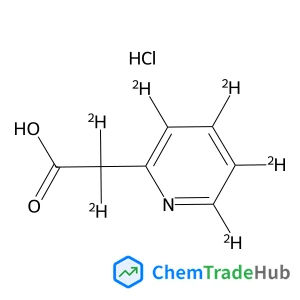
2,2-dideuterio-2-(3,4,5,6-tetradeuterio-2-pyridyl)acetic acid;hydrochloride
CAS Number:
1329799-67-8
Molecular Formula:
C7H2ClD6NO2
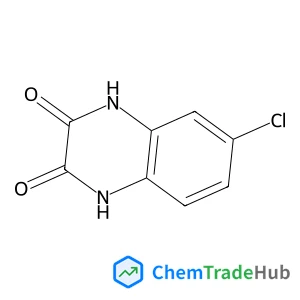
6-CHLORO-2,3-DIOXO-1,2,3,4-TETRAHYDROQUINOXALINE, 97
CAS Number:
169-14-2
Molecular Formula:
C8H5ClN2O2
Recommended Suppliers







Disclaimer
This page provides academic journal information for reference and research purposes only. We are not affiliated with any journal publishers and do not handle publication submissions. For publication-related inquiries, please contact the respective journal publishers directly.
If you notice any inaccuracies in the information displayed, please contact us at support@chemtradehub.com. We will promptly review and address your concerns.