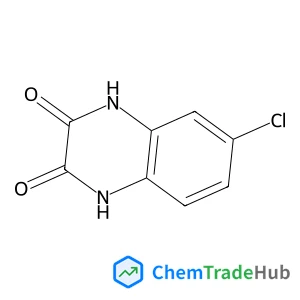
6-CHLORO-2,3-DIOXO-1,2,3,4-TETRAHYDROQUINOXALINE, 97
CAS Number:
169-14-2
Molecular Formula:
C8H5ClN2O2
Christophe Detrembleur, Marie Hurtgen, Antoine Debuigne, Marie-Claire De Pauw-Gillet, Stéphane Mornet, Etienne Duguet, Christine Jérôme
Reversibly crosslinked poly(vinyl alcohol)-b-poly(N-vinylcaprolactam) PVOH-b-PNVCL nanogels were prepared by using a redox-responsive crosslinking agent, 3,3′-dithiodipropionic acid (DPA), to crosslink the PVOH corona, above the lower critical solution temperature (LCST) of the PNVCL block. The stability of the as-prepared nanogels against heating and diluting with water was studied by dynamic light scattering (DLS) to follow the evolution of the hydrodynamic diameter and size distribution. Stability under reductive conditions was also studied by DLS and transmission electron microscopy (TEM) after exposure to dithiothreitol (DTT) buffer solutions at different pH. The reversibility of the crosslinking was evaluated by treating the de-crosslinked nanogels with hydrogen peroxide (H2O2) above the LCST. As a hydrophobic drug model, Nile red (NR) was loaded into the nanogels, and triggered release behaviours were studied after exposure to the same DTT buffer solutions. Moreover, two PVOH-b-PNVCL copolymers with different compositions and LCST were used to evaluate the effect of the LCST on the release behaviours of the nanogels. The cytotoxicity of the nanogels against a mouse fibroblast-like L929 cell line was assessed via the MTS assay, and preliminary studies on cellular uptake of the nanogels within human melanoma MEL-5 cells were also carried out by fluorescence microscopy and fluorescence-activated cell sorting.

Chemical Communications

Journal of Natural Medicines

Russian Journal of Applied Chemistry

Journal of Saudi Chemical Society

New Journal of Chemistry

Journal of Peptide Science

Current Opinion in Colloid & Interface Science

Nature Medicine

Chemistry Education Research and Practice

Russian Journal of Bioorganic Chemistry
Weiliang Wang
DOI: 10.1039/D1CP03117A
Xin Shen, Yinan Bai
DOI: 10.1039/D1CP02770K
DOI: 10.1039/D1CP03146E
DOI: 10.1039/D1CP90169A
Robert C. Chapleski, Jr., Alexander S. Ivanov, Kirk A. Peterson, Vyacheslav S. Bryantsev
DOI: 10.1039/D1CP02466C
Zhizhou Wu, Liuyang Li, Xuedong Zhou, Xiujian Zhao, Baoshun Liu
DOI: 10.1039/D1CP03135J
Leandro H. Z. Cocca, Jean-Christophe Mulatier, Delphine Pitrat, Chantal Andraud, Lino Misoguti, Cleber R. Mendonça, Marcelo G. Vivas, Leonardo De Boni
DOI: 10.1039/D1CP02553H
Xiaoyong Zhang, Jeremy N. Harvey
DOI: 10.1039/D1CP05272A
Georgia L. Thornton, Ryan Phelps, Andrew J. Orr-Ewing
DOI: 10.1039/D1CP03137F
4-Nitrophenyl phosphate disodium salt hexahydrate is primarily used as a substra...
2-(Trifluoromethyl)-1,3-oxazole-4-carboxylic Acid (CAS: 1060816-01-4) is widely ...
2-Fluoro-4-biphenylcarboxylic acid should be stored in a cool, dry place at room...
Prednisolone-21-Carboxylic Acid is primarily used in the pharmaceutical industry...
4-(Hydrazinomethyl)-1,2,3-benzenetriol (CAS: 3614-72-0) should be stored in a co...
4-Amino-1-methyl-1H-pyrazole-5-carboxylic acid hydrochloride (CAS: 92534-70-8) i...
Dehydropachymic acid (CAS: 77012-31-8) is regulated by various agencies. It fall...
The market and research trends for 6-[(2,2-Dimethylpropanoyl)amino]nicotinic aci...
1,10-Phenanthroline-2,9-dicarbaldehyde should be stored in a cool, dry place awa...
5-Carbamoyl-11-oxo-10,11-dihydro-5H-dibenzo[b,f]azepin-10-yl acetate can be synt...

Polymer Chemistry welcomes submissions in all areas of polymer science that have a strong focus on macromolecular chemistry. Manuscripts may cover a broad range of fields, yet no direct application focus is required.
![1-[(4-Methylphenyl)sulfonyl]-3-(4,4,5,5-tetramethyl-1,3,2-dioxaborolan-2-yl)-1H-pyrrolo[2,3-b]pyridine-5-carbonitrile structure](https://static.chemtradehub.com/structs/143/1434747-57-5-fc0d.webp "1-[(4-Methylphenyl)sulfonyl]-3-(4,4,5,5-tetramethyl-1,3,2-dioxaborolan-2-yl)-1H-pyrrolo[2,3-b]pyridine-5-carbonitrile structure")