












Thermal annealing reduces geminate recombination in TQ1:N2200 all-polymer solar cells
Literature Information
Publication Date
2018-03-27
DOI
10.1039/C8TA01692E
Impact Factor
12.732
Authors
Safakath Karuthedath, Armantas Melianas, Zhipeng Kan, Vytenis Pranculis, Markus Wohlfahrt, Jafar I. Khan, Julien Gorenflot, Yuxin Xia, Olle Inganäs, Vidmantas Gulbinas, Martijn Kemerink, Frédéric Laquai
View Original
Abstract
A combination of steady-state and time-resolved spectroscopic measurements is used to investigate the photophysics of the all-polymer bulk heterojunction system TQ1:N2200. Upon thermal annealing a doubling of the external quantum efficiency and an improved fill factor (FF) is observed, resulting in an increase in the power conversion efficiency. Carrier extraction is similar for both blends, as demonstrated by time-resolved electric-field-induced second harmonic generation experiments in conjunction with transient photocurrent studies, spanning the ps–μs time range. Complementary transient absorption spectroscopy measurements reveal that the different quantum efficiencies originate from differences in charge carrier separation and recombination at the polymer–polymer interface: in as-spun samples ∼35% of the charges are bound in interfacial charge-transfer states and recombine geminately, while this pool is reduced to ∼7% in thermally-annealed samples, resulting in higher short-circuit currents. Time-delayed collection field experiments demonstrate a field-dependent charge generation process in as-spun samples, which reduces the FF. In contrast, field-dependence of charge generation is weak in annealed films. While both devices exhibit significant non-geminate recombination competing with charge extraction, causing low FFs, our results demonstrate that the donor/acceptor interface in all-polymer solar cells can be favourably altered to enhance charge separation, without compromising charge transport and extraction.
Related Literature
A novel chlorine-containing borophosphate based on (4,3)-connected 3-D borophosphate anion [B6P11O42(OH)2]13− with unique B : P ratio and 22-tetrahedral cages
Yuquan Feng, Min Li, Hengzhen Shi, Qunzeng Huang, Dongfang Qiu
2013-01-16
Communication
DOI: 10.1039/C3CE26918C
Constant-temperature atomiser-computer controlled échelle spectrometer system for graphite furnace atomic emission spectrometry
Paper
DOI: 10.1039/JA9860100105
Cavity-containing, backbone-rigidified foldamers and macrocycles
Kazuhiro Yamato, Mark Kline, Bing Gong
2012-10-05
Feature Article
DOI: 10.1039/C2CC36391G
Synthesis, structure, and electrochemical properties of O′3-type monoclinic NaNi0.8Co0.15Al0.05O2 cathode materials for sodium-ion batteries
Pengfei Zhou, Xiaolan Liu, Junying Weng, Li Wang, Xiaozhong Wu, Zhichao Miao, Jinping Zhao, Jin Zhou, Shuping Zhuo
2018-11-29
Paper
DOI: 10.1039/C8TA07842D
Ultrasensitive detection of vitamin E by signal conversion combined with core-satellite structure-based plasmon coupling effect
Keying Xu, Jing Li, Qingyi Han, Dingding Zhang, Libing Zhang, Zhen Zhang, Xiaoquan Lu
2022-01-04
Paper
DOI: 10.1039/D1AN02289J
Low temperature surfactant-free synthesis of monodisperse β-NaGdF4 nanorods by a novel ion-exchange process and their luminescence properties
Lingfei Zhao, Ying Tao, Hongpeng You
2017-03-13
Paper
DOI: 10.1039/C7CE00097A
Predicting the conformations of the silk protein through deep learning
Mingrui Jiang, Ting Shu, Chao Ye, Jing Ren, Shengjie Ling
2021-03-05
Paper
DOI: 10.1039/D1AN00290B
Correction: Graphene materials as a superior platform for advanced sensing strategies against gaseous ammonia
Kumar Vikrant, Vanish Kumar, Ki-Hyun Kim
2018-12-21
Correction
DOI: 10.1039/C8TA90287A
Dissociation of large gaseous serine clusters produces abundant protonated serine octamer
Jacob S. Jordan, Evan R. Williams
2021-03-04
Paper
DOI: 10.1039/D1AN00273B
A colorimetric sensor array for rapid discrimination of edible oil species based on a halogen ion exchange reaction between CsPbBr3 and iodide
Xin Zhang, Xiaowei Feng, Leon Lee Zhou, Bin Liu, Zhengbo Chen, Xia Zuo
2021-12-13
Paper
DOI: 10.1039/D1AN02109E
You might also like
Compound Q&A
How is Ethyl 4-chlorothieno[2,3-b]pyridine-5-carboxylate (CAS: 59713-58-5) typically synthesized?
Ethyl 4-chlorothieno[2,3-b]pyridine-5-carboxylate (CAS: 59713-58-5) can be synth...
59713-58-5Ethyl 4-chlorothieno...
Compound Q&A
What regulatory guidelines apply to 5-Methyl-1H-indole-3-carbaldehyde (CAS: 52562-50-2)?
5-Methyl-1H-indole-3-carbaldehyde (CAS: 52562-50-2) is subject to various regula...
52562-50-25-Methyl-1H-indole-3...
Compound Q&A
What are the physical and chemical properties of (1,3-Dimethyl-2,4-dioxo-1,2,3,4-tetrahydro-5-pyrimidinyl)boronic acid (CAS: 223418-73-3)?
(1,3-Dimethyl-2,4-dioxo-1,2,3,4-tetrahydro-5-pyrimidinyl)boronic acid is a white...
223418-73-3(1,3-Dimethyl-2,4-di...
Compound Q&A
How should waste containing Sulfocostunolide A (CAS: 1016983-51-9) be handled?
Waste containing Sulfocostunolide A (CAS: 1016983-51-9) should be handled with c...
1016983-51-9Sulfocostunolide A
Compound Q&A
What precautions should be taken when handling Murraxocin (CAS: 88478-44-8)?
When handling Murraxocin (CAS: 88478-44-8), ensure proper personal protective eq...
88478-44-8Murraxocin
Compound Q&A
What are the physical and chemical properties of Formvar (CAS: 63148-64-1)?
Formvar (CAS: 63148-64-1) is an alkyd resin characterized by a high molecular we...
63148-64-1Formvar(R)
Compound Q&A
Is (S)-4-benzyl-2-((benzyloxy)methyl)morpholine (CAS: 205242-66-6) safe?
(S)-4-benzyl-2-((benzyloxy)methyl)morpholine is generally safe when handled with...
205242-66-6(S)-4-benzyl-2-((ben...
Compound Q&A
What industries use Methyl 1-(5-bromo-2-pyrimidinyl)cyclopropanecarboxylate (CAS: 1447607-69-3)?
Methyl 1-(5-bromo-2-pyrimidinyl)cyclopropanecarboxylate (CAS: 1447607-69-3) is p...
1447607-69-3Methyl 1-(5-bromo-2-...
Compound Q&A
Is 2-Methyl-1-phenyl-1-propanamine hydrochloride (CAS: 24290-47-9) safe?
2-Methyl-1-phenyl-1-propanamine hydrochloride (CAS: 24290-47-9) is generally con...
24290-47-92-Methyl-1-phenyl-1-...
Compound Q&A
How is 3-(4-Bromophenyl)-2-methylpropanoic acid (CAS: 66735-01-1) typically synthesized?
3-(4-Bromophenyl)-2-methylpropanoic acid is synthesized through a multi-step pro...
66735-01-13-(4-Bromophenyl)-2-...
Source Journal
Journal of Materials Chemistry A

CiteScore:
19.5
Self-citation Rate:
4.7%
Articles per Year:
2211
Journal of Materials Chemistry A, B & C cover high quality studies across all fields of materials chemistry. The journals focus on those theoretical or experimental studies that report new understanding, applications, properties and synthesis of materials. The journals have a strong history of publishing quality reports of interest to interdisciplinary communities and providing an efficient and rigorous service through peer review and publication. The journals are led by an international team of Editors-in-Chief and Associate Editors who are all active researchers in their fields. Journal of Materials Chemistry A, B & C are separated by the intended application of the material studied. Broadly, applications in energy and sustainability are of interest to Journal of Materials Chemistry A, applications in biology and medicine are of interest to Journal of Materials Chemistry B, and applications in optical, magnetic and electronic devices are of interest to Journal of Materials Chemistry C. More than one Journal of Materials Chemistry journal may be suitable for certain fields and researchers are encouraged to submit their paper to the journal that they feel best fits for their particular article. Example topic areas within the scope of Journal of Materials Chemistry A are listed below. This list is neither exhaustive nor exclusive. Artificial photosynthesis Batteries Carbon dioxide conversion Catalysis Fuel cells Gas capture/separation/storage Green/sustainable materials Hydrogen generation Hydrogen storage Photocatalysis Photovoltaics Self-cleaning materials Self-healing materials Sensors Supercapacitors Thermoelectrics Water splitting Water treatment
Recommended Compounds

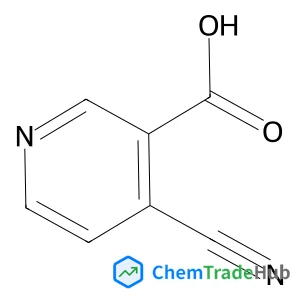
![2-(Methylsulfonyl)-2,4,5,6-tetrahydropyrrolo[3,4-c]pyrazole structure](https://static.chemtradehub.com/structs/122/1226781-80-1-09d5.webp "2-(Methylsulfonyl)-2,4,5,6-tetrahydropyrrolo[3,4-c]pyrazole structure")
2-(Methylsulfonyl)-2,4,5,6-tetrahydropyrrolo[3,4-c]pyrazole
CAS Number:
1226781-80-1
Molecular Formula:
C6H9N3O2S
Recommended Suppliers




Disclaimer
This page provides academic journal information for reference and research purposes only. We are not affiliated with any journal publishers and do not handle publication submissions. For publication-related inquiries, please contact the respective journal publishers directly.
If you notice any inaccuracies in the information displayed, please contact us at support@chemtradehub.com. We will promptly review and address your concerns.