












Lipid-soluble arsenic species identified in the brain of the marine fish skipjack tuna (Katsuwonus pelamis) using a sequential extraction and HPLC/mass spectrometry
Literature Information
Publication Date
2019-10-29
DOI
10.1039/C9JA00249A
Impact Factor
4.023
Authors
Michael Stiboller, Fabiana P. Freitas, Kevin A. Francesconi, Tanja Schwerdtle, António J. A. Nogueira, Georg Raber
View Original
Abstract
Lipid-soluble arsenicals, so called arsenolipids, occur in appreciable quantities in various marine organisms including fish. In this study, arsenolipids as well water-soluble arsenic species were investigated in brain (9.1–17.4 mg As per kg; dry mass) and muscle (4.0–5.8 mg As per kg; dry mass) tissues in five specimens of the marine fish skipjack tuna (Katsuwonus pelamis). For this purpose, we developed a sequential extraction method whereby the freeze-dried tissue was first treated with pyridine (organic extract) followed by aqueous ammonium bicarbonate (water extract) to extract arsenolipids and water-soluble species, respectively. When the method was applied to the tuna tissues, the arsenic distribution for brain was 55% (organic extract), 30% (water extract) and 15% (pellet), whereas for muscle tissue the corresponding values were 20%, 55%, and 25%. Arsenic species in water and organic extracts of muscle and brain tissues were investigated by HPLC/mass spectrometry. For both tissues, the water extracts contained arsenobetaine as the major arsenic species together with small amounts of dimethylarsinate and trimethylarsine oxide; trace amounts of dimethylarsinoyl propionic acid were found only in brain tissues. Arsenic-containing hydrocarbons (AsHCs), were the major arsenolipids in both tuna brain and muscle. The arsenolipid content in brain ranged from 3.8–5.9 mg As per kg, whereas it was substantially lower in muscle (0.3–0.8 mg As per kg) reflecting arsenolipids' potential to cross the blood brain barrier and accumulate in the fish brain.
Related Literature
Prediction of a novel 2D porous boron nitride material with excellent electronic, optical and catalytic properties
Vikram Mahamiya, Alok Shukla
2022-08-10
Paper
DOI: 10.1039/D2CP02705D
DLSSAffinity: protein–ligand binding affinity prediction via a deep learning model
Huiwen Wang, Haoquan Liu, Shangbo Ning, Chengwei Zeng, Yunjie Zhao
2022-04-04
Paper
DOI: 10.1039/D1CP05558E
Comparative study of Janus B2XY (X, Y = S, Se, Te) and F-BNBN-H monolayers for water splitting: revealing the positive and negative roles of the intrinsic dipole
Xing Zou, Li-Li Liu, Anrong Wang, Shi-Fa Wang, Yong Wei, Chun-Ming Yang, Lei Hu
2022-08-17
Paper
DOI: 10.1039/D2CP03069A
Mechanistic insight into the disruption of Tau R3–R4 protofibrils by curcumin and epinephrine: an all-atom molecular dynamics study
Yu Zou, Bote Qi, Jingwang Tan, Yehong Gong, Qingwen Zhang
2022-08-08
Paper
DOI: 10.1039/D2CP02353A
Fine and hyperfine coupling constants of the cis-β-cyanovinyl radical, HCCHCN
Masakazu Nakajima, Yi-Ting Liu, Ching Hua Chang, Kenji Seiki, Yoshihiro Sumiyoshi, Yasuhiro Ohshima, Jian Tang, Yasuki Endo
2022-04-14
Paper
DOI: 10.1039/D2CP00516F
Evaluating the impact of Hartree–Fock exact exchange on the performance of global hybrid functionals for the vertical excited-state energies of fused-ring electron acceptors using TD-DFT
Muhammad Imran Rafiq, Baojing Zhou
2022-08-16
Paper
DOI: 10.1039/D2CP02228A
Electronic polarization effects on membrane translocation of anti-cancer drugs
Atiyeh (Najla) Hosseini, Mohammad Reza Ejtehadi
2022-04-18
Paper
DOI: 10.1039/D2CP00056C
Doping of the Mn vacancy of Mn2B2 with a single different transition metal atom as the dual-function electrocatalyst
Jing Xu, Shijun Luo, Bin Xu, Jing Zhang, Fei Wang
2022-08-10
Paper
DOI: 10.1039/D2CP02209E
Computational prediction of heteromeric protein complex disassembly order using hybrid Monte Carlo/molecular dynamics simulation
Ikuo Kurisaki, Shigenori Tanaka
2022-03-31
Paper
DOI: 10.1039/D2CP00267A
Highlighting the difference in nanostructure between domain-forming and domainless protic ionic liquids
Igor A. Sedov, Timur I. Magsumov
2022-08-31
Paper
DOI: 10.1039/D2CP02925A
You might also like
Compound Q&A
How is Ethyl 4-chlorothieno[2,3-b]pyridine-5-carboxylate (CAS: 59713-58-5) typically synthesized?
Ethyl 4-chlorothieno[2,3-b]pyridine-5-carboxylate (CAS: 59713-58-5) can be synth...
59713-58-5Ethyl 4-chlorothieno...
Compound Q&A
What regulatory guidelines apply to 5-Methyl-1H-indole-3-carbaldehyde (CAS: 52562-50-2)?
5-Methyl-1H-indole-3-carbaldehyde (CAS: 52562-50-2) is subject to various regula...
52562-50-25-Methyl-1H-indole-3...
Compound Q&A
What are the physical and chemical properties of (1,3-Dimethyl-2,4-dioxo-1,2,3,4-tetrahydro-5-pyrimidinyl)boronic acid (CAS: 223418-73-3)?
(1,3-Dimethyl-2,4-dioxo-1,2,3,4-tetrahydro-5-pyrimidinyl)boronic acid is a white...
223418-73-3(1,3-Dimethyl-2,4-di...
Compound Q&A
How should waste containing Sulfocostunolide A (CAS: 1016983-51-9) be handled?
Waste containing Sulfocostunolide A (CAS: 1016983-51-9) should be handled with c...
1016983-51-9Sulfocostunolide A
Compound Q&A
What precautions should be taken when handling Murraxocin (CAS: 88478-44-8)?
When handling Murraxocin (CAS: 88478-44-8), ensure proper personal protective eq...
88478-44-8Murraxocin
Compound Q&A
What are the physical and chemical properties of Formvar (CAS: 63148-64-1)?
Formvar (CAS: 63148-64-1) is an alkyd resin characterized by a high molecular we...
63148-64-1Formvar(R)
Compound Q&A
Is (S)-4-benzyl-2-((benzyloxy)methyl)morpholine (CAS: 205242-66-6) safe?
(S)-4-benzyl-2-((benzyloxy)methyl)morpholine is generally safe when handled with...
205242-66-6(S)-4-benzyl-2-((ben...
Compound Q&A
What industries use Methyl 1-(5-bromo-2-pyrimidinyl)cyclopropanecarboxylate (CAS: 1447607-69-3)?
Methyl 1-(5-bromo-2-pyrimidinyl)cyclopropanecarboxylate (CAS: 1447607-69-3) is p...
1447607-69-3Methyl 1-(5-bromo-2-...
Compound Q&A
Is 2-Methyl-1-phenyl-1-propanamine hydrochloride (CAS: 24290-47-9) safe?
2-Methyl-1-phenyl-1-propanamine hydrochloride (CAS: 24290-47-9) is generally con...
24290-47-92-Methyl-1-phenyl-1-...
Compound Q&A
How is 3-(4-Bromophenyl)-2-methylpropanoic acid (CAS: 66735-01-1) typically synthesized?
3-(4-Bromophenyl)-2-methylpropanoic acid is synthesized through a multi-step pro...
66735-01-13-(4-Bromophenyl)-2-...
Source Journal
Journal of Analytical Atomic Spectrometry

CiteScore:
6.2
Self-citation Rate:
25.8%
Articles per Year:
254
The Journal of Analytical Atomic Spectrometry (JAAS) is the central journal for publishing innovative research on fundamentals, instrumentation, and methods in the determination, speciation and isotopic analysis of (trace) elements within all fields of application. This includes, but is not restricted to, the most recent progress, developments and achievements in all forms of atomic and elemental detection, isotope ratio determination, molecular analysis, plasma-based analysis and X-ray techniques. The journal welcomes full papers, communications, technical notes, critical and tutorial review articles, editorials, and comments, in addition to the Atomic Spectrometry Updates (ASU) literature reviews that are prepared by an expert panel. Submissions are welcome in the following areas, but note this list reflects the current scope and authors are strongly encouraged to contact the Editorial team if they believe that their work offers potentially new and emerging research relevant to the journal remit: Fundamental studies in the following. New and existing sources for atomic emission, absorption, fluorescence and mass spectrometry and those that provide both atomic and molecular information Sample introduction techniques for solids, liquids, gases Improvements in sensitivity, selectivity, precision, accuracy and/or robustness Isotope ratio measurements, including techniques for improving precision and mass bias correction Single channel and multichannel simultaneous detection systems Chemometrics, statistics, calibration techniques and internal standardisation Theoretical and numerical modelling of fundamental processes related to all of the above methodologies Novel or improved methodologies in areas of application including, but not limited to the following. Biosciences, including elemental, speciation and isotopic analysis in biological systems, immunoassays based on metal-labeled antibodies, bio-imaging, and nanoparticle toxicology Geochemistry Environmental science Materials science, including engineered nanoparticles and quantum dots Metrology, including reference materials Forensic analysis Food and agricultural sciences Energy Archaeometry Molecular analysis. Molecular sources for elemental and isotopic analysis Atomic sources for molecular analysis Atomic and molecular techniques simultaneously used for complementary chemical information All contributions are judged on originality and quality of scientific content, and appropriateness of length to content of new science.
Recommended Compounds
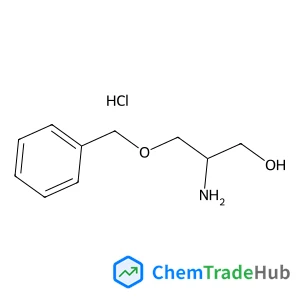
(R)-2-amino-3-(benzyloxy)propan-1-ol hydrochloride
CAS Number:
58577-95-0
Molecular Formula:
C10H16ClNO2
![2-Methyl-2-propanyl 1,6-diazaspiro[3.4]octane-6-carboxylate structure](https://static.chemtradehub.com/structs/115/1158749-79-1-81ee.webp "2-Methyl-2-propanyl 1,6-diazaspiro[3.4]octane-6-carboxylate structure")
2-Methyl-2-propanyl 1,6-diazaspiro[3.4]octane-6-carboxylate
CAS Number:
1158749-79-1
Molecular Formula:
C11H20N2O2
Recommended Suppliers





Disclaimer
This page provides academic journal information for reference and research purposes only. We are not affiliated with any journal publishers and do not handle publication submissions. For publication-related inquiries, please contact the respective journal publishers directly.
If you notice any inaccuracies in the information displayed, please contact us at support@chemtradehub.com. We will promptly review and address your concerns.